





Nicholas Rodda’s dairy brand is synonymous with clotted cream. Now it’s looking to reverse engineer into the on-trend cottage cheese market
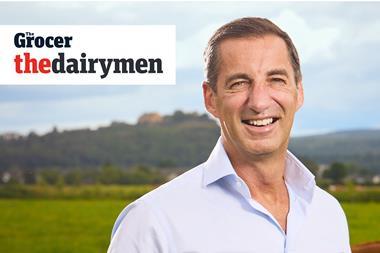
Nicholas Rodda’s grandfather was 16 years old when he left Cornwall for the first time, bound for London with a couple of jars of clotted cream in his pocket. After pounding the pavements of Mayfair, he soon secured more orders from hotels and high-end retailers than the brand could fulfil.
“We only had 20 cows at the time. We didn’t have enough milk to make all of the cream,” Rodda says with a smile. “I think he got a bit of a clip round the ear for doing too good a job.”
What was once a business that sold clotted cream as far as a horse and cart could take it now boasts turnover of £50.6m, supplying into retail and foodservice, including numerous airlines, and exports internationally.
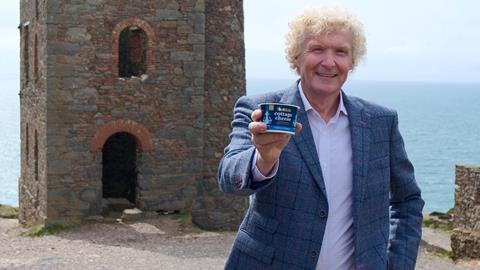
For consumers up and down the country, Rodda’s has become synonymous with clotted cream, and it produces 10 tonnes every day, but it still has a “very strong regional dairy business” in Cornwall, says managing director Rodda, with 20 vehicles also dropping off its range of milks, butter, shortbread and fudge to local hotels, restaurants and cafés. This month marks a big change for the dairy, however, with its launch into cottage cheese for the first time thanks to a £6m investment in a new manufacturing facility.

It’s looking to tap a cottage cheese boom that has seen monthly UK volumes surge from just over 900,000kg at the start of 2023 to more than 1.7 million kg in December 2025, according to NIQ data. It won’t be easy. From a fat content perspective alone, this is a major departure.
Clotted cream is made up of over 60% fat – some distance from the low-fat health food that is cottage cheese. But this might just be the reason it works.
After all, every 100 litres of milk used in the process of making clotted cream produces just 10 litres of cream, leaving 90 litres of skimmed milk as a “sort of byproduct”, Rodda explains.
The business has been selling this skimmed milk on the open market for years, but was keen to find a way to add value to it. It settled on cottage cheese even before the market was “racing away like it is now”, Rodda insists.
Demand for cottage cheese
“It started out as a good way to use that skimmed milk, and while I’d like to say it was absolute genius and we had data coming out of our ears that told us it all, to be honest it was fortuitous timing where we came across the idea, and the market was [already] growing,” Rodda adds. “We want to replicate the skills we put into clotted cream to make sure the cottage cheese we make is the best quality, the best consistency and the best taste we can.”
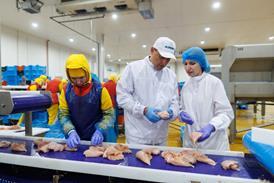
The state-of-the-art new facility at Rodda’s Scorrier site is expected to create up to 20 new jobs as it ramps up towards its full production capacity of 4,000 tonnes of cottage cheese per year.
“It’s been in the pipeline for about 15 months, so it’s been quite an accelerated build and installation. At the moment, I think it’s just going to be a matter of trying to keep up with demand. Given the demand we’re seeing at the moment, as soon as we get going, we’re going to be full quite quickly. Which is then prompting the question: when do we put in a second vat to be able to get some growth?”
Rodda says the plan is to launch four SKUs initially – low fat, medium and full fat, plus a pineapple flavour – before branching out into different flavours and trying to tap different eating occasions. Demand is coming not only from the UK, but from Europe and around the world, driven very much by recent health trends.
“People are looking for their protein fix, obviously thinking about health. They want something that’s clean and has a minimal amount of processing. This is a very clean recipe, it’s not ultra-processed,” he says. “We’re essentially condensing down all of the goodness of Cornwall into a pot.”
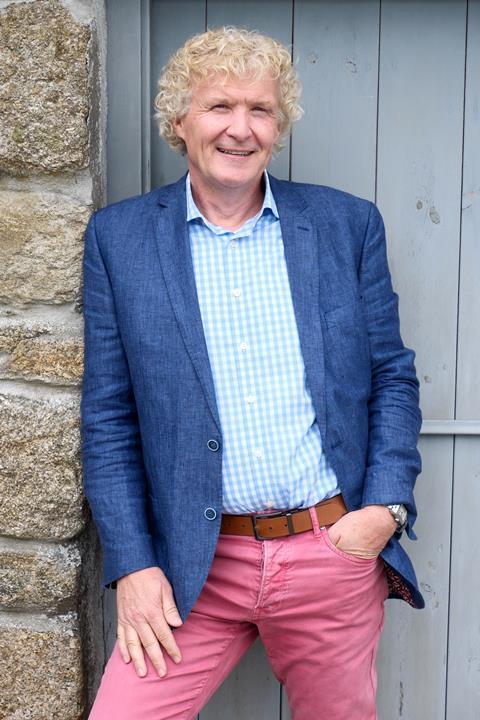
Name: Nicholas Rodda
Born: Truro, Cornwall
Lives: Scorrier, Cornwall
Family: Married to Marie, with three boys: William, Alexander and Edward
Potted CV: Like an apple, I did not fall far from the family tree
Career highlight: Being the fifth generation to be at the helm of Rodda’s
Business motto: Do everything as well as you can; your name’s on it
Item you couldn’t live without: My camera
Dream holiday: To travel from Cornwall to Cape Town
Favourite book: The Bible, as it guides so many people through generations
Favourite way to eat clotted cream: With fresh Cornish strawberries just as they come in for summer
Favourite place in Cornwall: Porthtowan
The business hopes the new venture will open more doors for export, bolstered by the reputation of British food brands and Rodda’s proud traditions.
“In places like Japan, they love the idea that this is a fifth-generation family business. It’s a great endorsement of our commitment to quality and our heritage, and particularly with the clotted cream, it roots it back into an area as well,” he says. “Over the years, we’ve been very fortunate for Cornwall to be publicised with Poldark, Doc Martin and all these shows that get exported around the world, so people have an instant connection.”
Cornwall is a key component of the brand’s image, and Rodda’s passion for his home county shines through as he speaks. He is proud of the jobs Rodda’s provides for the local economy, especially at a time when other Cornish dairy businesses have sold up, notably Trewithen Dairy, which was acquired by German dairy giant Ehrmann in June 2024. For Rodda, that is not an option.
“Once you sell these things, you never get them back again,” he says. “There are lots of lovely family businesses that are still going, but there’s so many that have been sold off, and you lose that personality behind it.”
He’s also worried about potential repercussions, telling the story of how an older woman at a county show told him a few years ago that he “wasn’t allowed” to sell up. She told him the business “doesn’t actually belong to you, it belongs to Cornwall, so you can’t sell it”.
“If a ‘for sale’ board was to go up over Rodda’s,” he adds, “I’m sure this lovely old lady would be beating a path down to the creamery to tell me off.”





No comments yet