


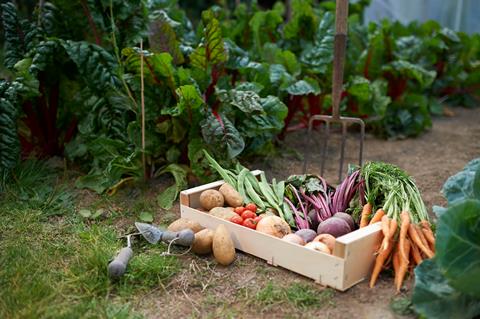
The number of organic farmers and processors has continued to decline, according to Defra’s annual organic farming statistics.
The department found the number of organic operators dropped by 2.5% from 5,133 in 2024 to 5,004 in 2025. This was despite Defra finding the total amount of land farmed organically in the UK has increased 7.3% year on year, bringing the total to 539.7 thousand hectares.
The Soil Association said the decline was down to “ongoing consolidation” which is a “farming industry-wide trend across organic and non-organic”.
The figures come as the Soil Association Certification’s Organic Market Report found organic sales outgrew non-organic by 400% in 2025, now worth £3.9bn.
Glebe Farm Foods founder and MD Philip Rayner echoed the Soil Assocation, explaining that while it was “unusual” for land to increase while processors have decreased, “it is likely partly due to amalgamation of farms in groups and is a trend in all farming”.
He added farmers were having to “get bigger to survive”.
However, he also asserted delayed organic farming payments made through the Sustainable Farming Incentive, which abruptly closed early last spring leaving farmers out of pocket, could be to blame.
He said confusion over the scheme “has possibly driven some farmers that are doing regen farming or rewilding at their own expense to reconsider how to make an income”.
Abel & Cole MD Hannah Shipton said the greatest area that the sector needed help in was “growing the expertise available to farmers on moving away from synthetic fertilisers”.
“Conventional farmers need more support transitioning onto organic sources of nutrients – there’s a lot at stake for them, but if we can get them the right support, we can help drive growth for organic,” she added.
Although the UK saw a fall in operators across the board, Scotland proved an exception. Whilst the country’s total number of organic operators remained stagnant at 2024’s 530, with the figure for organic processors declining from 126 to 119, the amount of organic farmers increased from 389 to 396.
The devolved nation also saw the greatest increase in the total amount of land farmed organically (27.9%).
Additionally, Scotland accounted for the greatest share of the UK’s 63% uptick in land in the process of organic conversion. Whilst England, Wales and Northern Ireland saw the amount of land in conversion rise 23.5%, 4.35% and 0%, respectively, the figure was 97.7% in Scotland.
“In Scotland, ministers are actively championing organic for the benefits it can deliver for soils, nature and climate by avoiding harmful, fossil-fuel based inputs,” said Soil Association Certification senior commercial manager Alison Muirhead. “In addition to the target to double organic land, the government has also rolled out a funded Organic Action Plan, which is bringing the supply chain together to break down barriers to making local organic food and drink accessible.”
Shipton added: “If we compare the UK to other European countries, the incentives and policies to support organic farmers are much stronger in Europe.”

No comments yet