





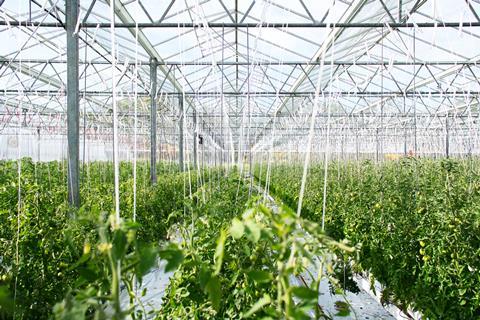
Tomato, cucumber and pepper growers have called on MPs to provide “immediate relief” as higher electricity standing charges come into force.
Higher electricity standing charges took effect this week, meaning growers are facing millions of pounds of additional costs. This, combined with the increase in energy prices caused by the conflict in Iran, had created an “immediate and unsustainable financial burden”, according to growers.
Simon Conway, chair of the British Tomato Growers’ Association, and Joe Shepherdson, chair of the Cucumber & Pepper Growers’ Association have warned that without government intervention growers will be forced to scale back or stop production entirely.
This, the chairs warned, could lead to an increased reliance on imports, which are likely to be more expensive as European growers are also facing higher energy prices due to the conflict.
Read more: Iran war: Growers may be forced to stop production due to fuel prices
Conway and Shepherdson wrote to MPs Peter Kyle and Angela Eagle last week to call for inclusion in the relevant exemption schemes such as the Energy Intensive Industries scheme, which they say “remains the most effective and target route to prevent immediate and avoidable harm to UK food production”.
“These schemes are designed precisely to protect strategically important, energy-exposed sectors from the kind of volatility we are now experiencing, and help them remain competitive,” they wrote.
The grower groups warned that the current situation could risk “destabilising the sector overnight”, but inclusion in the scheme would “provide the essential buffer growers need to maintain production, protect jobs, and safeguard domestic food supply”.
They said that the standing charges “alone would have placed the sector under extreme pressure”. However, this was “compounded by a sudden and severe gas price spike, with wholesale prices more than doubling compared with the end of February”.
Conway and Shepherdson warned that the situation was similar to the early stages of the Ukraine–Russia shock, which led to growers ceasing production and gaps on shelves.
“For a sector where energy can account for up to 30% of total production costs, this volatility is not just a financial inconvenience – projected annual cost increases now exceed levels that cannot be absorbed without cutting production,” they said.











No comments yet