






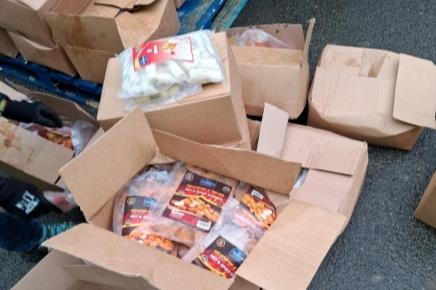
A Food Standards Agency National Food Crime Unit operation has resulted in the seizure of 33 tonnes of suspected illegal food products across England, Wales and Scotland, and the arrest of one man.
The man was later released under investigation and enquiries remain ongoing.
Following the arrest, NFCU officers, working alongside local authority partners, disposed of 25 tonnes of suspected illegal frozen food products in June.
It included a range of frozen food items ranging from meat and poultry to fruit & vegetables, the items included chicken nuggets, fish nuggets, samosas and kebabs.
Since the initial seizure, an additional eight tonnes have been seized over 111 visits to businesses.
The operation brought together multiple partners across law enforcement and local authorities, including the Greater Manchester and Staffordshire Police, as well as Stoke-on-Trent City Council.
“Seizing over 33 tonnes of suspected illegal frozen food products and making an arrest sends a strong message to those who seek to profit from deceiving consumers – we will take action,” said Wayne Parker, senior investigator at the FSA’s NFCU. “This operation is a clear example of what we can achieve when agencies work together with a shared purpose.”
In an exclusive interview with The Grocer, Andrew Quinn, head of the FSA’s NFCU, said the operation was a “great achievement”.
He said that the main question in this case was around traceability, as the business had used identification approval numbers relating to another company. While he did not want to speculate on why it had done this, he said there were no “legitimate reasons” to prevent traceability.
“If we can’t rely on the traceability, we’re never going to be able to track it back to the source and be able to stop it and prevent that food from running the market in the first place,” he added.
Quinn said the organisation was “making great strides towards our objectives of preventing food being rendered unsafe or inauthentic through dishonesty”.
The organisation runs operations across various types of food fraud, including on illegal meat, smoked salmon, byproducts being put back in the food chain, smokies (sheep or goat products which have had the fleece left on them and blow torched off), counterfeit rice and country of origin frauds.
Quinn said the organisation received 2,000 pieces of intelligence each year and that it adopted a national intelligence model whereby it focused on the “four Ps: pursue, prevent, protect and prepare”.
Since 1 May, the organisation has attended 38 different events where it has exercised new powers that give it more jurisdiction, meaning it can “free up police resources and therefore enable us to do it a little bit quicker”.







No comments yet