





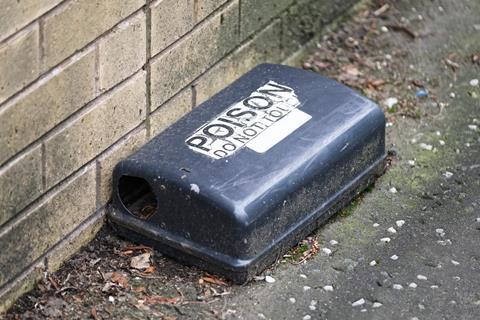
Rat and mice infestations at retail and food manufacturing premises have exploded due to milder, wetter winters, while pest professionals warn independent retailers are cutting back on audits and prevention.
Over three-quarters (79%) of pest managers polled by the National Pest Technicians Association (NPTA) said they had seen more rats than a year ago, and 52% more mice. One in five said they were seeing an increase of 50%-100% compared with last year.
“We are seeing a convergence of factors that create ideal conditions for rodents, especially brown rats,” said NPTA technical manager Mark Wenman.
“An ageing infrastructure, a redistribution of funds away from preventative maintenance, and more frequent building and drainage disruption all contribute. Milder winters also mean there is less natural population decline than we would historically expect.”
Worryingly, two-thirds (63%) said pest control was not considered a high priority for businesses in their experience.
Three in five NPTA members polled on behalf of The Grocer said food retailers had cut back on pest prevention measures in the past year, and half on the depth or frequency of internal audits. Food manufacturers have scaled back too, but by a smaller amount. Some 43% of pest professionals said suppliers have cut back on preventative measures and 36% on internal audits.
Wenman said: “When around a third of pest professionals who responded to the survey report that pest prevention has been cut back significantly, and around a fifth report a major reduction in internal audit depth or frequency, that should be taken seriously.
”Integrated pest management works best when it is embedded as part of a wider food safety and hygiene process and culture. When audits are reduced and prevention is deprioritised, issues may be more likely to be discovered by customers or enforcement bodies rather than being managed proactively.”
Wenman added that the more noticeable reductions are being reported at the smaller independent level, where “local decision-making, staffing pressures and budget constraints can have a much greater impact on day-to-day operations”.
Larger national retailers tend to have contractual obligations, central oversight and fixed audit structures in place, he added.
The NPTA urged the government to maintain independent checks when it reveals more about plans for national regulation for large food businesses in England later this month. The FSA has previously said national-level regulation would be based on businesses’ own data with “some checks on the ground”.
Wenman said: “The NPTA supports proportionate, risk-based regulation and the intelligent use of data. However, we do not support removing independent oversight altogether. Retailer-generated data can be a useful tool, but it must sit alongside transparent governance, robust verification and routine independent checks.
“Public confidence in food safety depends on independent assurance. Any changes to inspection models should always strengthen outcomes, and these must avoid creating a system where data replaces oversight rather than informs it.”
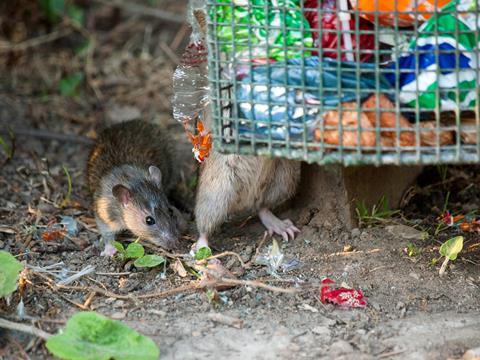
Rodents pose several health risks to humans, many of which are not visible. Rodent droppings, urine, saliva and ticks may transfer salmonella, e.coli, listeria, rat bite fever, hantavirus and Lyme disease.
“A rodent’s front incisors grow continuously, and they can gnaw any substrate which could present a fire risk if wires are chewed,” Wenman added.
Mark Hall, founder and director at Business Waste, said: “Supermarkets and convenience stores can be high-risk environments for rat infestations due to the prevalence of food waste and the opportunities for rodents to access this. Frequent deliveries, high foot traffic, and urban locations all create ideal conditions for rats to gain access to waste.
“The consequences of infestations to businesses operating in this space are serious. Rats carry dangerous viruses, such as salmonella and e.coli, which can easily contaminate food and packaging. Rats can also spread allergens, and this, along with bacteria, can be spread through fur, urine, and droppings. Not only does this pose a public health risk, but it can also result in fines, closures, and significant financial impacts on the business.
“Beyond the physical dangers, rat infestations also damage a brand’s reputation. This can lead to a rapid decline in footfall, a decrease in customer loyalty, and negative social media coverage.”








No comments yet