
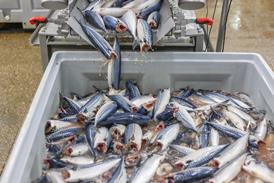





From AI-powered production line cameras to social supermarket models, the UK food and drink sector is developing increasingly sophisticated ways to capture edible surplus – and turn it into commercial, charitable and social returns. But with an estimated 470,000 tonnes still going unredistributed, the industry says collaboration, not just technology, will be key to closing the gap.
The spotlight on food surplus looks set to intensify.
From March, mandatory food waste collections across England will see all households separating out their own surplus as part of the government’s Simpler Recycling initiative – a change that will, quite literally, bring home the scale of edible food that currently goes to waste.
This coincides with growing fears about food insecurity, amid ongoing inflation and geopolitical crises such as the conflict in Iran.
The result will be further pressure on the food and drink sector to increase efforts on redistribution, believes Gary Stott, executive chairman at Biffa-owned community interest company (CIC) Community Shop. “The potential for waste is in front of our eyes much more clearly than it ever was 10 years ago,” he says. “And that demands a response.”
Thankfully, it isn’t only the pressure that has ramped up. Also in the last 10 years, a raft of innovative pilots, partnerships and technologies have taken place to unlock new surplus streams in UK food and drink – and turn redistribution into what Stott calls a “triple bottom line” win for those companies that take advantage.
Surplus left on the table
UK food and drink has made significant headway on redistribution.
From a standing start some 15 years ago, nearly all leading supermarkets and manufacturers now have dedicated redistribution schemes in place – and volumes are still growing.
According to the latest figures from WRAP, approximately 210,000 tonnes of surplus food was redistributed in the UK in 2024, a 27% increase from 2022 and the equivalent of roughly 500 million meals. That includes 58,400 tonnes from manufacturers, an 8% increase year on year.
But that still leaves plenty of surplus on the table. A 2026 report by Newton calculated that a further 89,000 tonnes of surplus could be gleaned from manufacturers alone – rising to 470,000 tonnes if on-farm surplus is included.
“The surplus redistribution sector has evolved really rapidly: there’s more partners in the space, more initiatives, more projects and that can be hard to navigate for a manufacturer, especially a smaller one”
– Natalie Verner, senior sustainability policy executive at the Food and Drink Federation
In looking to rise to that challenge, manufacturers may not fully appreciate all the different possibilities now available when it comes to unlocking surplus from their operations, says Natalie Verner, senior sustainability policy executive at the Food and Drink Federation (FDF).
“The surplus redistribution sector has evolved really rapidly in the past couple of years, so businesses may not have caught up with the abilities we now have. There’s more partners in the space, more initiatives, more projects and that can be hard to navigate for a manufacturer, especially a smaller one with limited internal capabilities.” It is for this reason that the FDF is planning to launch its own dedicated surplus redistribution hub in the coming months.
A knowledge gap around what is now possible when it comes to redistribution can even lead to “a fundamental misunderstanding of what surplus is,” believes Carla Brian, public affairs and partnerships director at Biffa. “There is an educational piece from our teams in simply spotting opportunities for surplus in what our customers might perceive as waste or waste products.”
Advances in redistribution
One big driver of change in identifying and unlocking the value in surplus has been technology. In particular, as waste reduction efforts have — quite rightly – removed much of the low-hanging fruit from supply chains, technology has opened up more creative ways to identify surplus in harder-to-reach areas, such as mid-production.
For Verner, one of the most compelling solutions out there is Zest, a platform that uses AI and real-time cameras on production lines to map out when, where and how waste occurs. It uses these insights to recommend ways to both reduce waste and redistribute edible surplus that would otherwise have been missed.
In a pilot with Nestlé, the technology identified 4.8 tonnes of edible surplus that had previously been unreported, 100% of which was then redistributed to Company Shop Group and FareShare, with the manufacturer distributing the proceeds between its factory and charity partners via its ‘Everyone Wins’ model.
“This was a small pilot – if these kinds of things were rolled out much wider, we could see huge results,” says Kris Gibbon-Walsh, CEO at FareShare UK. “We know the amount of edible surplus the retail sector is able to provide for redistribution is going down. Grocery supply chains are getting smarter.” But pilots such as this demonstrate that those same technologies can be used to boost redistribution in parallel.
It isn’t only the capture of surplus that is becoming more sophisticated, with the logistics around redistribution becoming far more streamlined too.
“We need to recognise that government, businesses, social enterprises, cooperatives and charities have an equal part to play in … delivering large-scale social impact”
– Gary Stott, executive chairman at Biffa-owned CIC Community Shop
The Alliance Manufacturing programme – an initiative born from King Charles’s Coronation Food Project — sees members pool their resources to overcome some of the logistical costs and barriers around redistribution. The project sees one participant offer surplus ingredients while others contribute packaging, expertise or production line capacity in order to create essential items for the charitable sector.
Biffa, meanwhile, offers a one-stop solution. Manufacturers can outsource the job of relabelling and repacking surplus items, removing any concerns around brand credibility or reputation, as well as combining both commercial and charitable returns.
Its surplus supermarket model Company Shop provides the former. When Mackie’s of Scotland trials new flavours and formulations for its premium ice creams, for example, it diverts the surplus – that can’t be sold in retail – to Company Shop, with 169 tonnes of its product redistributed in 10 years, creating “a revenue stream where we would otherwise only see waste,” says managing director Stuart Common.
Biffa’s CIC Community Shop, a social supermarket model which provides users with access to very low-cost groceries and additional support services, enables companies to unlock the social value in their surplus.
It reflects far more nuance in the system, believes Stott. “We’re starting to see a change which moves beyond ‘business operates as usual’ and ‘charity does good’ to a deeper understanding of how all parts of that system collaborate together to make large-scale change possible.”
Convening power
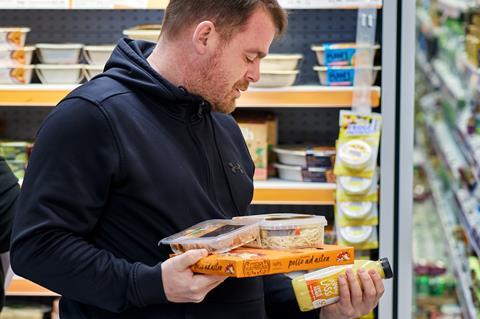
Further collaboration will be critical to unlocking further surplus in the years ahead, not least as the government is currently thrashing out the details of an ambitious new food waste strategy designed to realise its ambitions to halve edible waste by 2030.
Verner is optimistic that the right government support could be beneficial. “Government can inject momentum by helping us focus on that collaboration and innovation at scale,” she says. “I would ask that government avoids adding regulatory pressure in the current tough operating environment – but its convening power can really help us to test the risk and scale up these solutions.”
Stott agrees. “We need to recognise that government, businesses, social enterprises, cooperatives and charities have an equal part to play in this. It’s a challenge that requires a new form of collaboration and, already, we are seeing brave and visionary businesses and policy makers alongside social enterprises and charities saying we need to define a new way of delivering large-scale social impact at scale.”
As a result, “there’s increasing movement within the industry to recognise that the bigger challenges we face in terms of redistributing food require scale, capability, heritage and depth to be able to move that thing around the system and make the best value of it.”
Rather than have it end up in a small brown bin on consumers’ doorsteps.
To find out more, go to biffa.co.uk/whatiff