





Advantage Group’s latest survey shows supplier satisfaction holding steady – but underneath that, AI creep, staff turnover and a drop in the number of experienced buyers are straining the relationship
In June, The Grocer revealed the results of Advantage Group’s annual survey, in which grocery retailers scored their relationships with suppliers. Three months later, the boot is on the other foot.
Almost 5,000 individuals from 1,730 suppliers were asked to rate the retailers they work with on a sliding scale from –100 to +100 across 33 competencies grouped into six main business areas: Organisation & People; Category & Business Development; Retail Execution; supply chain; E-commerce; and Own Brand & Technical Management (see box below).
And as with June’s results, the picture that emerges is not wholly positive, even if overall supplier satisfaction is about the same year on year – improving slightly to 30, compared with 29 last year and 26 the year before. “The headline is that suppliers are equally as satisfied this year, but underneath that, there’s obviously different areas of adjustment,” says Andrew Johnston, MD of Advantage Group UK & Ireland.
The overall score of 30 that suppliers gave retailers was lower than the 33 that retailers gave suppliers earlier this year, and that gap was even steeper in the business area that suppliers rank as the most important: Organisation & People, where retailers scored just 31, compared with suppliers’ 43.
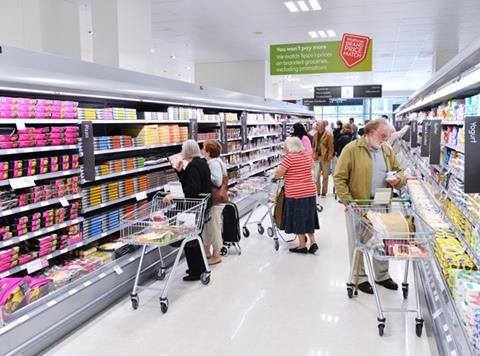
Eight out of 12 competencies were down year on year in this area, including Agility, Availability of People and Trust. This reflects a year where head office shuffles, redundancies and more have taken place widely.
“We can talk about people instability,” says Johnston. “And that inconsistency – perhaps a supplier not necessarily knowing what’s happening to their buyer, or who their buyer is, or the relative experience of their buyer – that loosens the relationships a little bit. So that’s where we see scores on things like Trust and Delivers on Commitments come down a bit year on year.”
For Ged Futter, director of The Retail Mind, “trust is the most important thing for a supplier with a retailer”. That makes its year-on-year decline – the joint-highest drop in this business area – particularly worrying. “You’ve got to trust that the relationships you’ve got are going to be honest and that if someone says they’re going to do something, then they will. And when you’ve got a merry-go-round of buyers, you’re never going to get any trust,” Futter adds.
Numerous suppliers, speaking anonymously, tell The Grocer that lots of movement of people is not conducive to a good supplier-retailer relationship. One describes gaps of “a few months” between buyers, where the supplier is left with “no idea” what’s going on. “It’s an abuse of power – they know they can get away with it, because no one dares complain about anything,” the supplier adds.
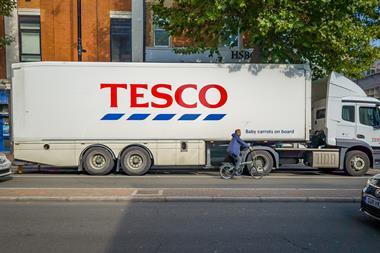
It was also no surprise to see Capability & Experience drop from 45 to 42 in the survey, if suppliers’ comments are anything to go by. “When I get taken out to see customers, there’s a lot of very young, inexperienced people,” says one. “There isn’t that knowledge or experience. So it becomes very transactional, because they don’t truly understand their products or categories. Across the trade, I’d say the level is quite low in terms of people. One exception is Tesco, which consistently has good people. They’re a notch above.”
The news was perhaps even worse in the Category & Business Development business area, which dropped from a low 18 to just 15 overall, making it the second-worst business area. While most competencies hovered around a similar score, Category Management dropped by eight points year on year from 24 to 16 – comfortably the biggest drop in the whole survey.
“What’s happening there is that suppliers aren’t necessarily seeing retailers show up with insight-led category management choices,” says Johnston. “So, they’re not understanding how and why a retailer might be making a range change, or knowing when it’s happening, and when it has landed maybe not knowing what the rationale is for some of the changes.”
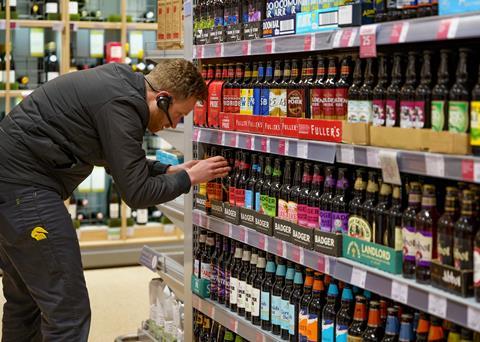
There’s certainly a general feeling that transparency in category management is not as high as it could be – and according Futter, that’s largely to do with this being “an area where there’s been a lot of cuts”.
Most retailers previously had quite large teams looking after a category, but that’s rarely the case any more. Some retailers are even using outside sources such as NIQ for their insights, whereas previously that expertise would come from the buying team.
The relative youth and inexperience of buyers nowadays also plays a part here – and they’re being given bigger areas to look after. When all these factors collide, it means “they don’t have time, they don’t have experience and they also don’t want to make mistakes”, says Futter. “So they’ll listen to what they’re being told, and if they trust their suppliers, they’ll take it as gospel.”
This chimes very much with the experience of suppliers. “They’re not originating proper insight and direction themselves,” says one. “They’re relying on their brands to do that and, increasingly, that’s getting skewed. Often there’s practically no category knowledge there because people move so much. They go from wine to, I don’t know, shampoo. And yet you have to dance to their tune. This is the problem. Whatever they say, you have to react to and you can’t complain.”
Case for the execution
The strongest-performing business area in the survey was Retail Execution with 41, though it was likely aided by having only two competencies ranked: Planogram Integrity and Instore/Online execution. Both of these improved year on year, to 40 and 41 respectively, but remain down on how they were ranked in 2024. Johnston points out that despite improvement, beneath the scores, there’s “a high divergence” between retailers who do this extremely well and others who don’t.
“You can see when you go into stores,” says Futter. “Morrisons and Asda are very poor. Their execution, their standards in store, are woeful. But when you look at Waitrose, I see them now as a retailer that’s really got to grips with what they are again. They’ve gone back to what they do well, which is premium own-label food.”
Suppliers confirm that standards vary massively on these two competencies depending on the retailer, with promotional execution a particular area of weakness. “If you’re talking about paid-for promotions, like barkers or things like that, it’s diabolical. The policing of what you paid for is effectively non-existent, and your ability to challenge or complain is practically zero,” says one. “Increasingly, brands just let it go.”
Impressions of Planogram Integrity were more varied. One supplier says that “generally, they’re well implemented”. But another describes planograms as “some completely mysterious thing you can never, ever get to the bottom of”.
“Often, you’ll see your sales results and one store is selling 100 units a week and one is selling three,” they add. “And you know perfectly well that when you go to that store, you’ll find the planogram is wrong: you’ve been allocated the bottom shelf with a single facing when you’ve been told you’ll have four facings at eye level. I’m painting an extreme picture, because there’s everything in between as well. It’s the wild west.”
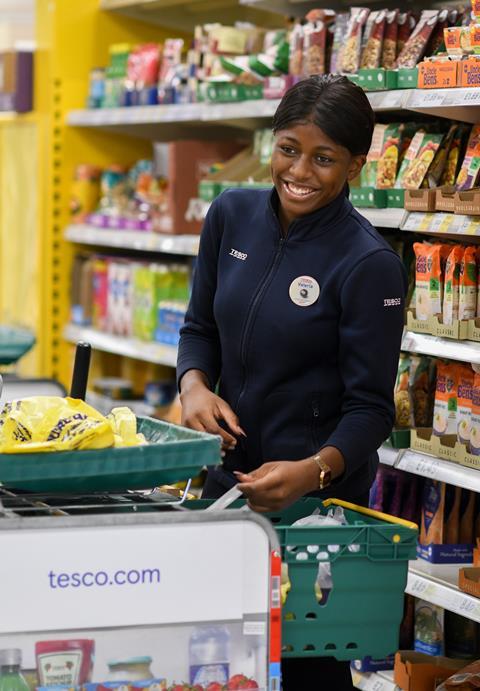
Best in class retailers
Overall #1 Retailer:
Tesco
E-Commerce:
Ocado
Supply Chain:
Waitrose
Sustainability:
Marks & Spencer
Retail Execution:
Tesco
Innovation:
Marks & Spencer
People:
Waitrose + Tesco
Own Brand:
Waitrose + Tesco
Supply Chain was another business area that scored relatively well, though its overall total of 37 was the same as last year. The highest scoring competency here was Efficient Invoicing Process, which maintained last year’s score of 43, while the biggest improvement came in Forecast & Demand Planning, which was up from 23 to 26, though that was still comfortably the lowest score in this business area.
“What this talks to is there’s a reasonably positive level of dialogue going on between retailers and the supplier base,” says Johnston. “But what’s noticeable underneath is there’s been a swing away from human-to-human contact. This is the one area where we hear a lot more about AI use. A lot more suppliers are saying: ‘My contacts moved, I don’t have the same contacts year on year.’ So again, quite a bit of people instability.”
Futter says the move towards AI “does sound familiar to me”. But he points out that, even though Forecast & Demand Planning scored lowest in this business area, “one positive in terms of forecasting is that in some categories, particularly in produce and fresh, you’re getting longer-term agreements from some of the retailers with the supplier… so that helps”.
Suppliers broadly agreed with the sentiment that human-to-human contact was being lost, though not all had experienced too much AI creep. “There’s no one to actually speak to,” comments one supplier. “You’re having to send off emails all the time. And when something’s urgent, you don’t use email – you don’t call the fire brigade with an email.
“Often in supply and logistics things need an urgent response, and email just doesn’t work, but you can’t actually speak to anyone. Again, this is really down to the fact they’ve cost cut, reduced resources, and there just aren’t the people there to manage it.”
Another supplier reports that, in their experience, when it comes to waste, “you get a lot of really weird outcomes. We often get stores with 400% waste. Or where they’ve more waste than they had stock. A lot of the systems are really flawed. They’re ancient – I see the interfaces. They look like much of the industry is still going around on Windows 98 or something.”
E-commerce struggles again
There’s one area of the supplier-retailer relationship that stands out even in a relatively weak set of results: E-commerce. As a business area, its score of 12 is the lowest in the survey. And the same was true in June when retailers ranked suppliers. It seems there is quite a gap between the two when it comes to e-commerce.
“Perennially our lowest clutch of scores and both sides of the table are saying it,” Johnston says. “Suppliers are saying: We don’t know who to talk to. We’d like to know how we can activate our brands more and get the basics right online. Retailers are saying: We think you’ve got a lot more you could be doing with us. So there’s a natural tension here and the two need to really flush that one through with each other.”
Again, digging beneath the results, there is distinctiveness, with big suppliers scoring highly and smaller ones struggling to get traction.
“This is a question of resource,” says one supplier. “Go to Unilever and there will be a department of e-commerce people. Here, it’s people wedging it into the rest of their job. Even so, it’s very difficult to know what we’re doing in Tesco, Sainsbury’s. There’s no transparency. There’s no team to really speak to.”
Another adds: “The best way to get a response out of an online team is to get a consumer to complain about something.”

The root of the problem, from both perspectives, seems to be that neither side cares that much about e-commerce – because sales are simply much lower.
“For suppliers, you’re not going to move the dial by getting your e-commerce sorted,” says Futter. “And retailers don’t make money on it: it’s only Tesco that is making a little bit. So you don’t want to be absolutely flogging it, because all you’re doing is making a bigger hole in your P&L.”
Own Brand & Technical Management was the business area that improved the most year on year, with its score increasing from 35 to 40. It also provided the two highest-scoring competencies: QA & Technical Support and Technical Audit Visits, both of which scored 48.
That technical side of the relationship “comes up most powerfully” within this business area, says Johnston, with suppliers reporting more site visits from retailers – and those visits resulting in productive encounters that help the partners “be better together”.
“The technical-to-technical relationship is powerful and positive,” he adds. “But private-label suppliers are also crediting things like innovation. Noticeably, private-label companies and their employees are more satisfied than branded.”
That should come as little surprise, according to Futter, as there is “far more proper collaboration” between retailers and private-label suppliers than their branded counterparts. “There’s that growth in own label because that’s where a lot of the price fighting has been taking place, and it’s only by working together that you can really improve quality and keep costs low,” he adds. “When things are difficult, you have to work better with your own-label partners. So, it’s obviously in retailers’ best interests to be productive partners in that area.”
Consistency is key
Overall, there’s much for retailers to ponder in this year’s survey. When suppliers are asked what sets their top-rated partners apart from others, it usually comes back to Organisation & People, says Johnston.
Futter believes that cost cutting has hit supermarkets hard in this area in recent years. “Experienced buyers are expensive. So, when you’re looking at costs, you think: ‘Oh, I’ll get rid of them and replace them with junior buyers who are half the price.’ That’s been happening for the past 10 years. But when you do that, you lose all that experience. And that experience saves you money in the long run, because they predict and get ahead of issues before they go wrong.”
One supplier says the biggest issue they have is “the power imbalance, because it means that if a buyer decides not to give a shit, they can get away with it. There’s contempt, because they’re allowed to not give a shit, but you’re not allowed to not give a shit.”
Another supplier said the “most important factor – and the one that creates most frustration” is communication. “There’s no question some buyers only respond or speak to you when they need something, so there’s a bit of one-way traffic. However, I know they don’t have enough time. The downsizing has gone too far. There’s a clear lack of resource in buying teams, but that can be a false economy, because if you spend and engage with a supplier, you may get something out of them.”
What suppliers want most is consistency on the other side of the table. They’re looking for a person they know, a person they’ve been working with for a period of time, a person where there’s continuity and, ideally, experience. They want a retailer that approaches things with a consistent lens and doesn’t change things at the last moment. They want open and transparent communication, so even when there’s tough news, being honest about it and taking ownership of things. And they would love it if retailers were sharing more data and category insight.
“The big word we’re using at the moment is consistency,” says Johnston. “Because consistency breeds and enables trust. A supplier who knows their retail counterpart is operating in a consistent and predictable way can go back to their head office and secure things for them. Our huge belief is that when two businesses are aligned, they’ll grow together.”



No comments yet