





New CPI inflation figures today prompted last-ditch industry calls for the government to help by delivering a much-needed cost-cutting budget on 28 October.
As headline inflation rose to 3.5% in the 12 months to September and food inflation held steady at 1.3%, British Retail Consortium (BRC) lead economist Harvir Dhillon said: “Retailers and government are aligned on the need to tackle the high cost of living, and next week’s budget provides a crucial opportunity to do just that.”
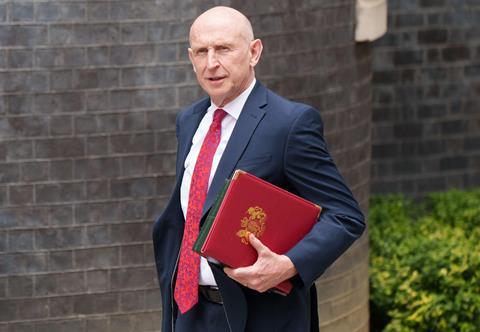
So, what does the food and retail industry need from Chancellor John Healey on 28 October?
Business rates
Among the biggest fears as the budget approaches has been the possibility of a new warehouse tax, which – like the business rates surtax for high-value properties ushered in at last year’s budget – would also hit large shops. The warehouse tax plan has been a persistent looming spectre since Andy Burnham repeatedly floated the idea before taking the keys to No 10 in July.
Healey is said to have ruled out such a plan last week after both M&S chief Stuart Machin and John Lewis chairman Jason Tarry vented their alarm by penning newspaper articles.
But questions hang over how, then, he will pay for a 20% business rates discount for pubs and live music venues, and for lifting the rates burden entirely from 75,000 small, independent businesses, both of which have been promised.
Along with measures to make vape and betting shops pay more, Healey is expected to announce that £1bn can be raised from a clampdown on VAT avoidance by third-party sellers on online marketplaces.
Online marketplaces are already liable for collecting VAT on behalf of overseas sellers, and a consultation this summer proposed extending this to UK sellers. It aims to catch overseas sellers using UK shell companies to avoid VAT.
All well and good – except Amazon-commissioned analysis by Flint Global last year estimated only £700m could be raised from such a clampdown.
Alvarez & Marsal MD and VAT specialist Mairéad Warren de Búrca says Healey’s plan faces “a significant practical problem” because “businesses often sell across several online marketplaces, meaning no single platform can accurately establish whether their total turnover exceeds the VAT threshold”.
“I don’t think anyone can fully calculate the VAT lost to the exchequer by overseas companies masquerading as domestic companies,” she adds.
In any event, assurances that Healey will not revert to a warehouse tax are not enough for retailers, who also want business rates to be frozen and shops to be removed from the existing high-value surtax. They were among the demands of a delegation of bosses from major retailers, including Machin and Sainsbury’s CEO Simon Roberts, who attended No 11 with the BRC to make their case to Healey last week.
“The 2025 budget put embattled high streets under further strain with higher business rates,” BRC CEO Helen Dickinson wrote in the Telegraph ahead of the meeting.
Employment costs
The high-value surtax is not the only recent budget measure that retail is demanding Healey reverse. Also high among demands of the delegation was raising the threshold at which employers pay National Insurance. Lowering it in the 2024 budget had led to “122,000 retail jobs being lost in two years”, Dickinson said.
Lamenting the demise of the Saturday job, Machin – who also wrote to Healey directly – said the Chancellor must “make sure the Employment Rights Act doesn’t ban” such roles “by treating normal weekend shifts as ‘low hours’ contracts”.
Was Healey all ears to the suggestions? “The Chancellor recognised these pressures, and we had a positive discussion about our shared ambition for growth and tackling youth unemployment,” says Dickinson. “His first budget is the chance to turn that ambition into action by easing costs, making tax fairer and unlocking investment.”
Health regulation
Supermarket and supplier bosses have also ramped up calls ahead of the budget for ministers to can a series of existing and future regulatory costs around health and packaging.
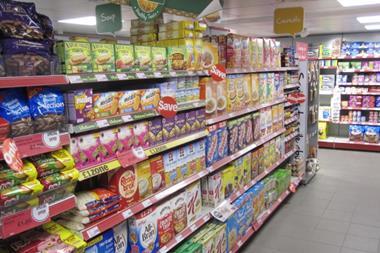
Top of the list is the government’s delayed pledge to bring in an updated nutrient profiling model (NPM). Doing so would see tens of thousands of products reclassified as high in fat, sugar or salt (HFSS), moving the goalposts on advertising restrictions that have only been in place since January.
Industry chiefs wrote to the prime minister this week calling for the move to be scrapped, arguing it would lead to price increases of up to 60% on products such as cereals, yoghurt and smoothies.
Companies including Asda, Coca-Cola, Mars, as well as major commercial broadcasters, claimed the introduction of the updated NPM would have a devastating impact on ad revenues and prices.
“The government committed to a five-year statutory review before revisiting this framework,” says the letter.
“Abandoning that commitment mere months after implementation is poor regulatory practice by any measure. At a moment when growth is the government’s stated priority, and when every part of the economy needs the confidence to invest for the long term, this proposal adds fresh uncertainty and cost to an industry that itself underpins that growth. We do not believe this is a sensible or helpful course, for our industries or for the country.”
Jim Bligh, head of food policy at the BRC, tells The Grocer: “It is crazy for a government that says it’s prioritising the cost of living crisis to be planning to land huge extra regulatory costs on manufacturers which will then result in higher costs on the shelf.
“Now is not the time to bring in the new NPM. The government needs to sit down with industry and look again at this.”
Last month The Grocer revealed the industry had called on government to pause plans to update the nutrient profiling model for at least five years, claiming “cost heavy” health regulation was killing investment.
Research among its members by the Food and Drink Federation (FDF) and Argon & Co found nearly 70% of companies said regulatory certainty was important in deciding whether to embark on supporting healthier product innovation.
Packaging taxes
When it comes to packaging taxes, the certainty industry bosses would like is for crisis-hit schemes to be scrapped altogether.
As reported by The Grocer last week, the government has already announced a major bailout of the packaging compliance fees system after producers were left with soaring bills for a range of materials. Retailers and producers have welcomed the intervention while calling on the government to phase out PRNs completely.
M&S boss Machin wants Healey to go further still, by scrapping the UK deposit return scheme (DRS) and extended producer responsibility (EPR). DRS is “patently ridiculous”, he said. “Next October, you’ll pay 20p more for every bottle or can of drink. To get it back, you’ll have to lug bags of empties back to the shops – despite already paying your council for collections.”
M&S’s glossy stores will “need to rip out shelves to make space for monstrous recycling machines”.

And EPR was “sold as investment in recycling” but is simply “a tax of almost £2bn on food and drink”.
“In April, M&S had to pay an extra £40m in one go. Scrap it, and shoppers will feel the difference.”
The FDF is not quite so ambitious in its expectations, but demands the government at least allow breathing space to adjust to DRS and EPR by simplifying other burdens.
“Government must tackle the mounting cost and complexity of regulation,” says FDF director of sustainability and growth Balwinder Dhoot.
“Simplifying packaging requirements as businesses transition to extended producer responsibility and the deposit return scheme, and allowing recent HFSS changes time to bed in before introducing further changes, would give manufacturers the certainty to invest in innovation, sustainability, health and people.
“This budget is a defining moment for the government to back growth and reindustrialisation by supporting the businesses that keep the country fed and sustain local economies across the UK.”










No comments yet