

For years now, June has been a kaleidoscope of Pride-themed marketing campaigns and rainbow logos. So why is 2026 feeling strangely low key?
This weekend, central London’s streets will be awash with colour as an estimated 1.5 million people gather for London Pride. Over the past decade or two, June became a very bright arms race of sorts, with fmcg giants seemingly competing to out-rainbow one another. In our supermarkets and on our screens, Pride month has become synonymous with limited-edition launches, marketing campaigns and social media pronouncements, all of them festooned with the famed rainbow flag.
Yet in recent years, many such displays have become more subdued. According to a 2025 analysis by The Guardian, many of the UK’s biggest brands – including Unilever and British American Tobacco – had dialled back public support for Pride celebrations, with social media mentions of Pride dropping by 92% since 2023.
The companies claimed that social media posts alone do not reflect the breadth of their approach. But in a world where hostility to diversity and inclusion has become weaponised and widespread, Simon Blake, chief executive of Stonewall, said at the time that it was in the best interest of companies to send “clear signals” of support.
So with London Pride upon us this weekend, how have fmcg giants been showing up for Pride this year? How has support evolved and why? And how can fmcg companies support the LGBTQ+ community better – during Pride and beyond?
British supermarkets have long been firm supporters of Pride, and this year Waitrose is marking the event with its ‘Love Wins’ tote bag, donating 10% of all proceeds from sales of the bag to LGBTQ+ charities via the John Lewis Foundation. Its Pride in Partnership network has also attended events in Glasgow, Leeds and Norwich, while stores have been hosting more localised celebrations.
Meanwhile, Co-op will attend more than 30 Pride events this year, from major parades in Brighton and Manchester to community celebrations in Hull, Cumbria and the Isle of Bute. The convenience retailer’s activity is shaped by its LGBTQ+ colleague network Prjsm. “The focus is on ensuring our activity is locally relevant, colleague-led and rooted in the communities we serve,” says a Co-op spokesperson.
Pride limited editions:
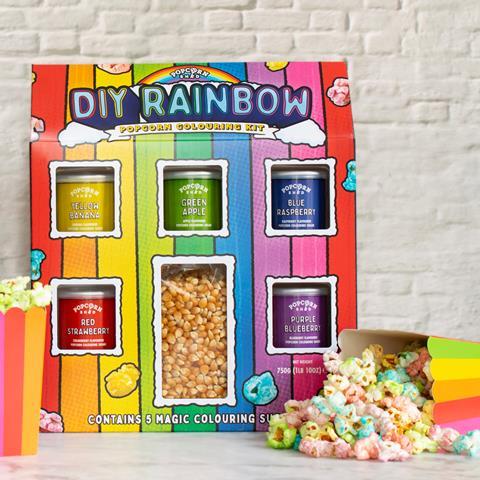
Popcorn Shed
Popcorn Shed launched a DIY Rainbow Popcorn Colouring Kit (rsp: £25/750g), giving popcorn lovers everything they need to create bright, colourful, rainbow popcorn at home.
Throughout June, the brand donated 10% of website sales to Give Out, an LGBTQ+ charity supporting activists and organisations around the world.
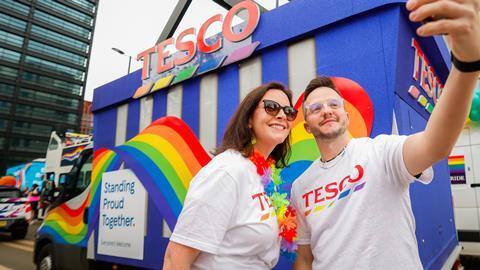
Tesco has been a key partner for Pride celebrations for years, donating more than £1m to LGBTQ+ charities since 2020. And this year will be no different. It will contribute £100k to partners including Just Like Us, Rainbow Mind, Not A Phase and Proud 2 B Parents, while Tesco and its colleagues will be attending more than 40 Pride events across the UK, including London, Bristol, Glasgow, Leeds and more. The retailer says its approach “grounds Pride commitments in tangible, year-round support rather than a single marketing campaign”.
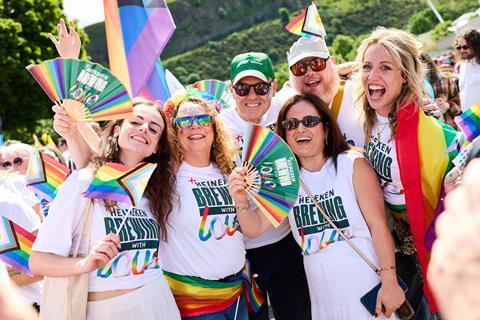
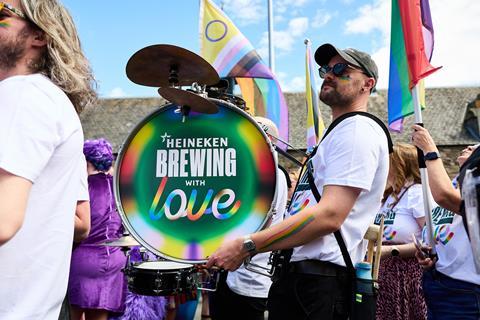
The UK’s biggest suppliers are also getting involved. Coca-Cola Europacific Partners has placed its Absolut Vodka & Sprite at the centre of its Pride activity, with the RTD partnering with events in Manchester, Leeds, Blackpool and Glasgow. Meanwhile, Heineken UK kicked things off with Brewing Inclusion, a town hall all about career inclusion, ahead of Edinburgh Pride. Then 80 staff came together for Pride itself, marching with a brass band, a piper and Tiara Skye, the only Scottish winner of RuPaul’s Drag Race.
Nestlé UK & Ireland is also getting involved, supporting local celebrations in York, Dublin and Crawley. The company says this comes alongside embedding inclusion internally through policies, safe spaces and education, “creating an environment where LGBTQ+ colleagues feel respected, supported and able to thrive”, according to a Nestlé spokesperson.
‘Noticeably quieter’
Clearly, many fmcg giants remain active this month. However, overall, Pride feels “noticeably quieter across fmcg this year”, with fewer rainbow logos, limited-edition products and overt activations, says Paul Greenwood, head of cultural strategy & insights at We Are Social.
Larissa Persons, head of strategy at sustainability consultancy Good Business, goes further. She thinks there has been a “significant dialling back”, with less tokenistic activity and more cautious public messaging.
“We’re seeing a decrease in the willingness of companies to shout about what they’re doing publicly, even if they’re still doing it”
“We’re seeing a decrease in some cases in the willingness of companies to shout about what they’re doing publicly, even if they’re still doing it,” she adds. “[It’s] sort of like a green-hushing equivalent for social issues, but that’s not uniform. There are still some companies that are willing to put their name out there, but perhaps less than before.”
One brand that is certainly out and proud is London-based olive oil brand The Gay Farmer. Its founder, Mark Dyer, says he has “absolutely” noticed a pulling back from fmcg giants in recent years: “Five or six years ago, many large brands were becoming increasingly visible during Pride, often launching limited-edition products, changing packaging and investing heavily in sponsorships and events. More recently, we’ve seen some brands become more cautious.”
Pride limited editions:
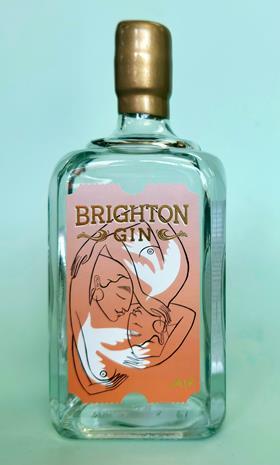
Brighton Gin
Brighton Gin celebrated Pride with a limited-edition bottle design by LGBTQ+ artist Amy Isles Freeman. Proceeds from sales of the bottle will be donated to Lunch Positive, a Brighton-based charity providing free, nutritious hot meals and community support for people living with HIV.
The bottle is available on its DTC webstore and selected independent retailers across Brighton & Hove, including Quaff Wines, The Wine Barrel and Seven Cellars.
That caution doesn’t necessarily mean fmcg brands are abandoning Pride altogether; often their approach is just evolving. The LGBT Foundation says some brands are shifting their focus inward by prioritising inclusive workplace cultures and supporting LGBTQ+ employees more meaningfully.
“This quieter approach can lead to more authentic engagement and ultimately puts brands in a stronger position to show up credibly and consistently when they do engage publicly,” says Sarah Miguel, director of fundraising & marketing at the LGBT Foundation.
In some ways, this shift is positive, says Good Business’ Persons. Companies have matured and understood that unless they can withstand scrutiny and are confident they’re doing the right things internally, they shouldn’t show up externally. Previously, there was “a desire to be seen to be involved in Pride without necessarily having the policies, processes and systems in place”.
Businesses are also dealing with much more external pressure. From the rollback of DEI initiatives in the US to increasingly politicised rhetoric around LGBTQ+ rights in the UK, numerous social and political headwinds have made brands more cautious. In some cases, this has led to reduced or withdrawn public sponsorship, creating a “significant” funding gap for Pride events and LGBTQ+ charities, reveals Miguel.
At the same time as brands are trying to navigate a more polarised world, consumers are asking tougher questions. Greenwood says they are more alert than ever to ‘rainbow-washing’ and expect brands to prove support beyond symbolic gestures.
“In many ways that’s a healthier conversation because it places greater emphasis on meaningful action rather than seasonal marketing,” says Dyer. “The biggest mistake is treating Pride as a marketing exercise rather than a community issue. It’s about creating opportunities, backing diverse founders and supporting the community long after June has ended.”
The Gay Farmer, for example, runs its Progressive Pride charity initiative all year round, with the brand donating £1 from every special rainbow-adorned ‘queer can’ to AKT, a charity supporting LGBTQ+ young people facing homelessness or hostile living environments.
“I’d like to see brands invest in long-term partnerships with LGBTQ+ organisations, support community initiatives throughout the year, and use their platforms to amplify LGBTQ+ voices year-round,” says Miguel. “This could include working with LGBTQ+ suppliers and creators, as well as supporting charities that often lack visibility and funding.”
Pride limited editions:
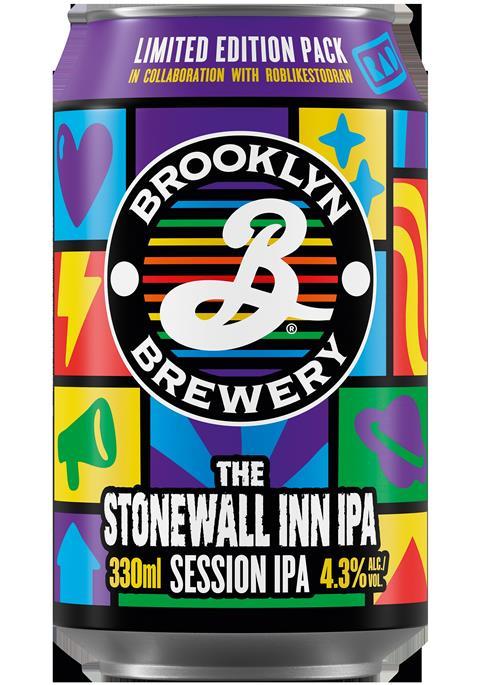
Brooklyn Brewery
Brooklyn Brewery unveiled a limited-edition Stonewall Inn IPA design in a bid to champion its long-standing commitment to the LGBTQ+ community.
At the heart of the launch is a new can design created in collaboration with emerging artist @RobLikesToDraw and the Queer Youth Art Collective. The design transforms the Stonewall Inn IPA into a bold canvas celebrating queer creativity and expression, says the brewery.
A number of other LGBTQ+ founded brands also “demonstrate what long-term commitment looks like”, Dyer says. Brands such as Happy Endings, Queer Brewing and Brighton Gin don’t just appear during Pride month, they “actively celebrate and support LGBTQ+ communities throughout the year”.
“Brighton Gin’s permanent Progress Pride bottle is a great example of a brand embedding LGBTQ+ visibility into its range all year round rather than treating Pride as a seasonal campaign,” Dyer adds.
While being able to demonstrate meaningful action and engagement is increasingly a prerequisite for brands looking to fly the flag for LGBTQ+ causes and events, the simple power of visibility should not be underestimated, according to Greenwood.
“Seeing Pride represented in supermarkets across the country can definitely help normalise inclusion and create a sense of belonging,” he says.
Indeed, Pride can also be an opportunity for brands to act with greater confidence. Outvertising is a UK-based advocacy group for LGBTQ+ inclusion in marketing and advertising. It says that, contrary to the presumptions of some brands who have dialled back overt support for Pride, inclusive advertising featuring LGBTQ+ people does not negatively impact brand performance and can in fact strengthen trust and resonance with modern audiences.
“This should give brands reassurance that showing up authentically and visibly is not only the right thing to do; it also makes commercial sense,” says Miguel.
“When Pride first started, you’d never have imagined that you’d see fmcg corporates involved in the way they are”
While it can sometimes be hard for larger fmcg companies to navigate the line between showing support and rainbow-washing, Stonewall’s Blake tells The Grocer that people should not lose sight of the bigger picture. After all, he points out, 50 years ago none of this would be happening.
“It’s really important for us to celebrate and to recognise that change that’s been seen in just a couple of decades,” he says. “When Pride first started, you’d never have imagined that you’d see fmcg corporates involved in the way they are. There’s been enormous progress, much more engagement, which I don’t think any of us really ever imagined would happen.”
Pride in 2026 may look quieter, but for the brands doing it right, that’s backed by more than a rainbow.


No comments yet