

What if your brand never even makes it into the basket? That’s the reality as AI assistants begin to shape everyday grocery decisions.
Instead of browsing aisles or scrolling category pages, shoppers are starting to ask simple questions: what’s the best olive oil, which cereal is healthiest, what should I cook tonight? And increasingly, they get a single answer.
By the time that answer appears, the comparison has already happened. AI has filtered the market – weighing price, ratings and availability – and deciding what is worth considering.
In effect, the basket is being built before the shop starts. Competition has moved upstream.
For decades, grocery competition has been built on visibility. Win shelf space, stand out in-store, rank highly in search, and convert at the point of purchase. The logic was simple: get noticed, then get chosen.
AI breaks that model. It doesn’t present options, it curates outcomes. Comparison is no longer done by the shopper, but by the system.
The risk of invisibility
That creates a new risk for fmcg brands: invisibility. A product can be well distributed, competitively priced and highly visible, yet still be absent from AI-generated recommendations.
And this shift will favour retailer brands. AI systems prioritise what they can verify – value, availability, ratings and clean product data.
Ranges such as Tesco Finest or Aldi’s Specially Selected are built on consistent quality, strong value perception and tight integration with retailer data. In an AI-mediated shop, those advantages become decisive.
If AI is optimising for value and reliability, own label becomes the default answer. The risk for branded fmcg is no longer just losing share on shelf, but disappearing from the recommendation entirely.
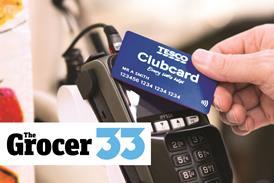
This also reshapes loyalty. Loyalty no longer lives in the shopper’s mind, but in data. Programmes like Tesco Clubcard and Sainsbury’s Nectar generate signals of what shoppers consistently choose – determining what AI recommends.
Loyalty is no longer what customers feel. It is what systems can verify.
This adds a new stage to the decision journey: qualification. Before a brand can persuade, it must be eligible. If AI cannot interpret or validate a product, it won’t recommend it – and in grocery, no recommendation means no sale.
And this shift is already moving beyond recommendations. Earlier this year, Mastercard completed a live agent-led transaction, allowing an AI agent to complete a purchase on a customer’s behalf.
When AI is not just recommending products but buying them, exclusion becomes even more consequential.
This shifts where brand building matters. The winners will be brands that generate signals AI can trust, not just stories shoppers like.
Because in an AI-shaped marketplace, preference only matters if you are considered.
Grocery has always been a battle for visibility. AI moves that battle to the recommendation layer.
And in that world, brands won’t lose at the shelf. They’ll lose before they’re even seen.
Nicola Nimmo is head of customer engagement at Cheil








No comments yet