



Selling your business to a big corporate is, for most in fmcg, the ultimate dream, driving founders onwards in the face of seemingly insurmountable challenges. For Fuel10K’s Barney Mauleverer that dream is now a reality, following a £34m deal with Premier Foods in 2023. But what to do with all this newfound spare time?
Mauleverer’s answer was to dive back into the madness and build something new. And so, in 2024, Future of Food was born. A platform to encourage the next generation of entrepreneurs in food to be the change the industry desperately needs.
If that wasn’t enough to keep him busy, Mauleverer also planned an expedition to the South Pole – which he reached in January this year, following the successful inaugural Future of Food competition in November 2024.
His opening address at last week’s Future of Food event at London’s Royal Geographic Society gave the 700-plus attendees an insight into his Antarctic adventure and his experience witnessing firsthand the impact of a changing climate on this most remote of environments.
But far from being another depressing reminder of the state of the planet, Future of Food was a day full of reasons to be cheerful and inspiring stories from 16 finalists already making an impact on the industry.
Reasons to be cheerful
Despite the serious message behind Future of Food (highlighted by guest speaker – and chair of the judging panel – Henry Dimbleby in a full suit-and-tie combo), the event was far from po-faced.

Musician-turned-farmer Andy Cato, of Groove Armada fame, walked on-stage to deliver a keynote speech to the salacious beat of ‘I See You Baby’ (“shaking that ass, shaking that ass”); Miranda Ballard of NIQ showcased the power of AI-driven brand insights (as well as some serious amateur dramatic chops as she walked an imaginary trolley down the supermarket aisles); and Dimbleby gave his engaging – and sweary – take on where the industry is headed (hint: GLP-1s are coming for volumes).
Cato, in particular, underscored the urgent need for transformation within global food systems as he told the story of his journey from superstar DJ to regenerative farmer. The 20-minute speech also squeezed in a whistlestop history of agriculture and its far-reaching impact on soil health and biodiversity.
Yields have increased exponentially, yet profitability in farming has eroded dramatically amid a vicious cycle of agri-chemical consumption leading to soil degradation and feeding into a need for further chemical R&D.
The result? Nothing short of a disaster for the natural world, especially in the UK, with farmlands emptying of birds such as yellowhammers and turtle doves and insects disappearing at a rate that should alarm us all.
It is something even Jeremy Clarkson has come to recognise. The former Top Gear host wrote a brilliant cover story for The Sunday Times magazine just this weekend calling for more to be done to protect Britain’s birdlife. And if Clarkson’s Farm is making more room for nature, maybe it will inspire others to do the same.
Disrupt the system
Cato’s Wildfarmed is certainly leading the charge in advocating for farming with nature, not against it. There is room to feed the nation and give wildlife space: the two need not be mutually exclusive.
“I’ve seen again and again, first-hand, that given half a chance nature quickly comes roaring back,” Cato said. “Adjusting economic incentives to include nature just has to happen.”
The devastating effects of wild weather hitting battered ecosystems are already being felt as commodities such as coffee, olive oil and cocoa soar to record highs.
If the Future of Food is anything, it’s a clarion call for not accepting the status quo, and instead imagining how things could be – indeed, how they ought to be.
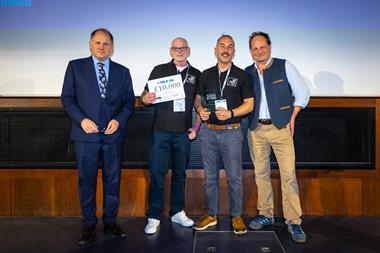
This was something all 16 finalists showcased in abundance, from gold winner No More Lids offering a solution to end the hideous waste of plastic takeaway cups (this must be the future for McDonald’s, Coca-Cola, Costa, sporting events, festivals and so on) to the aforementioned Wildfarmed (silver) and KluraLabs (bronze), whose smart packaging tech reduces food waste by extending shelf life at the same time as allowing manufacturers to take out additives.
The quality on show gave the distinguished expert judges, led by a former government food tsar and including a lawyer, a fmcg CEO, a banker, a retail buying director, an industry consultant – and me – a massive headache in whittling the finalists down to just three winners.
Governments, retail giants and multinationals have finally woken up to the fact the food system needs to change, but they are incapable of moving at speed. So, it is left to the startups and challengers to shake things up.
Dimbleby said one supermarket CEO he spoke to reckons the next decade will be the most disruptive for the industry since the war.
His message to the packed auditorium? “Now is the right time to set up businesses to disrupt the system.”
And Mauleverer is building the platform to recognise and inspire those future innovators.
No comments yet