Following in the footsteps of almost every other British prime minister in recent memory, Keir Starmer didn’t mess around burning through the goodwill of farmers. Inheritance Tax changes did most of the damage, but the abrupt closures of subsidy schemes hammered the final nail into the coffin. As a result, almost two-thirds of the public now think Labour is unfairly neglecting countryside communities, according to research published last year.
This clearly poses difficuties for the (admittedly small) group of rural Labour MPs, who are now scraping the bottom of the proverbial barrel for ideas they hope will ease tensions at their presumably awkward meetings with agricultural constituents.
As we have seen this week, that means returning to the old political battleground of food labels. This time, more than 40 MPs have called for the government to require clearer country-of-origin labelling on a wider range of meat products, making it clear whether the animals were reared in Britain or overseas.
The proposal is aimed particularly at processed foods such as sandwiches, sausage rolls and ready meals, where provenance can be far less obvious than it is for fresh meat.
Country of origin
It may seem strange for those of us who give little thought to a small sticker on the back of our food, but Brexit fallout has consistently shown that nothing can provoke outrage quite like a supermarket telling you where your chicken is from.
And to be fair, the current rules can seem contradictory. A roast chicken must prominently display the country where it was reared, yet there is no such requirement for even minimally processed meats like sausages, burgers or salami.
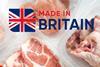
Even more obtusely, as the Telegraph noted this week, bacon that is cured and packed in the UK can be labelled as ‘British’ even if the pork was originally imported from Europe.
Consumers say they are in favour of change. A public consultation in 2024 found 90% of shoppers think it is important to extend mandatory country-of-origin labelling to minimally processed meats. The same goes for 83% of businesses – indeed, many said this would help them support domestic farmers by buying British-grown produce. Exactly what the MPs want.
But this is already broadly possible. Most supermarkets are only labelling meat pies as British when the meat clearly comes from British farms with British certification. This is, therefore, primarily a question of whether Danish-reared bacon, for example, should be clearly labelled with the Denmark flag rather than none at all.
A modest boost
There is a well-worn playbook of negation for situations like this. First is the argument that very few shoppers really care anyway – sure, they may say they want to buy British, but when it comes to the crunch only a handful will bother to check.
Then comes the question of cost and complexity. It is fairly easy to label a single cut of meat or a piece of fruit, but when ingredient lists begin to grow that becomes far more complicated. Many manufacturers change their sourcing throughout the year; printing new labels every time would be tricky to say the least.
Both points are fair but flawed.
On the first, it is irrelevant whether or not someone puts their money where their mouth is. GDPR laws give the public the power to request information held on them – this was not introduced because of clamouring demand to know every detail of our utilities accounts. It was about the having the fundmental right to know. If Tesco knows where a food is produced, does the person eating it not also have a right to know this information?
The affordability argument also falls short. A government analysis found in 2024 that mandating animal welfare labels on all goods would cost supermarkets around £2m – an average of £179k each. Country-of-origin labels would be a similar process.
While that cost would inevitably be higher if the rules were extended to cover every ingredient in a beef lasagne or a pepperoni pizza, no one is calling for that (yet). And new technologies mean this information doesn’t even need to be printed on the label – it can simply be available through a QR code.
Ultimately, though, it feels as though all this is little more than a distraction. Country-of-origin labels are not going to save British farming – and it is questionable how much difference they would make. At best, clearer labelling would give shoppers more information and farmers a (very) modest boost.
But with the industry facing far bigger challenges, from Inheritance Tax changes to profitability pressures and the loss of support schemes, it hardly feels like a priority right now, especially given the perilous state of British agriculture. A less charitable observer might suggest those 40 MPs have more pressing issues to focus on.


No comments yet