





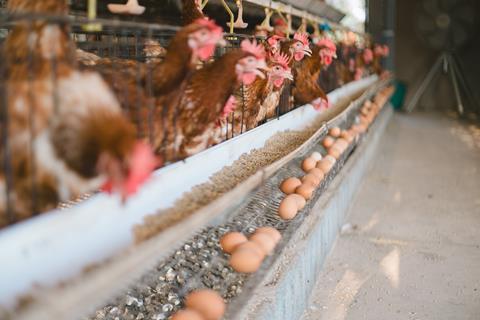
In December 2025, I stood inside an industrial-scale enriched colony cage facility. The machinery was deafening, the ammonia stench overwhelming. Thousands of dejected, half-bald birds with deformed beaks and overgrown claws, jostling frantically for inches of space. If you’ve ever spent time with rescued hens living a genuinely free-range life, you’d understand why I call these places hell.
Fast-forward to now. The Defra consultation on a proposed cage ban has closed. Our undercover investigation into Heal Farms has kicked off a consumer egg awareness campaign, Cracked, which will be running throughout 2026. And the farming sector has come out in staunch opposition to virtually every welfare reform Labour has dared to propose.
The cage ban is just one measure in the government’s Animal Welfare Strategy for England. But almost all of them have provoked ire from an industry that would prefer if things stayed exactly as they are.
Industry vs the public
If you’re among the 94% of British people who oppose keeping hens in cages, you might be surprised to learn that the National Farmers’ Union is firmly in favour of it. NFU National Poultry Board chair Will Raw put it plainly: “The NFU opposes a ban on enriched colony cages.”
The NFU’s justification? Converting to non-cage systems, the NFU says, would reduce consumer choice, be more expensive and take longer than Defra’s estimates suggest, meaning some UK caged egg producers may leave the sector. Underpinning all this is the bold claim that enriched cages enable “key natural behaviours” – one of the five freedoms enshrined in animal welfare law.
Defra disagrees, noting that caged hens “do not have full freedom to express normal behaviours”. Our Heal Farm footage speaks for itself.
No relief for lambs
What about reducing the routine, acutely painful castration and tail-docking of lambs? The Government’s proposal is simple: if these procedures must happen, pain relief should be given regardless of the animal’s age. You might think that’s perfectly reasonable (you’re probably even appalled by the idea of any animal having body parts removed without anaesthetic) – but the NFU Livestock Board disagrees.
It has formally objected to the proposal, arguing that castration and tail-docking should remain legal without anaesthetic or analgesic for lambs up to seven days old – as most currently are – citing a shortage of licensed pain relief medications for the specific use in very young lambs. It has also opposed plans to ban these procedures within the first 24 hours of life.
Chick culling: 40 million lives a year (and counting)
Every year, around 40 to 45 million male chicks are gassed within 36 hours of hatching. In-ovo sexing technology could end this by identifying the sex of an egg before it hatches.
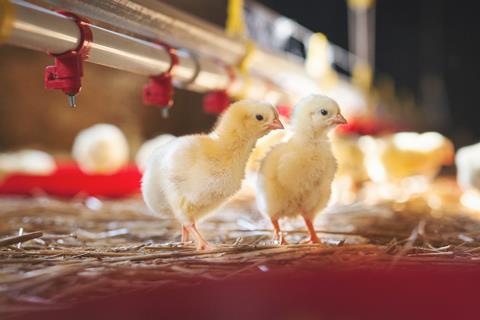
The British Egg Industry Council (BEIC), however, claims the government’s proposal to end the “practice of killing day-old chicks” is out of step with both science and public opinion. Its argument relies on a survey suggesting that around half of respondents opposed testing eggs during incubation to identify male embryos, who are then destroyed before they hatch.
So, the BEIC’s position is this: keep killing live, newly hatched male chicks, rather than killing them earlier in the egg, until a version of the technology comes along that people find easier to accept.
I’d like to know whether the BEIC survey respondents were told the full picture about what chick culling actually involves. Do people genuinely care more about embryos than sentient, living chicks? I doubt it. Research suggests that 85% of consumers object to chick culling. The framing of these questions matters enormously, and the industry knows it.
Competitiveness over concern
There is one single recurring argument running through all the objections that have emerged in recent weeks: competitiveness. Farmers fear that cruel practices will be banned here while cheaper imports from countries that still permit them flood our shelves, undermining British producers.
Viva agrees this would be unacceptable and we’re urging the government to introduce robust import standards to prevent exactly that.
But it is deeply disturbing to watch industry bodies defend continued suffering on these grounds. That is not leadership, it is not progress and it is not morality.
“They do it too” is not an ethical position. It is a surrender of basic moral responsibility. The UK purports to be a civilised nation. We should be ending cruelty, not hiding behind the fact that other countries have not yet done so.
We’re now facing a pivotal policy moment. Labour has already infuriated farmers over the Inheritance Tax changes and a government on the back foot may be tempted to offer concessions, especially in the face of such vocal and sustained opposition.
Watering down its proposed welfare reforms might be the tempting path of least resistance, a quiet way for the prime minister to signal goodwill to an angry, disenchanted sector – but Keir Starmer must not take it. These measures enjoy overwhelming public support, are scientifically sound and represent the absolute minimum owed to the billions of animals suffering inside Britain’s industrial farming systems.
The government promised change. Industry bodies are hoping it won’t deliver.
But the public is watching – and animal advocates across the country will be doing everything possible to make sure it does.
Juliet Gellatley is the founder and director of Viva






No comments yet