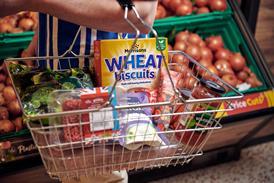
Walk into any well-stocked supermarket and the abundance feels comforting. Fresh produce shipped from four continents, perfectly chilled meat, dairy with an extended shelf life – it all suggests precision, stability, and control. At first glance, the global food system appears not just functional, but resilient.
Scratch beneath the surface, however, and a web of vulnerabilities emerge. Weak links across infrastructure, logistics and cold chains are exacerbating existing pressures, while increasingly frequent disruptions threaten to drive up prices and restrict access to food.
Recent research from Economist Enterprise, supported by Cargill, suggests global food systems occupy an uncomfortable middle ground. The Resilient Food Systems Index (RFSI) assesses 60 countries across 71 indicators, finding that global food systems score an average of 64 out of 100: neither acutely vulnerable nor sufficiently resilient to withstand future shocks.
In other words, the world’s food systems are functional until they aren’t. Recent volatility in energy markets, which has increased transport and refrigeration costs, alongside weather extremes linked to El Niño, illustrates how quickly external shocks can expose underlying weaknesses across the food system.
The consequences of fragile food systems are already visible. Around 13% of food is lost between harvest and retail and an estimated 19% is wasted at the household level. Together, roughly one in four of the world’s calories never gets eaten.
That level of inefficiency would be troubling under any circumstances. As the world moves toward feeding nearly 10 billion people by 2050, it becomes a systemic risk.
The Index identifies where the cracks run deepest: weak transport networks, inadequate logistics, and cold chain gaps that don’t just waste food, but stifle the innovation needed to build more resilient systems. It’s that gap between intent and investment that defines the problem.
The gap between intent and investment
Governments, for the most part, are not ignoring the problem of food loss and waste. All 60 countries evaluated in the Index have expanded crop storage capacity over the past five years and 50 of the 60 have dedicated food loss and waste strategies in place. Action plans, regulatory frameworks and market-based instruments are widespread. The challenge is not policy ambition, but targeted investment.
Despite this breadth of commitment, the average global score for end-to-end cold chain capacity was just 43 out of 100, meaning more than half of all countries are significantly under-investing in the infrastructure that determines whether food produced actually reaches people in safe, edible condition. Distribution infrastructure and logistics fared only marginally better, with countries averaging 57 out of 100. Intention persistently outpaces execution.
The result is a system that lacks effective mechanisms to prevent perishable, nutrient-rich food from spoiling in transit, and without stronger investment, progress on food loss and waste will continue to stall. Beyond reducing spoilage, cold chains increase food system flexibility by extending shelf life, widening market access and helping supply chains absorb shocks.
Of all the infrastructure deficits the Index identifies, cold chain capacity stands out as both the most consequential and the most tractable. With a warming world and a growing population, cold chain capacity emerges as a real resilience multiplier.
Cold chain failures do not affect all foods equally. They disproportionately hit perishable, nutrient-dense foods such as fruits, vegetables, dairy, meat and fish – the very foods that form the backbone of a healthy diet.
The missing link between farm support and food supply chains
Weak cold chain provision therefore does more than inflate food loss figures; it distorts what food is actually available and affordable, nudging consumption toward shelf-stable, energy-dense but nutritionally poor alternatives.
The Index illustrates what targeted investment can achieve. In Nigeria, which scores 67 on end-to-end cold chain capacity, the ColdHubs network of solar-powered storage units has prevented the spoilage of over 2,400 tonnes of fresh produce, raising incomes for more than 6,300 farmers, traders and wholesalers by approximately 50%. The model is pay-as-you-store, removing the capital barrier for smaller operators. There is no shortage of proof that cold chain investment works as a resilience accelerator; there is a shortage of investment at scale.
Infrastructure weakness does not just cause post-harvest losses. It also erodes the incentive to invest in productivity in the first place. The Index records that while blended market-access support for smaller-scale farmers averages a strong 88, annual growth in producer prices averages just 42.
The gap between those two numbers means that while support may reach the farmgate, too often it fails to translate into higher incomes. High transport costs, poor road connectivity and the absence of reliable cold storage mean that even when farmers produce more, they cannot reliably convert that output into income.
This disconnect matters. When smallholders and agri-SMEs lack reliable routes to market, the quality and consistency of raw material supply suffers.
Conversely, when logistics infrastructure improves – through better roads, cold storage, digital price-discovery platforms or contract farming arrangements – yield quality rises, price volatility falls, and the entire supply chain becomes more predictable. Investment in upstream logistics is effective supply chain risk management.
A systemic problem requires a systemic response
The evidence is clear: the constraint undermining system-wide resilience is not a lack of innovation, but the infrastructure needed to scale it.
The technologies to build effective cold chains, improve logistics and reduce post-harvest losses are well understood and largely available. What is missing is the investment needed to deploy them at scale.
Two levers stand out. Governments can embed cold chain and logistics targets explicitly within food security strategies, making infrastructure investment measurable and accountable rather than aspirational. Blended finance instruments, such as green bonds or multilateral guarantee programmes, can de-risk private investment in cold chain and logistics infrastructure in markets where commercial returns alone are insufficient.
The research highlights that resilience is not built on food production alone. It depends on the infrastructure that connects farms to markets and food to consumers. The question is whether the food industry – manufacturers, retailers, logistics providers and policymakers – has the appetite to act on the evidence.
Pratima Singh is principal of policy and insights and head of The Food Imperative at Economist Enterprise


No comments yet