




There is an unfortunate tendency for politicians to treat food crises as if they have the good manners to arrive one at a time. They don’t. And the danger facing the global food system over the next 18 months is that several potentially serious problems are arriving together.
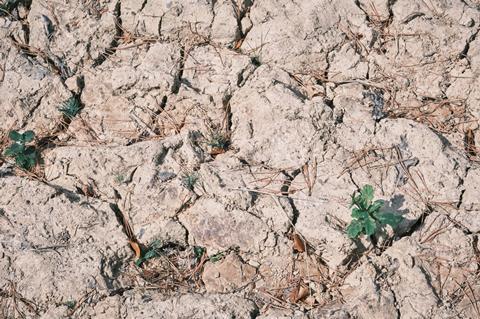
The most obvious is drought. Before the turn of the century, pan-European droughts were comparatively unusual. There were major episodes in 1976 and 1991. Since 2003 they have become depressingly familiar: 2018, 2020, 2022 and now 2026. This summer, western Europe experienced its second-warmest July on record, 2.53°C above the 1991-2020 average.
More worrying is the changing nature of drought. Scientists increasingly talk about “fast droughts”. In the past, serious drought conditions developed over months or years. Now inadequate rainfall combined with extreme heat can produce an intense drought in two or three weeks. And droughts can arrive quickly but leave very slowly. A thunderstorm doesn’t solve the problem. Parched soil cannot absorb torrential rain quickly enough, so water runs off, producing floods rather than replenishing groundwater. Drought and flood, counterintuitively, can increasingly be part of the same problem.
That would be worrying enough. But now comes El Niño.
The periodic warming of the tropical Pacific occurs every two to seven years and can disrupt weather patterns for up to 18 months. Forecasts suggest the developing event could be exceptionally powerful, with Pacific temperatures more than 2°C above normal. Nobody can say precisely what that means for agricultural production. El Niño does not simply make everywhere hotter and drier. Some regions become wetter and can produce better harvests.
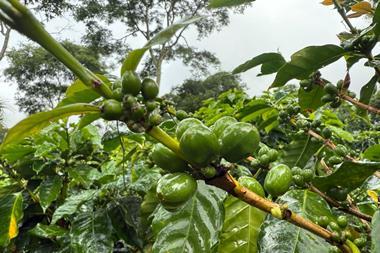
But this El Niño is not occurring against a benign climatic background. It is being superimposed on an already hotter planet and agricultural systems which in many places have just endured severe drought. An exceptionally strong El Niño could weaken Asian monsoons and threaten rice production, damage coffee and cocoa crops across South America and west Africa, and produce drought in some regions and torrential flooding in others.
The nightmare scenario isn’t simply a poor harvest. It is several of the world’s important agricultural regions experiencing poor harvests simultaneously. Modern food security depends on geographical diversification. Australia has a bad year; America has a good one. Asian rice disappoints; another producer fills the gap. The system works because somewhere, usually, the weather is favourable.
What happens if it isn’t?
Climate is only half the story
Disruption to shipping through the Strait of Hormuz has pushed up energy and fertiliser prices. Natural gas is the basic feedstock for nitrogen fertilisers such as urea. Restrict gas supplies and the consequences eventually arrive in a farmer’s fertiliser bill. That creates an especially unpleasant combination. Farmers facing difficult growing conditions are simultaneously paying more for one of the principal inputs they use to maintain yields. Some will inevitably use less.
Ukraine adds another vulnerability through continued disruption to Black Sea grain exports. And drought can itself interfere with transport. Low water levels restrict shipping through important waterways, increasing the cost of moving grain, fertiliser and other commodities.
A drought is manageable. An El Niño is manageable. Expensive fertiliser is manageable. Disrupted shipping is manageable.
It is their interaction which should worry us a lot.
For British consumers, another surge in food inflation would be painful. In poorer countries, where food represents a much larger proportion of household spending, the consequences could be disastrous. Sharp increases in the price of basic foods have an unpleasant history of turning economic dissatisfaction into political unrest.
So what should governments and food businesses do?
First, resist protectionism. When food becomes scarce, politicians instinctively want to protect domestic consumers through export restrictions. But if every wheat or rice-producing country does the same thing, a shortage becomes a crisis.
Second, take water seriously. Europe loses almost one litre in four of drinkable water to leaks and inadequate infrastructure before it ever reaches consumers. With global freshwater demand projected to exceed supply by 40% by 2030, fixing pipes, recycling wastewater, improving irrigation and restoring wetlands are no longer peripheral environmental policies.
Third, food companies need to examine their supply chains with a rather different question in mind. It is no longer sufficient to know the alternative supplier if your principal source fails. What happens if both experience climate shocks simultaneously? How exposed are you to commodities concentrated in particular regions? How quickly could recipes, sourcing or logistics change?
Governments similarly need better early-warning systems, sensible strategic stocks and much closer monitoring of fertiliser availability.
The worst-case scenario may not happen. Hormuz could reopen quickly. El Niño’s effects could prove uneven. Good harvests somewhere may compensate for bad ones elsewhere. The global food system has demonstrated extraordinary adaptability before. But relying on good weather somewhere else is not a strategy.
For decades the efficiency of the global food system has depended on our ability to source food cheaply from wherever it can most efficiently be produced. That system has been remarkably successful.
But efficiency and resilience are not the same thing. Over the next 18 months we may very well discover just how much the difference matters.
Ian Wright is partner at Acuti Associates






No comments yet