




Red meat prices have increased for yet another month, adding further pressure to faltering consumer demand, new data has revealed.
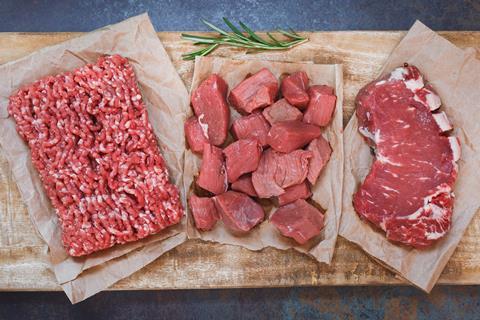
Figures from AHDB show beef spend increased by 8.8% in the 12 weeks to 22 March, driven by average price increases of 16.4%, which resulted in volume declines of 6.5%.
This resulted in volume declines of 6.5%, with primary beef volumes declining the most (9.1%) followed by mince (8.2%).
Lamb and pork also saw significant pricing increases, although to a lesser extent, with the meats up 9.2% and 1.7% respectively. Similarly, volumes were hit as a result, with lamb sales declining by 1.7% and pork by 2.3% in the period.
Total primary lamb cuts saw an 1.9% volume decrease during the 12-week period, but lamb leg roasting joints increased 4.9%, driven by an increase in buyers and volumes purchased per trip, AHDB said.
AHDB analyst Hannah McLoughlin said farmgate prices had remained relatively high in recent months and were expected to remain so due to continued tight supply.
While there had been predictions that prices would peak, “the volatility in the world could potentially impact prices and could prevent the slowing of price increases in the near future”, she said.
Read more:
-
Farmers threaten protests in two weeks without government action
-
‘Serious concerns’ raised about factory farming as ammonia hotspots revealed
-
Swap processed meat for plant-based options to boost fibre, researchers say
“This may affect consumer confidence and lead to cautious shopper spending,” she added. Despite these challenges, John Powell, CEO of the British Meat Processors Association, said production had remained stable thanks to improved farm efficiency and heavier animals at slaughter. However, he forecast that production was expected to drop while consumption would rise.
“The main concern is the falling number of beef and sheep,” he said, which he attributed to the loss of BPS payments and increased input and labour costs.
“There is also a general lack of confidence within the sector, not least because it can take more than three years from a beef producer deciding to increase their herd, to the point where value is realised when the animals go to slaughter,” he added.
Powell warned that should production decline the UK would become more reliant on foreign imports which “ultimately lowers domestic prices but could also exacerbate the current trend in falling livestock numbers”.
The ongoing conflict in the Middle East was also likely to take its toll on meat prices, warned Tony Goodger, head of marketing and communication at AIMS, particularly in pork and poultry in the short term due to their reliance on feed.
“Our ruminants are going to be able to graze and not be so reliant on any bought-in feed, whereas pigs and poultry will need bought-in feed that will add to production costs,” he added.
“A lot of people have switched from beef and lamb to pigs and poultry because of the price differential, but if that price differential starts to close then we could well see a bit of movement within the market of people going back to beef but perhaps in smaller amounts.”




No comments yet