






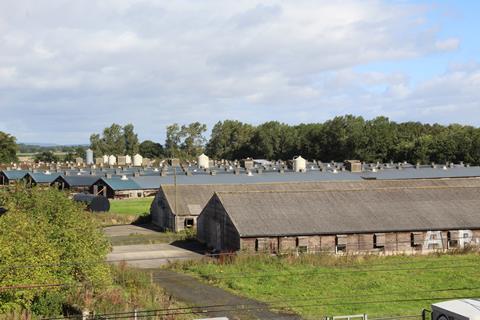
“Serious concerns” have been raised about the expansion of factory farming as Compassion in World Farming and Sustain publish their Ammonia Map.
The map revealed that the areas of the country experiencing the highest emissions of the nitrogen-based gas corresponded to those with the greatest concentration of large-scale intensive farms.
As the government has proposed revisions to the National Planning Policy Framework which could make it easier to approve intensive livestock units, the NGOs have warned industrial farming poses risks to public health, the environment, and animal welfare.
Used to produce fertilisers and emitted from livestock manure, the organisations said ammonia contributed to the creation of fine particulate matter – linked to respiratory conditions, dementia, lung cancer, low birthrates, and diabetes.
TV doctor and Compassion patron Dr Amir Khan said ammonia from intensive farming was a “major, yet often overlooked, part of that problem”, warning it is “our most vulnerable patients who pay the price”.
“When factory farming releases huge volumes of ammonia into the air, the health impacts don’t stay on the farm – they reach our surgeries, our hospitals and our communities,” Khan continued. “Reducing these emissions is not just an environmental issue; it is an urgent public health priority.”
Read more:
-
New planning rule proposals ‘risk undermining food security’
-
Fix factory farming ‘climate doom loop’, governments urged
-
The rot of factory farming goes deeper than one ‘bad’ supplier
According to the map, the most severe concentrations of ammonia emissions were found in areas within Lincolnshire, Herefordshire and East Anglia, where the charities warned there was a high density of intensive poultry and pig units.
Compassion’s Factory Farming Map found Lincolnshire, Herefordshire, and Norfolk had 146, 63 and 122 mega-farms respectively.
Factory farming in Waveney Valley, in Norfolk and Suffolk, was found to produce the greatest amount of ammonia at up to 3,000 tonnes per year. Meanwhile, north Herefordshire, Gainsborough, southwest Norfolk and mid-Norfolk were the other areas to see the greatest emissions, with all tracking over 2,500 tonnes per annum.
“The spread of industrial factory farming must stop,” said Compassion in World Farming head Anthony Field, adding that factory farming “sits at the heart of the UK’s ammonia crisis”.
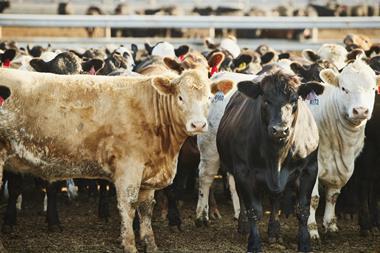
”By cramming large numbers of animals into confined spaces and relying heavily on fertilisers, these intensive systems release far more ammonia than the environment or our bodies can cope with,” he added. ”The result is a cascade of harm – to the animals living in these conditions, to the people breathing the polluted air, and to the ecosystems absorbing the excess nitrogen.”
Compassion’s report, The Ammonia Pollution Problem, argued ammonia pollution was not an isolated agricultural issue but a systemic challenge affecting animals, people and the environment.
It has called for a ‘One Health’ approach and for urgent action to rethink how food is produced and how nitrogen is managed.
“If we are serious about protecting public health and restoring the natural world, we must confront the role of industrial livestock production and rethink how we produce food,” Field continued. “The evidence is unequivocal: confronting agricultural ammonia pollution head-on is essential if the UK is to build a food system in which animals, communities and ecosystems can all thrive.”
“Industrial animal production is sending our food system in the wrong direction,” added Ruth Westcott, campaign manager at Sustain. “It is designed to extract profit, not to create good food or benefit our rural communities.”









No comments yet