



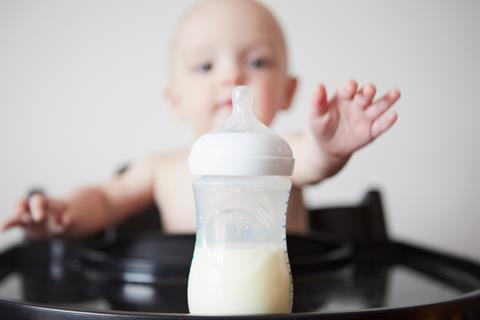
Shoppers will continue to be able to buy infant formula using loyalty points and vouchers under a government plan to make it more affordable.
Ministers will accept a series of recommendations made in February by the Competition & Markets Authority intended to help inform parents about baby formula products that are nutritionally identical, but cheaper than the best-known brands, such as own-label alternatives.
The CMA’s market study found that well-intentioned parents might opt for more expensive products and were influenced by on-pack messaging when trying to choose the best product for their baby.
By taking up some of its recommendations, the government said it would help those who cannot or choose not to breastfeed their babies to provide them with “the best possible start in life”, alleviate child poverty and save up to £500 a year.
“For too long, parents have been pushed into spending more on infant formula than needed – told they’re paying for better quality and left hundreds of pounds out of pocket,” said Keir Starmer at PMQs yesterday (3 December).
“I can announce today that we are changing that.
“We will take action to give parents and carers the confidence to access infant formula at more affordable prices.
“With clearer guidance for retailers and helping new parents use loyalty points and vouchers, together that will save them up to £500 before their child’s first birthday.
“That builds on our action to lift over half a million children out of poverty, extending free breakfast clubs and our child poverty strategy will be published later this week.”
Retailers’ response
In a LinkedIn post, Iceland chairman Richard Walker said the announcement was “a huge step forward”.
“Our colleagues and customers have been consistent in our call for fairness: infant formula had become unaffordable for too many families, and the system needed fixing,” he wrote.
“Through our work, and the #FormulaForChange campaign with Metro and Feed, we helped expose the reality facing parents who were being priced out of the basics.
“So yes, I think this is better late than never. This decision will make a real difference to families across the UK, and I’m incredibly proud of everyone at Iceland who helped force the issue on to the national agenda.”
Read more: Can the CMA save parents from infant formula confusion?
Meanwhile, Aldi has extended its price freeze on Mamia First Infant Formula (£6.99) to summer 2026. The discounter had previously committed to freezing the price of the product until the end of 2025.
“At Aldi, we’ve always believed that people shouldn’t have to choose between great quality and low prices – which is why we welcome the government’s pledge to better educate parents about baby formula,” said Aldi UK CCO Julie Ashfield.
“All infant formula sold in the UK – including lower-priced options – must meet the same strict nutritional standards.
“Clearer guidance on this is vital and will help those who can’t, or choose not to, breastfeed be more confident in doing what’s right for their baby and their budget.”
A ‘positive step’
The Baby Feeding Law Group UK and First Steps Nutrition Trust said the government’s response to the CMA’s recommendations was “a small but positive step” in the right direction.
However, both organisations took issue with the government’s rejection of the CMA’s recommendation to implement standardised labelling of infant formula via the NHS.
They also argued that vouchers and coupons were not an equitable or meaningful solution to the unaffordability of infant formula for families on the lowest incomes.
“Placing the onus on parents to make better choices and shop around is a concerning focus of the government’s response,” said Dr Katie Pereira-Kotze, secretariat of the Baby Feeding Law Group UK.
“In the current environment, where any evidence-based information from health professionals gets drowned out by misleading marketing, it will remain vital to prioritise strengthening legislation governing the marketing of all formula milks, and to enforce it properly.”
It comes ahead of the release of the government’s child poverty strategy, which follows the major move by the Chancellor to lift 450,000 children out of poverty in the budget.




No comments yet