





Right now, fulfilment has to happen at the speed of customer expectations. Here are the common mistakes businesses make at the warehouse, plus some simple hacks to help get back on track, saving both time and money.
The pressure on retail warehouses has never been greater. Rising customer expectations, wafer-thin margins and the relentless pace of ecommerce mean fulfilment operations have to be faster, more accurate and more efficient than ever before. Yet many retailers are unknowingly haemorrhaging money through a problem hiding in plain sight: inventory inaccuracy.
The gap between what your warehouse management system says is on the shelf and what is actually there is rarely dramatic. It doesn’t announce itself. Instead, it quietly erodes margin through picking errors, delayed replenishment, unnecessary safety stock and the kind of customer experience failures that don’t show up until it’s too late.
Here are five ways that gap is costing your operation - and, most importantly, what to do about it.
1. Picking errors are eroding customer trust
In retail, the order is the promise. When a customer receives the wrong item, or nothing at all, the damage goes beyond a single transaction. Returns are expensive to process, customer service teams absorb the fallout, and loyalty quietly walks out the door.
Most picking errors don’t stem from poor process design or undertrained staff. They stem from inaccurate location data. When a picker is directed to a bay that holds something different from what the system expects, errors are almost inevitable. The root cause is a warehouse running on stale data - and the fix isn’t more training, it’s better visibility.
2. Replenishment is reactive, not proactive
If your replenishment team is responding to stockouts rather than preventing them, your inventory data isn’t working hard enough. In high-velocity retail environments, by the time a gap is spotted and acted upon, sales have already been lost and fulfilment timelines have slipped.
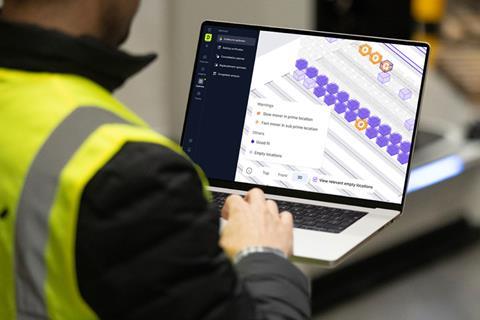
Proactive replenishment depends on knowing, in real time, what is where, how fast it’s moving and where gaps are beginning to form. Without that continuous picture, buyers and planners compensate with buffer stock and gut instinct, neither of which is a sustainable strategy as volumes and SKU complexity grow.
3. You’re scaling, but your data isn’t keeping up
Growth is good, but scaling a retail operation without scaling your inventory intelligence creates risk. More SKUs, more locations, more movement: all of it increases the likelihood of discrepancies between system records and physical reality.
Vente-unique.com, a leading online furniture and home décor retailer and multiple Customer Service of the Year award winner, experienced this directly. Operating across an 80,000m³ warehouse, the company had previously trialled drone-based inventory solutions that fell short on accuracy and real-time insight. As Cyrille Mazal, supply chain and customer service director, explains: “Errors and delays can result in reduced customer experience, which can impact profitability. We needed a solution that provided real-time data without disrupting operations.”
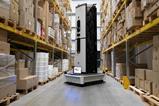
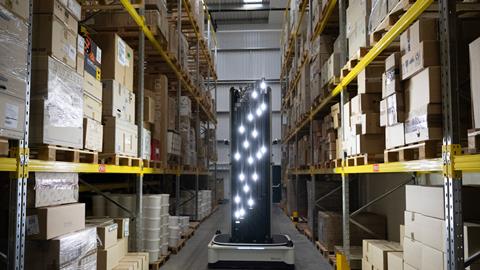
The answer was continuous, autonomous warehouse scanning - delivering inventory accuracy that rose from 92% to 98% within three days of deployment, with up to 99.9% accuracy consistently maintained thereafter.
4. Manual stock checks are consuming resources you can’t afford to waste
Walking the aisles with a clipboard is expensive, not just in labour hours, but in opportunity cost. Every hour a skilled warehouse operative spends on a manual stock check is an hour not spent on value-adding activity. And the data produced is already out of date the moment it’s recorded.
Periodic audits create a false sense of control. Between counts, the operation is running on assumptions. In a fast-moving retail environment where stock positions can change dramatically across a single shift, that assumption gap is where fulfilment failures begin.
Retailers who have moved to continuous, automated scanning report dramatic reductions in manual stocktake effort, freeing teams to focus on throughput, accuracy checks, and higher-value operational tasks.
5. You’re paying for safety stock you shouldn’t need
When inventory data can’t be trusted, the natural response is to over-order. Buffer stock becomes a crutch, a hedge against uncertainty rather than a deliberate strategy. The result is higher carrying costs, wasted space and working capital tied up in stock that wouldn’t be necessary if the underlying data were reliable.
Mazal puts it simply: “Thanks to Dexory’s autonomous robots, we have not only achieved exceptional inventory accuracy but also optimised our ability to perform full inventories several times per week.”
That frequency of insight changes everything - replenishment decisions become confident, space is used efficiently, and the operation stops paying for uncertainty.
The retailers pulling ahead aren’t auditing more frequently or hiring more people. They’re closing the gap between assumption and reality, and finding the return on doing so is faster, larger and more immediate than most expect.