



Mr Kipling owner Premier Foods is going it alone. As the government dallies, it’s gone ahead and published data on the healthiness of its food sales without any mandatory requirement.
As revealed by The Grocer last week, Premier, whose stable also includes Birds Eye and Angel Delight, has voluntarily reported the share of its sales from healthier products in its 2025/26 annual report, covering the year to 28 March.
It has done so using metrics developed by the Food Data Transparency Partnership (FDTP) and DHSC in talks with the industry over two years, in what it claims is the first use of the framework by a major branded food manufacturer.
It comes amid calls from the FDF for the government to “get on with” mandating the same requirement of all large food companies, nearly a year after it indicated it would do so in its 10-Year Health Plan.
But the timing means it could just as easily be seen as an inconvenient complication for that 10-year NHS plan rather than a bold move to lead on transparency.
Premier has reported a seven percentage point increase in the share of volume sales of ‘non‑HFSS’ products (those not high in fat, sugar or salt) since 2022/23, from 53% to 60%. It has also claimed an improvement in the overall nutrient profile of its portfolio since 2022/23, with its nutrient profiling model (NPM) score reducing from 7.26 to 6.78.
The company says its decision to publish the data shows it “matches the government’s ambition” and that it is acting amid growing consumer demand for transparency on health. The move is part of its Enriching Life sustainability plan, which promises to help consumers lead healthier and more sustainable lifestyles.
However, the scores it gives itself are based on the 2004 NPM, while the government is consulting on switching to a newer, much tougher model. The consultation is due to end next week, with industry bodies lining up to try to convince new health secretary James Murray to backtrack.
The new model shifts focus from total sugars to free sugars, and proposes a lower threshold for “healthy foods”, allowing free sugar intake to make up no more than 5% of daily energy intake. The model was shelved by the former Tory government over fears of the economic impact on companies.
The current government has said it plans to use the new model to underpin both the junk food advertising ban that came into force on television and online in January, and the restrictions against prominent displays in stores and mulitbuy deals that began in 2022.
That means millions spent on reformulation could be money down the drain, an FDF report warned this week. It claimed FDF members had already slashed salt levels by 18%, sugar by 19% and calories by 17% since 2021, with the average NPM score improving by 13 percentage points. And it warned hundreds or possibly thousands of products that had been reformulated to avoid the junk food advertising and in-store promotion restrictions now faced being subject to them nonetheless, a prospect the BRC has described as simply “unworkable”.
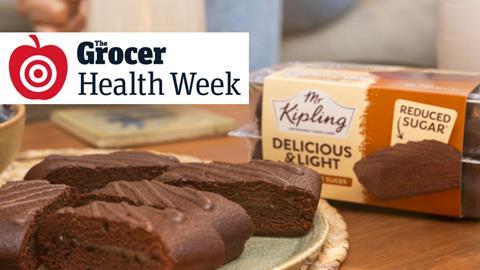
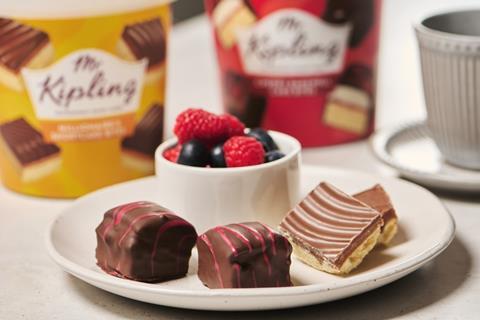
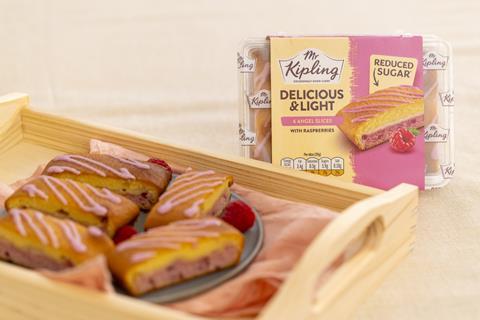
Among those manufacturers highlighted by the FDF as in the firing line was none other than Premier Foods, whose Mr Kipling Delicious & Light was the first full range of cakes to meet the government’s current healthier eating guidelines.
Pressure on government
As such, some believe it is no coincidence that Premier has made its move on transparency, with just days to go before the NPM consultation deadline.
“This is clearly a tactic by Premier to pile pressure on the government to shelve the [new] NPM,” says one source.
“Products like the reformulated Mr Kipling range are clearly going to have trouble with the new model if it comes in, as will many others. The more companies can say, ‘look, we are out there being transparent and the data shows we are making our products healthier’, the harder it will be for the government to move the goalposts.”
The FDTP framework for healthy food sales reporting, including the percentage of sales made up of HFSS products, based on the existing NPM, has been ready to go since February 2024, as revealed by The Grocer at the time.
Calls on the government to mandate healthy food sales reporting have been mounting since May last year, when Tesco CEO Ken Murphy said it was necessary to tackle the obesity crisis in an open letter to then health secretary Wes Streeting. Murphy’s call was backed by Tesco’s powerful health charity partners Cancer Research UK, British Heart Foundation and Diabetes UK.
Most of the UK’s major supermarkets subsequently backed the call, as did the FDF, despite having previously opposed mandatory reporting.
Ministers last week said a consultation on mandatory reporting, which had originally been expected to launch in spring 2026, would now be published before the summer recess on 17 July. But the government could be in for shock if it expects last year’s levels of support while remaining intent on bringing in the new NPM at the same time.
Based on IGD forecasts this week, it would leave the industry with a staggeringly short time to adjust to comprehensive new standards and requirements, with dramatic economic implications heaped onto already climbing inflation thanks to the Middle East conflict.
IGD predicts the proposed new NPM could be operational by September 2027, followed by mandatory reporting – using the new NPM – by April the following year (see timeline).
| Collision course: how the new NPM and mandatory reporting intersect | |
|---|---|
|
January 2026 |
The government publishes details of the proposed new NPM |
|
March 2026 |
A 12-week consultation begins on applying the new NPM to existing regulation |
|
July 2026 |
Consultation expected to launch on mandatory healthy food sales reporting, potentially concluding in September |
|
January – April 2027 |
Government expected to begin legislating to introduce mandatory reporting |
|
September 2027 |
New NMP applied to existing restrictions on advertising, prominent in-store locations and promotions |
|
April 2028 – March 2029 |
First year of mandatory healthy sales reporting for companies, using the new NPM |
|
Source: IGD |
|
IGD also warns of a troubling lack of awareness among companies, and of the enormous technical challenges posed by the tougher requirements of the model, especially when it comes to measuring free sugars.
Should the government refuse to backtrack, there are doubts that such a timeframe could possibly be achieved given the expected level of opposition, confusion and supply chain complexity entailed.
Flawed impact assessment
Industry bosses are expected to challenge what is seen as a “hugely flawed” impact assessment of the plans by the government, raising the prospect of a drawn-out battle.
Henry Dimbleby, the former health tsar whose National Food Strategy report proposed mandatory reporting back in 2021, last month claimed that in reality it would take at least five years for the new NPM to be implemented.
So, if in the meantime consumers are fed information about the healthiness of companies’ portfolios based on a soon-to-be redundant mechanism, is that a recipe for greater transparency or confusion?
Katherine Jenner, executive director at the Obesity Health Alliance, welcomes Premier’s move, but says it is not a reason to put NPM changes on the back burner. “What they are doing is positive because it shows this information is available and is clearly there ready to be published,” she says.
“It’s not the huge, unachievable task some in the food industry used to argue. Any company should be applauded for publishing their data. Now what we need is the regulation to ensure everyone does the same.”
Jenner also blames calls for the updated NPM to be binned on “regressive” forces in the food industry, which should be ready for an update that has been “nearly 20 years in the making”.
Still, if companies want to test the government’s resolve to push ahead, following Premier’s lead could be a way to do it.
The Grocer Health Summit 2026 is helping the industry turn healthy eating insight into action. Covering everything from regulation to reformulation and science to strategy, the one-day conference will be taking place on Tuesday 15 September 2026 at the QEII Centre in London.
Visit thegrocerhealthsummit.co.uk to book your tickets and find out more.

No comments yet