


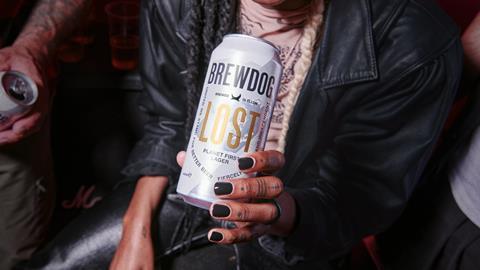

After weeks of speculation, US-listed fmcg group Tilray Brands swooped for BrewDog in a £33m pre-pack administration this week.
The deal, announced on Monday after a quick-fire sale process led by restructuring specialist AlixPartners, brings clarity and a clean slate for the controversial brewer, following five successive years of pre-tax losses totalling nearly £150m.
But it also comes at a significant cost, with almost 40 bars closed overnight, nearly 500 jobs lost and suppliers facing a shortfall that could run into tens of millions. BrewDog’s shareholders – including private equity backer TSG (to the tune of an estimated £300m) and some 220,000 so-called ‘equity punk’ crowd-funded retail investors – have also wound up empty-handed.
So, who are BrewDog’s new owners, and what exactly do they want with a failing Scottish beer company?
‘Bargain hunter’
Established in 2013 as a pureplay cannabis supplier, Tilray Brands has diversified into other sectors including pharmaceuticals, energy drinks and craft beer amid stalling legalisation efforts in the US.
But the Nasdaq-listed company has rarely shopped at the top table, mostly acquiring unloved craft brands from major US brewers including AB InBev and Molson Coors. With net revenues of $240m (£180m) in the year to last May, it’s a relative minnow and smaller even than BrewDog (£280m).
One consumer M&A advisor describes CEO Irwin Simon as a “bargain hunter” and “a very deal-hungry guy”.
“Tilray bought craft beer brands by the dozen just because they were cheap and it made a lot of sense from a portfolio perspective, a little bit like [the approach of] Keystone in the UK,” the source says.
How Tilray became a major craft beer player
-
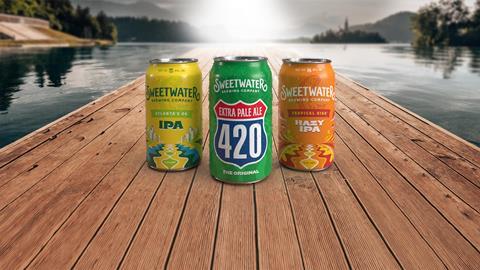
2021: Tilray merges with Canadian cannabis company Aphria, which had itself bought Atlanta-based brewer SweetWater for $300m six months earlier
-
2021: Acquires San Diego-headquartered craft brands Green Flash Brewing and Alpine Beer Company for $5.1m
-
2022: Adds New York-based Montauk Brewing Company in a $35.1m deal
-
2023: Swoops for eight beer and beverage brands from AB InBev, including Shock Top, Blue Point Brewing Company and 10 Barrel Brewing Company
-
2024: Buys four Molson Coors-owned breweries (Hop Valley Brewing Company, Terrapin Beer Co, Revolver Brewing, and Atwater Brewery).
-
2026: Strikes a deal to produce, market, sell and distribute Carlsberg’s stable of brands in the US
-
2026: Buys Scottish craft beer company BrewDog out of administration for £33m
Drinks now account for around a quarter of Tilray’s total revenues, but questions remain over the effectiveness of its diversification strategy and the strength of its brands. Revenues fell 10.6% to $50.1m in the three months to 30 November 2025, with Tilray admitting it was eyeing growth overseas to offset a challenging beer category in the US.
The chance to acquire a leading European beer brand and brewery in BrewDog – at a fraction of its value on a solvent basis – was therefore “probably too good an opportunity to miss,” the M&A source says.
That tallies with comments made by Simon, with Tilray’s CEO telling analysts “you could not simply build this platform in Europe today for the amount of money we paid”.
Tilray’s slice of the pie
The deal certainly looks a bargain on paper, with the £33m paid handing Tilray BrewDog’s global IP, its brewery in Ellon and 11 of its best-performing bars in the UK and Ireland. Tilray is also set to pick up BrewDog’s US and Australian businesses separately, taking its total spend to around £40m.
The figure pales in comparison to punchy valuations of BrewDog in the past, but was the largest made as part of the administration process, The Grocer understands.
Crucially, Tilray won because it needed BrewDog’s HQ and brewery – capable of producing up two million hectolitres of beer a year – and was willing to take on more of its bars than any other bidder. Other interested parties included rival brewers C&C Group, Royal Unibrew and Royal Swinkles, but nobody had the appetite for as much of the pie as Tilray.
Meanwhile, there is understood to be significant relief internally at BrewDog that the bid of founder and former CEO James Watt was ultimately unsuccessful.
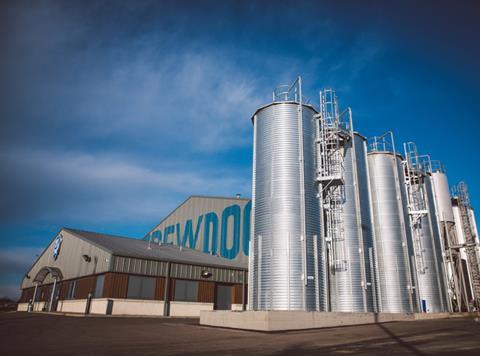
Buying BrewDog gives Tilray instant scale in European beverages, including well-established relationships and listings with grocers, as well as a high-quality brewing facility currently only operating at around a third of its capacity.
“The Ellon brewing operation alone represents over £100m of invested capital,” says Simon. “This gives Tilray the infrastructure to introduce our leading US craft brands into Europe through an existing production and hospitality platform.
“We are not entering Europe from scratch, leasing capacity and testing distribution relationships, market by market. We now own a proven, scaled European beverage platform, accelerating our beverage strategy by years.”
Additional capital outlay
Having cherry-picked the best parts of the BrewDog business, leaving most of its unprofitable bar arm (and the recently shuttered spirits business) behind, Tilray’s predicts the business will deliver $200m in annual revenues and $6m-8m in adjusted EBITDA by its next fiscal year.
It plans to revitalise BrewDog by “stabilising operations, improving efficiency, investing behind… core SKUs and expanding international distribution,” according to Simon. The Punk IPA brewer has been placed in the hands of Tilray’s international president Rajnish Ohri, who has pledged to “return the business firmly to its core”.
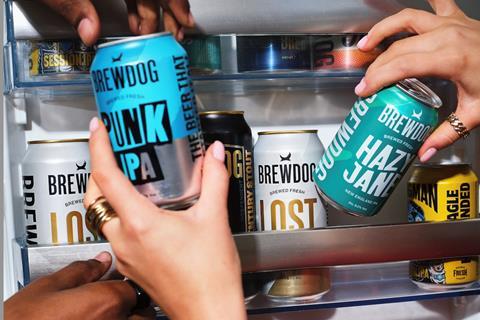
“We see meaningful opportunity to grow BrewDog by investing behind its beer first heritage, supporting the teams that make the brand special and expanding thoughtfully across international markets where demand from premium craft beer continues to grow,” he says.
However, its likely that further capital outlay will be required closer to home to appease suppliers short-changed as part of the administration process. “When you go through an insolvency, then one of the first things you want to do is get on the phone to your supply base and work out a route forward with them,” explains one restructuring expert.
Our M&A advisor adds: “A working capital injection will be required pretty swiftly, even just in terms of supplier backlog and ongoing operating cashflow, which is negative. If they can control that narrative, speak to suppliers and tell them ‘let’s grow this business together’ then maybe that [element] will be OK.”
Administration fallout
However, an arguably bigger unknown is how BrewDog’s already battered reputation will endure the fallout from administration.
Perhaps mindful of the optics of its cut-price deal, Tilray has lavished praise on BrewDog’s staff and pledged to honour discounts and other perks enjoyed by its now ex-‘equity punk’ shareholders.
“We intend to continue your key benefits, including bar and online discounts, tattoo discounts, and a free beer on your birthday, as well as hosting annual community events,” an email signed by ‘The BrewDog Team’ and seen by The Grocer reads. “Most importantly, we would still value your voice and your support as we shape the next chapter of this business together.”
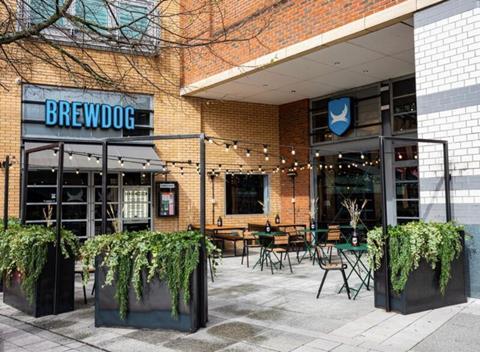
But with those 484 staff being made redundant by the closure of 38 BrewDog bars, and 220,000 long-suffering equity punks discovering their shares are now worthless, it’s possible the brand could become “even more toxic” in the eyes of consumers, our M&A source believes.
“I wouldn’t be surprised if there is massive freefall, with [equity] punks boycotting BrewDog products,” the source says. “How much of the volumes are being driven by punks and friends and family? If there is a big fall in consumer sentiment towards the brand, could that $200m in revenues [quoted by Tilray] evaporate overnight?
“I suspect the worst is still to come for this brand.”
Bernstein drinks analyst Trevor Stirling is also sceptical. “Tilray have so far not shown any aptitude for turning round troubled beer brands,” he says. “Furthermore, they have no experience of alcohol outside the US. C&C would have [had] material synergies and Royal Unibrew know the beer business very well, so I am not sure where they think they will have an edge.”


1 Readers' comment