




As industry calls grow louder for government action on energy costs to prevent food price inflation reaching up to 10% by Christmas, attention is rightly focused on what can be done at the top of the supply chain.
At every stage of the food system, decisions are being made right now about pricing, margins and waste. For fmcg brands and retailers, those decisions are often framed in commercial terms: cost pressures, promotional strategy, stock management and shrink. By the time they reach the end of the supply chain, they look very different.
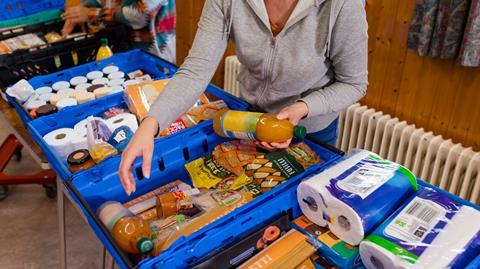
At The Bread and Butter Thing, we work with more than 10,000 households each week through more than 150 community food clubs. That gives us a clear, consistent view of what is happening on the ground when prices move, availability shifts, or surplus flows change. Pressure doesn’t arrive as a single event. It builds, week by week, decision by decision, until households are operating with almost no room for error.
Many of the families we support are living on the equivalent of around £6,500 a year once housing and energy costs are accounted for. Around two thirds have less than £200 left each month after those fixed costs are paid. That is not a budgeting failure. It is a question of there simply not being enough left. In that context, food becomes the only flexible spend. When inflation rises, promotions disappear, or pack sizes change, the adjustment doesn’t happen in a spreadsheet. It happens in kitchens. Meals get simplified. Fresh food drops out first. Households stretch what they have and, increasingly, they borrow to get through.
Among families with children in our network, more than 40% report needing to borrow money just to cover everyday essentials – more than three times the rate seen among older households. For many working families, there is no financial buffer left to absorb even small increases in cost. This is where the link back to the supply chain becomes critical. Commercial decisions about waste are not neutral. When edible surplus is diverted away from redistribution or becomes harder to access due to cost, specification or logistics barriers, that food does not simply disappear. It is replaced by higher-cost alternatives further down the chain – or not replaced at all.
Pricing decisions made in response to inflation don’t land evenly, either. Households on higher incomes may adjust behaviour or absorb the increase. For those already operating at the edge, even small uplifts compound quickly. An inflation spike on the ground means increased volatility in household decision-making: more people cutting back on food first, greater reliance on informal borrowing from friends and family, and a higher likelihood that households tip from “just about managing” into crisis.
We see this play out in real time. When food costs rise, demand for affordable food through our network increases almost immediately. Volumes go up, attendance stabilises at higher levels, and households that might previously have dipped in and out start to rely on support week after week. Last year, we redistributed more than 9,000 tonnes of food, equivalent to more than 21 million meals. That food did not just reduce waste. It reduced pressure. It allowed households to maintain access to fresh produce, avoid skipping meals, and limit the need to borrow.
Surplus is not just an environmental issue, it’s an affordability lever. With relatively small shifts in how surplus is prioritised and unlocked, the system can deliver value twice: reducing waste and supporting households to stay financially stable.
At the end of the supply chain, this isn’t a commercial question any more. There is just a family, standing in a kitchen, working out how to make the numbers add up for another week.
Vic Harper is CEO of The Bread and Butter Thing






No comments yet