Meat-free category leader Quorn has been hit by concerns around UPFs, affordability and taste. Its new CEO is betting on marketing and reformulation

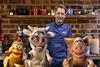
David Flochel may be the top dog at Quorn, but he’s enlisted the help of some rather different animals to lead its turnaround. Perry Pig, Clarence Cow and Chickson Chicken are the stars of two major campaigns for the leading meat-free brand this year. “They’ve proven very popular,” says Flochel.

The puppet-led activity is the latest bid to turn things around at Quorn, which has been battling a long-running sales decline amid the growing ultra-processed foods (UPFs) narrative and consumer price sensitivity. Since the end of the pandemic, the brand has struggled to turn a profit.

Still, none of that deterred Flochel from taking the helm at the end of 2024. The 52-year-old was looking for something more purposeful after years of working at the biggest names in fmcg. So he was enthused by parent company Monde Nissin’s commitment to “bringing healthier choices to the masses”.

“That’s why I joined the business. I think there’s a fantastic purpose and, as a standalone CEO, it’s brilliant to be able to try to make a difference while also focusing on the transformation operationally,” he says.

David Flochel v2

David Flochel is a relative newcomer to Quorn, having joined in November 2024

He has a tough job on his hands. As the meat-free market leader, Quorn has been the poster child for the category’s decline. In The Grocer’s most recent Top Products Survey, meat-free sales slumped by 4.8% in value and 6.5% in volume. Quorn’s volumes fell 3.4%.

The need for change was acknowledged when Flochel took over from former CEO Marco Bertacca, who left in November 2024.

Bertacca had built a solid legacy. In his five years at the business, he managed to increase the brand’s retail market share – thanks largely to the rest of the category falling faster – while bolstering its foodservice and QSR divisions, and launching the Marlow Ingredients business unit. However, he was unable to bring any real financial change. Latest accounts showed pre-tax losses of £27.8m, contributing to overall losses of £107m over the past three years.

“There was a big recognition that we needed to drive or lead the business differently,” says Flochel. “There was a need for, let’s call it what it is, a turnaround, which is what I’m doing now.”

While keen not to criticise predecessors, Flochel admits “we were focusing very much on the destination, without mapping out clear milestones”.

His first job was to put in place those milestones. They’ve involved making some “tough calls”, including cutting jobs and SKUs from Quorn’s portfolio to make it “leaner” and “more agile”. Indeed, the brand has cut more than 30 listings from the major mults in the past two years, shows The Grocer’s analysis of Assosia data.

Name: David Flochel
Age: 52
Born: Normandy, France
Family: Married for 23 years, with two children
Potted CV: Started at L’Oréal in Scandinavia; Unilever in Holland and France; Mars in France, UK and US; CEO of Selecta in Switzerland; managing director of Heineken UK; Quorn
Best career decision: My ‘international’ career and joining Quorn as CEO
Career highlight: Seeing so many people I’ve worked with develop
Best advice received: Stay authentic and true to yourself
Business idol: Grant F. Reid, ex-CEO of Mars Inc
Hobbies: Sports (skiing, hiking, sailing, watching football with my son), travel, electronic music (I used to DJ when I was much younger)
Book currently reading: Successions by Raphaëlle Bacqué and Vanessa Schneider
Favourite album: Random Access Memories by Daft Punk, it’s the reference album in electronic music
Favourite film: Life of Pi

But it’s not just about cutting back. The brand is also spending big on advertising, fronted by Flochel’s puppet friends. Their two major campaigns have focused on priority areas: snacking, which Quorn sees as a key gateway to the brand; and its ingredients range, which has been the subject of major reformulation.

Reformulation, in particular, is an area of big investment. Quorn has removed artificial ingredients from a number of its core lines, including its Fillets, Mince, Pieces and Swedish Style Balls. They join its Strips, which were already free of anything artificial.

This kind of reformulation, Flochel says, is “what the consumer wants”. He points to a 17% rise in purchasing intent since the revamp in August. “Consumers understand no artificial ingredients,” he says. “They also understand in some products you need preservatives, as long as those preservatives are safe.”

What the consumer doesn’t understand, Flochel says, is what constitutes a UPF. There has long been discussion about whether plant-based or meat-free products fall under the definition, and whether the Nova classification should be used to determine health.

Flochel believes neither Quorn, nor the meat-free category at large, should be categorised as UPF. “I think there are far more challenging categories that should be the key focus,” he says. More than 90% of Quorn’s lines are non-HFSS, he adds. Regardless, he admits meat alternatives as whole have “been impacted by the halo effect of the UPF debate”.


More Big Interviews:


To counter that narrative, Quorn is focusing on clear nutritional metrics. Flochel emphasises it is trying reduce fat, salt, sugar and artificial ingredients, which is a “more relevant” aim than fixating on UPFs.

The company is also capitalising on increasingly health-conscious shopping habits through its snacking lines. Quorn aims to provide “more moments for easier swaps”. Flochel says he and his team will be working to “provide more healthy snacks within new formats for the future”, with “very innovative” launches to come this year. Ultimately, Quorn wants to use that innovation to bring even more shoppers into the brand.

Innovation challenge

At the same time, Quorn has been careful to ensure any NPD is well thought through. In an increasingly competitive market, brands need to “deliver the right innovation to the market”, Flochel stresses.

“You have to have that momentum building,” he says, but “we can’t do everything at the same time, because you want to make sure you have the right insights, the right innovation. We need to focus on what can really make a difference to the category.”

Quorn Fillets Landscape_16x9

Source: Quorn

Packaging highlights no artificial ingredients in Quorn’s fillets

That means addressing issues with taste and texture – or at least negative consumer perceptions. Flochel accepts those concerns have been a barrier to growth for meat-free. “It’s true the category has lost a lot of the flexitarians, people who tried the products and, let’s be honest, were disappointed by the experience.

“Consumers want taste, convenience, health, affordability and protein – not all products on the shelves are hitting those key elements,” Flochel says.

However, he’s optimistic the category is changing. “I would hope the shelf or aisle will look different three years from now,” he says. “I think all of us, not only Quorn, all of the main players, are doing a good job at improving taste and convenience.”

Affordability is improving, too. As meat prices soar, the gap is closing between meat and meat alternatives.

In his view, Quorn has a vital role to play in reinvigorating the market. “As category leader, it’s our role to reinvest,” he says. This means working with both retailers and competitors to “keep not only Quorn but the other best performers [on shelf], which will really drive better performance of this category”. If the category wins, so does Quorn – and vice versa.

As Flochel looks down the barrel of the second year of “turnaround mode”, he’s cautiously optimistic. In the first three quarters of 2025, the business enjoyed quarter-on-quarter improvements.

Flochel wants to bring the brand back to low single-digit growth by the end of 2026. But the 30-year fmcg veteran knows not to count his Chickson Chickens just yet. “Let’s not be over-ambitious,” he says with a smile. At such a tough time for meat-free, any growth would surely be a vote of confidence in his turnaround.