





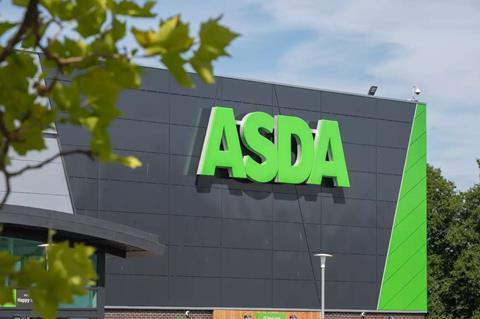
Asda has been hit by a major bond sell-off, after its Christmas sales slump sparked “red flags” among investors losing confidence in Allan Leighton’s turnaround plan.
Having slumped significantly since November, Asda’s bond price reached a new low, following disastrous Christmas results, where it was the only major supermarket to lose sales.
The value of €700m of bonds set to mature in 2031, today dropped to 94 cents on the euro, having traded above par in October.
A further €1.3bn term loan issued in 2024 has dropped to a record low of 88 cents on the euro, from 96 cents in November, per the FT, which first reported the sell-off.
Traders are concerned about Asda’s high leverage as a result of TDR’s £6.8bn buyout in 2021, and its still worsening performance following dire Christmas results. It followed back to back credit downgrades for Asda parent Bellis Finco over the latter months of last year.
Asda had high hopes for Christmas 2025, following Leighton’s renewed price offensive throughout 2025, which saw the price thousands of SKUs reduced, in a bid to restore its price position of between 5%-10% cheaper than rivals.
However, Christmas sales fell 6.5% in the four weeks to 27 December, according to NIQ. Worldpanel data put its decline at 4.2% in the four weeks to 28 December, leaving Asda’s market share at 11.4%. discounters Aldi and Lidl both hailed record share gains.
“There are red flags from negative movements in Asda’s bonds and loans, indicating a loss of investor confidence in the business,” said Dan Coatsworth, head of markets at AJ Bell.
“Prices have dropped on various Asda-linked credit instruments following a tough Christmas for the grocer,” he added. “It was the runt of the litter for festive takings, compounding problems that stem back several years. Asda has suffered a notable loss of market share since 2024 as rivals found their groove and grew bigger.”
Concerns over Asda’s turnaround plan
Leighton has come out swinging in 2026, doubling down on price with a promise to undercut the loyalty prices of Tesco, Sainsbury’s and Morrisons by as much as 50% on 2,300 products.
However, there is concern that his turnaround plan is based too heavily on winning a price war that Asda can’t win, which at the same time limits its ability to invest elsewhere in the business, as well as raise new investment.
When he returned to the supermarket in November 2024, Leighton said it could take between three to five years to turn Asda around. That timescale was set back by a further six months at least following the disastrous decoupling of its systems from Walmart, which led to empty shelves and depots.
In a bid to raise funds, TDR has made £3.3bn through the sale and leaseback of Asda stores and other property assets since 2021, according to research conducted by the FT and property consultancy Cushman & Wakefield. However, analysts have warned this would also increase Asda’s lease and rent liabilities.
“Asda’s stores have suffered from underinvestment since being owned by Private equity and the business has an inconsistent strategy,” Coatsworth continued.
“For decades, Asda was the go-to place for shoppers looking for low-priced products. The rise of Aldi and Lidl presented a serious competitive challenge and then Tesco and Sainsbury’s decided to go hard on the value side of food as well. Even Marks & Spencer got in on the game,” he said.
“Asda has spent the past few years treading water trying to stay afloat while its rivals swam ahead. It has shown ambition to fight harder on price, but so far, the efforts haven’t been fruitful,” Coatsworth added.
An Asda spokesman said: “We are in the early stages of a transformation and are making progress where it matters most for our customers by helping them save money on their grocery shop. Independent price comparisons showing Asda is the lowest-priced traditional supermarket undercutting competitors’ base and loyalty prices. This focus on value is beginning to be reflected in stronger volumes over recent periods.
“Asda has a sustainable capital structure with the majority of its borrowings secured into the next decade. Our strong balance sheet and underlying free cash flow generation means we can comfortably cover current and future debt obligations.”






No comments yet