




Asda’s Q3 results made grim reading, and critics have decried ‘appalling’ store standards. Could the plan be too price fixated?
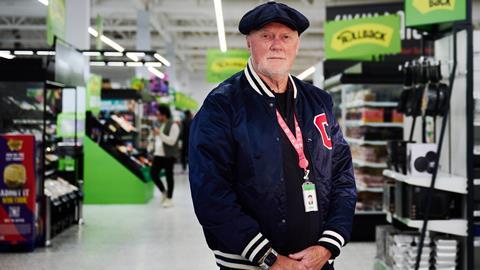
Allan Leighton has compared restoring Asda to its former glory with climbing Mount Everest. But even he would likely admit its ascent is proving harder than anticipated.
Asda’s third quarter results last week made for grim reading. Like-for-like sales fell 2.8% in the three months to 30 September, while total revenues fell 3.7% to £5.1bn excluding fuel.
Asda’s executive chair blamed the backwards step almost entirely on “severe” disruption from the final stage of Asda’s bungled Project Future IT transition in August.
Leighton railed at the extent of the “self-inflicted” issues which led to empty shelves, clogged up supply chains and disrupted online orders, “materially” impacting sales, and setting Asda’s turnaround back six months. But the underlying strategy was “clearly working”, Leighton insisted, as he vowed to “double down” on his plan.
Market share
His defiance has raised eyebrows among some industry spectators, who note Asda’s freefalling market share – from 12.6% to 11.6% year on year in the 12 weeks to 2 November, according to latest Worldpanel by Numerator data – as evidence Leighton’s ‘Formula for Growth’ won’t work.
So, does Leighton’s turnaround plan still have the legs to conquer the mountain ahead?
On his return to the business in November 2024, 25 years after his first spell as CEO, Leighton vowed to restore the ‘Asda Price’ of being 5%-10% cheaper than traditional rivals. Thousands of products have subsequently passed through the relaunched Rollback cycle, after which they revert to a permanently lower Asda Price under the plan.
Leighton claims Asda has so far achieved a 4%-7% price gap with direct competitors.
At the same time, to improve availability, Asda has axed around 6,000 SKUs and put more hours into stores, he says.
Leighton points to Asda’s back-to-back wins in both Grocer 33 store of the week and cheapest basket during the last two weeks of November as evidence the strategy is “clearly working”. Now the IT issues have “stabilised”, average availability is back up to above 95%, Asda says.
The fact this is not playing out in the most important measure of all – sales figures – is leading some analysts to question whether Asda is too fixated on fighting a price war with traditional rivals in a market that has “fundamentally changed” since Leighton’s first stint there.
After all, in the past five years alone, Lidl’s market share has grown by 41% – faster than any other supermarket’s – from 5.8% to 8.2%. Aldi’s has grown second fastest, while Asda’s has tumbled the fastest (see table).
Price war
Meanwhile, Tesco and Sainsbury’s have defended their market share not through a naked price war, which cannot be won against the more efficient operating models of the discounters, but by building price perception through Aldi price match schemes, everyday low pricing and now established loyalty price programmes, which Asda lacks, notes David Sables of Sentinel Management Consultants.
This in contrast to Asda’s ditching of its Aldi price match scheme in January and its claim that comparisons with the discounters are “not relevant” because it has a more comprehensive offer.
Even against the likes of Tesco, Asda is fortunate there is likely “no appetite” for an all-out price war in the current climate of inflation, says Catherine Shuttleworth, CEO of retail marketing agency Savvy.
Recent analysis by The Grocer revealed Tesco cut prices on 3,352 SKUs in the four weeks to 3 November, while Asda reduced 2,814. But by keeping its prices lower for longer, Asda was exclusively cheapest on the largest number of SKUs, at nearly 2,700 versus Tesco’s 884.
Tesco has been giving Asda a run for its money in recent Grocer 33 price comparisons, most recently winning on 31 October and 7 November.
Debt-laden Asda will be eroding margins too much to sustain its current effort over the three to five years Leighton has said it will take to rebuild its market share, argues Sables. “Unless it can get suppliers to fund those cuts, it will have to change strategy,” he says.
And it will get yet more costly if rivals decide to properly take the price gloves off, says Shuttleworth.
Asda chief commercial officer Darren Blackhurst unveiled his “bay by bay” reset to suppliers at Asda’s Merchandising Retail Centre of Excellence in Leeds in October, calling on commercial directors to back the supermarket.
While not all were convinced, The Grocer understands many are fully behind the plan.
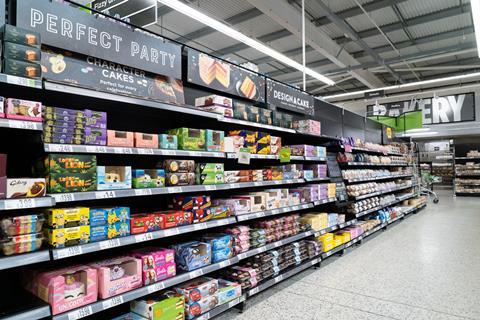
But significant investment is still required to fix the core issues that dog Asda stores, says Andrew Busby, founder of Redline Retail. Standards in some are “appalling”, and a major reason shoppers are leaving, he says.
Last week, Asda completed the final of nine conversions of a £12m ‘White Rose’ project to rejuvenate stores in and around Yorkshire.
The revamp – led by senior director for store development and proposition Nadia Younis – has focused on boosting availability, particularly in fresh produce.
Asda aims to apply elements of the programme to 200 to 300 of its stores over time, particularly in BWS and produce, Leighton says.
But “millions” more in investment will be needed to properly raise standards across its estate, according to Busby.
“Asda has a lot of catching up to do, which would be easier if its competitors were standing still. But they aren’t.”
Early days
However, it is still early days in the strategy Leighton launched at the start of the year, and Asda must be given the benefit of the doubt over the impact of those IT issues. It has certainly made significant progress on the rollout of its Asda Express c-stores, where sales were up 3.5% during the third quarter. “Suddenly there is real visibility and presence in the brand,” Shuttleworth says.
The performance of George – which remains the UK’s second-largest fashion brand – is another reason for optimism, analysts add. Neither of these are picked up in Worldpanel’s market share data, Asda notes.
And Asda looks to be through the worst of disruption from Project Future, albeit with two remaining long-term uncertainties.
One, of course, is servicing its nearly £4bn in debt left over from the £6.8bn TDR and Issa brothers 2021 buyout.
Pressure intensified last week when credit rating agency Fitch downgraded Asda from B+ to B, further into junk status, warning its investment in pricing would eat further into profits than expected. Fitch also warned Asda’s latest £568m sale and leaseback deal for 24 of its stores would increase its long-term rent costs.
Publicly, Leighton has dismissed fears, insisting Asda is “a pretty highly cash generative business”, with strong capital structure, £8bn in assets and over £1bn in liquidity.
The second is continuing uncertainty over the CEO vacancy that has remained since Roger Burnley left in 2021.
The Grocer understands the search is currently on hold, with Leighton, 72, intending to remain the de facto CEO in order to see through his plan.
After all, having done it once before, few could claim to be as qualified as he to turn the Asda ship around, says Shuttleworth. He retains near legendary status among many of Asda’s long-term employees.
In his own inimitable style, “he’s brought confidence back to the business”, says Shuttleworth. “If the worst of the IT challenges are behind them, then it’s just going to be a hard slog from here.” Onwards and upwards, then.





No comments yet