





The UK food and drink sector walks a continual tightrope between day-to-day operational demands and preparing for what the future holds. In the first in our 2026 series, we look at how manufacturers and retailers can get the balance just right, while allowing for unforeseen micro and macro challenges?
Pummelled by policy shocks and economic headwinds that threaten to throw it off course, UK food and drink may feel like its operating in the eye of a storm right now.
Retailers, manufacturers and suppliers are operating at relentless speed, grappling with an onslaught of pressures that threaten their place in the market, from spiralling costs to burdensome regulation and, of course, cash-strapped consumers.
The result can be an all-hands-to-the-pumps response, that prioritises putting time and money into mitigating short-term threats over long-term opportunities.
But understandable though that might be, in an era of rapid market evolution – from disruptive tech to dynamic pricing and a surge in social commerce – this mindset can put a business at significant risk of falling behind.
So, how exactly do you future-proof a business – and make critical decisions based on uncertain forecasts – when even the smallest everyday decisions feel like a risk?
A balancing act
Built on a foundation of low margins, high volumes and just-in-time supply models, the UK food and drink sector has always walked a tightrope between day-to-day operational demands and preparing for what’s around the corner.
But the tumult of the last five years has made this balancing act more perilous.
“Margin pressure, persistent inflation in key input categories, tariff uncertainty, and rising cyber/tech outages mean the ‘here and now’ is absorbing disproportionate leadership bandwidth,” says Linda Ellett, head of consumer, retail and leisure at KPMG UK.
While 80% of the consumer and retail CEOs polled in KPMG’s latest Global CEO Outlook felt under pressure to ensure long-term prosperity, the two challenges ranking uppermost in their minds were supply chain resilience and market competition – and those most clearly shaped day-to-day decisions.
“The risk of that is you don’t get to the future until it’s already here, and then you’re not in control of how you succeed in it,” observes Ellett.
Take tech as an example, she suggests. Many businesses have been making incremental improvements to legacy technologies to keep them serviceable, rather than investing in a complete overhaul of their tech stack, despite knowing the pace of development. “That means that, in a decade, you’ve still got tech held together with a sticking plaster. As a result, the increased risk of outages puts you in a perpetual state where it’s ever-more difficult to lift your head above the parapet and make decisions for fundamental change.”
“Ocado was built on cutting-edge tech two decades ago and, today, we’re again leaning into the latest developments”
– Dan Elton, chief customer officer, Ocado Retail
There are exceptions, however – businesses which are reaping the rewards of investing for growth, rather than scaling back to sustain the status quo.
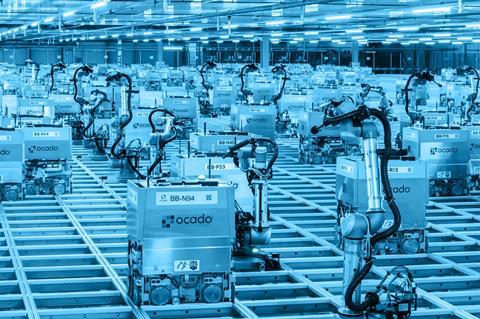
Take Ocado Retail, which hit its highest-ever market share in November, according to Worldpanel by Numerator, off the back of an ongoing push to improve customer engagement and CX via personalisation tools and technologies.
“Ocado was built on cutting-edge tech two decades ago and today, we’re again leaning into the latest developments, namely AI, to maintain our position as the UK’s fastest-growing grocer,” says its chief customer officer Dan Elton.
“For example, our webshop solutions generate more than 10 billion product predictions a day to enhance and personalise the experience, resulting in next-to-no-substitutions and the ability to efficiently pick a 50-item grocery in just 10 minutes. Longer-term, we’re committed to continuing this momentum. Future investments that blend innovation with personalisation will mean we’re better set up to bring joy to even more customers’ shops.”
Read more in the series
The only way isn’t up: Driving value through price
Reconsidering responsibility for cybersecurity in retail
How marketers can sharpen tech tools to unlock long-term value
Future-gazing
In the complex world of consumer and retail, future-gazing isn’t about peering passively into a crystal ball – it’s about taking proactive steps to plan ahead.
There are some practical and structured ways that businesses can better strike a balance between short-term pressures and long-term prospects within their decision-making, says Ellett.
First of these is challenging your teams to split their time more deliberately. “Ensure an element of people’s time is spent on the medium- and longer-term – and be really explicit about that,” she suggests.
That’s the approach at one major retailer. “We cannot take our eye off delivering a great customer proposition every day, and 70% of our leaders’ time is spent here,” says a senior executive. “But we also must keep our plan for the next two to three years in mind, and a deliberate 20% of our focus is here. That leaves 10% – which we deploy strategically – for us to ensure we are consciously looking ahead and exploring opportunities as to whether to grow the revenue or improve the operations, without taking our eye off delivering this year’s plan.”
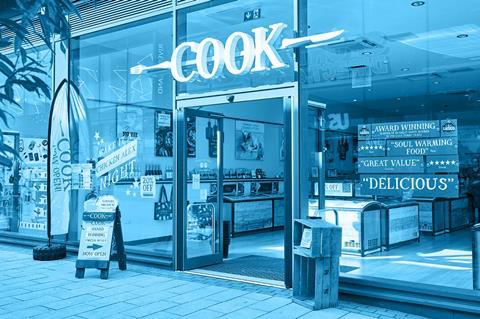
At frozen foods retailer Cook the team even splits their cash between what it calls Sword and Shield pots, explains its chief operations officer Chris Portwood, to “ensure that enough investment is put into both areas so we can continue growing whilst having sufficient infrastructure to support it.”
“From experience, we are aware that ‘sticking plasters’ are often temporary and can end up costing a lot more long-term if the root cause is not dealt with properly,” he adds.
Second, map out extreme future scenarios, rather than taking a probabilistic view typically used in strategic planning, adds Ellett. “If you indulge in considering how you would respond to extremes, then you build the capability to deal with whatever comes… you build that leadership muscle,” she says. Rather than speculate that 10% of the population may end up trying GLP-1 drugs, for example, consider what would change in the market were they to become permanent for 50% of the population or, alternately, if they were to lead to dramatic side effects and disappear within the next five years. “If you plan for those extremes, it’s not about having an answer to the future, it’s about building up that leadership muscle to be ready to react.”
Following a cyberattack in December 2021 that forced it to halt operations and temporarily shut down its site during a busy Christmas period, Portwood says has become the norm at Cook. “Five years on, long-term and extreme scenario planning has become the norm as a result of our experience,” he says. “The short-term pain of the cost and effort involved in ensuring we have robust preventative measures way outweighs the alternative of being vulnerable.
Third, empower decision-makers at all levels with the clarity of a five-year strategic vision for customers and colleagues – a lens through which they can weigh up strategic decisions about a future food and drink landscape, whatever that might look like.
“When trends shift rapidly, grounding decisions in a few fundamentals provides a stabilising logic”
– Linda Ellett, head of consumer, retail and leisure, KPMG UK
Crucially, ensure it isn’t future uncertainties on which this plan is built, but the immutable truths that underpin any long-term success in this industry, urges Ellett.
“Perpetual change can make people think, ‘Well, I can’t know what the experience looks like for my customer or for my colleagues in five years’ time because how can I know what the technology will be, or how can I know what the competitive landscape is?’,” she says. “But when trends shift rapidly, grounding decisions in a few fundamentals provides a stabilising logic.”
Out of the storm
Irrespective of what lies ahead for food and drink, there are “no regrets anchors” that senior leaders can buy into, believes Ellett. .
First, prioritise accessible, connected data systems that surface insights quickly across the whole value chain, rather than in siloed pockets.
Second, create a tech-curious culture across the whole organisation that encourages teams, at all levels, to embrace new enablement, such as AI, whatever direction it might take.
Third, develop deep consumer understanding that decodes emotional, social and financial behaviours, however they may evolve. Forget surface-level trends here, flags Ellett. This is about rigorous, robust insights that dig deep into the data to unpick complex shopper dynamics.
“It might feel radical in today’s climate,” sums up Ellett, “but, remember, focusing only on the here and now is a conscious choice to fall behind”.
Instead, with this approach, business leaders and their teams can find a structured way to rise temporarily above today’s swirling storm of pressures - and look toward the horizon.
To learn more about how KPMG’s experts can help your business, visit: KPMG Consumer
Or contact:
Linda Ellett, partner, head of consumer, retail and leisure: Linda.Ellett@kpmg.co.uk