

Losses have continued to pile up at Quorn as shrinking meat-free demand led to a further sales decline. But despite the headwinds, a turnaround is taking shape.
Revenues at parent group Marlow Foods slipped 1.2% to £184.5m on lower volumes in 2025 – compared with a 9% fall in 2024 – with sales in supermarkets down 2.7% and out-of-home by 3.7%, newly filed accounts revealed. It represented a 22% decline in the top line since a peak of £236m in 2020 when the plant-based category was booming.
However, trends are improving as CEO David Flochel’s three-year transformation plan completed its first full year. The growth trajectory of the core retail and foodservice businesses improved quarter on quarter, moving from –6% in Q1 to –1% by Q3 and flat by the end of 2025.
The category leader also reinforced its number one position last year, driving market share 0.9 percentage points higher to 31%.
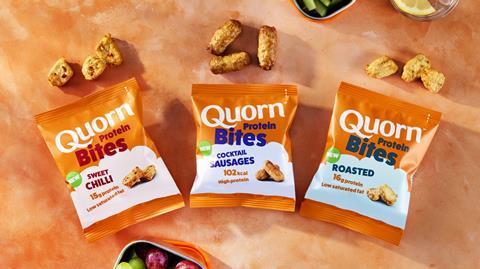
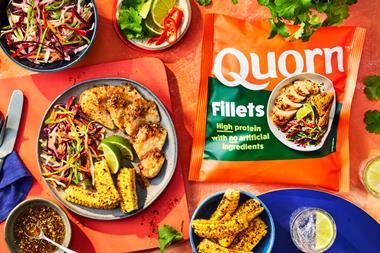
A push to remove all artificial ingredients from Quorn’s offering won back shoppers who have moved away from UPFs in meat-free. A renewed focus on snacking, backed by a ‘Mission Snack Swap’ ad campaign, also helped.
Margins improved and costs reduced at Marlow as benefits from the transformation programme kicked in, with improvements in efficiency and targeted price increases. Underlying operating losses halved to £12m as a result.
Further job cuts factored into the strategy, with average employee numbers down year on year from 844 to 752.
Exceptional charges of £8.5m related to the turnaround, including asset impairments and redundancy and legal costs, pushed the group to a pre-tax loss of £16.5m, compared with £27.8m in 2024.
Total losses at Marlow, which is owned by Monde Nissin and also includes the Cauldron brand, now stand at more than £120m for the past four years.
CFO Nick Cooper said the latest results showed “significant progress”. “Although there is more work to do, we begin the year with increased confidence in the transformation plan,” he added.
“Looking ahead, the category dynamics have improved a little and there are early signs of recovery for the sector, but we continue to face a turbulent environment, which is further complicated by events in the Gulf.
“Against that challenging backdrop, we’ve continued to grow share, attract new buyers and win in the priority areas that we’ve focused on. We continue with our supply chain transformation program to further rebuild margins and generate funds to grow the business and category. We’re also going to keep bringing exciting innovation to the market, most recently in the form of our new Quorn Protein Bites, as well as making our Quorn range more convenient and accessible across even more occasions.
“We believe that it’s more important than ever to provide consumers with positive protein choices that are tasty, healthy, convenient, affordable and good for the planet. We are excited about working with our customers and partners to meet this need in 2026 and beyond.”
Marlow remained cash positive at an operating level in 2025 and, with the help of further £25m injection by Monde Nissin, repaid £30m of external borrowing by the end of the year. It left just £14m outstanding for a syndicate loan agreement, due for repayment in June 2027.
This improved performance contributed to the value of the business to receive a modest write-up after three successive years of writedowns.
Marlow is planning to return to profitable sales growth by the end of the three-year strategic plan.




No comments yet