






While physical retail remains the major channel for grocery sales, online is becoming an increasingly important lever for fmcg brands to scale effectively. So why is it taking some brands so long to embrace the online retail world?
Growth is hard to come by in UK grocery right now.
A combination of cost increases, squeezed consumer spending power and geopolitical uncertainty have forced many food and drink brands to settle for flat or incremental volume gains in recent years, setting aside any meaningful growth ambitions to simply keep their heads above water.
“Brands have found themselves in what is possibly one of the most complex growth environments I can remember,” says Peter Masters, director for EU grocery & everyday essentials at Amazon. “The brands that win online are those that adapt their established models and rethink how they invest to best engage customers in the channels where they increasingly spend their time, using data to drive their growth decisions.”
So, against that tough trading backdrop, could e-commerce offer a way through?
By taking advantage of real-time data and insights, lower-risk product development, and exposure to new demographic sets who might rarely step foot in a traditional supermarket, could suppliers unlock new avenues for growth, both on- and offline?
Drawing more customers in
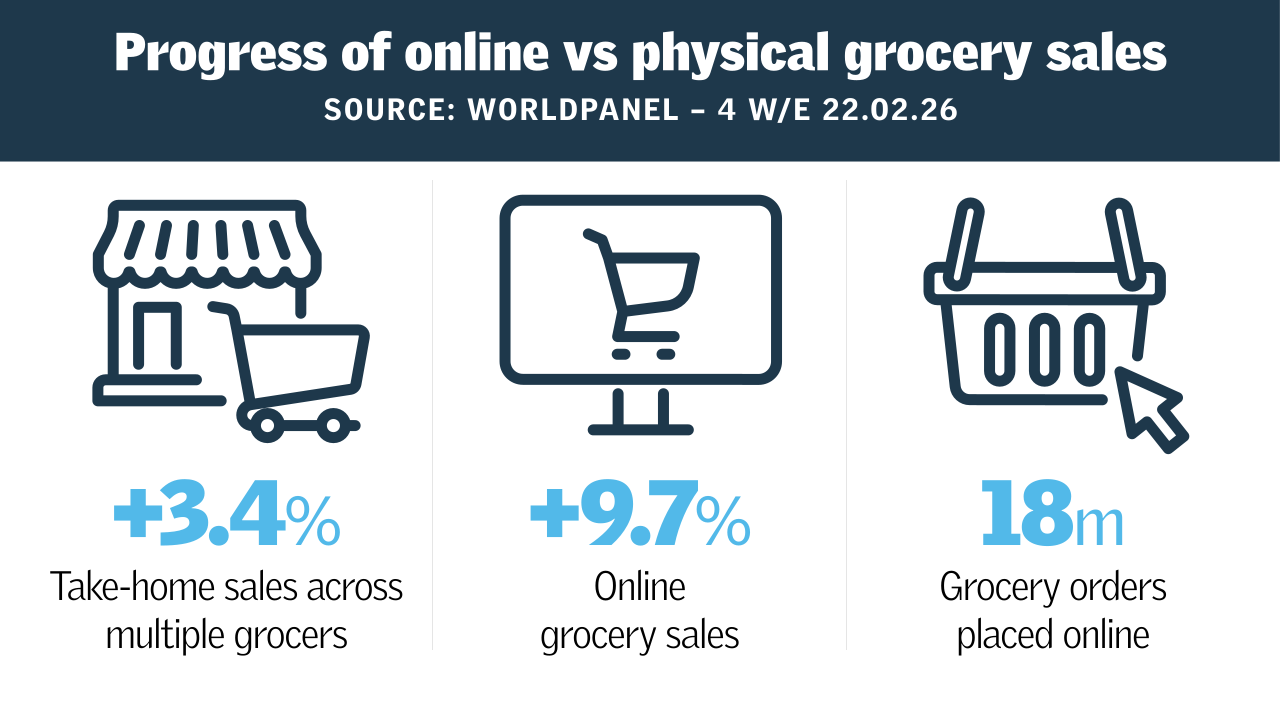
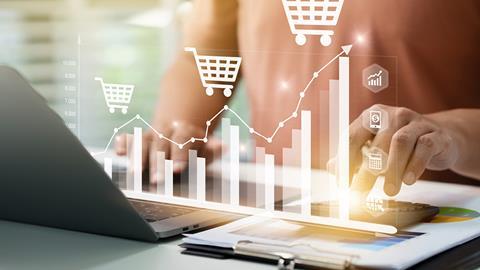
Although physical retail remains the leading channel for grocery sales, online is now a force to be reckoned with. According to 2026 figures from Worldpanel, while take-home sales across the major grocers increased by 3.4% [in the four weeks to 22 February 2026] online sales grew 9.7% in the same period, taking the channel’s share to 13% – its highest level since July 2021.
“Physical retail will remain the largest sales channel in grocery for a very long time to come,” says Neil Saunders, managing director for retail at GlobalData. “However, online grocery is growing far faster and is gradually taking share. It is also drawing in more customers as people seek convenience and ease, even if they don’t use online all the time.”
As a result, suppliers need to interrogate often-outdated perceptions of what role online platforms should play in their channel mix. In the past, food and drink brands have frequently viewed online as either competition to their own direct distribution platforms or “a bit of a distraction”, says Saunders. “Neither is true.”
Instead, online offers a clearly differentiated and complementary proposition to physical retail, points out Masters. “What online can offer brands is reach and loyalty. It allows them the speed to get their products out there very quickly, as well as get them to a customer very rapidly, enabling them to scale.” It also has a far lower barrier to entry, he points out. This, in itself, is an advantage for brands that might otherwise struggle to gain a position on the limited shelf space in physical stores. With an endless aisle online has far fewer constraints.
Lower risk, instant feedback
Cultivating growth via e-commerce isn’t only about adding to overall sales, however. It’s also about using the e-commerce tools available to refine and amplify overall growth strategies, both on- and offline.
“Testing a product with a listing in a physical store can be brutal – if the sales velocity isn’t there straight away, the listing can be gone in weeks”
– Viv Craske, e-commerce advisor and consultant
For example, as economic pressures squeeze budgets, many suppliers have little appetite for the risk that comes with new product development, focusing their attention and resources on existing or core SKUs instead. However, without innovation, they risk losing shopper interest, engagement and loyalty.
That’s where e-commerce comes in, suggests grocery e-commerce advisor and consultant Viv Craske. “Testing a product with a listing in a physical store can be brutal – if the sales velocity isn’t there straight away, the listing can be gone in weeks,” he says. “[But] e-commerce is a perfect testing ground for new product launches.
“You can test a new product rapidly in Amazon or with a quick-commerce platform, for example, and gain fast customer feedback from reviews,” he says. “Then, as you scale out, you can drive people down the sales funnel quicker than ever before by running online ads and content in Meta, TikTok, online programmatic and retailer onsite media to boost visibility and sales velocity in those all-important early days – moving swiftly from trial to repeat purchase.”
Online channels let brands test regional preferences, seasonal lines, or entirely new categories with minimal upfront investment. If something works, they can scale it nationally – or even internationally – almost overnight. If it doesn’t, they learn fast and move on without the sunk cost of a failed physical launch, agrees Masters. He has often seen suppliers launch products and quickly iterate based on the qualitative feedback from Amazon reviews before expanding distribution across other channels.
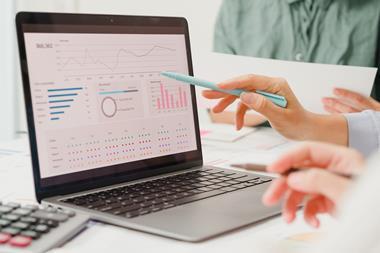
What’s more, reviews are only one source of instant, real-time data that suppliers can access via online platforms to drive growth, as Saunders explains. “E-commerce can create a very rich dataset around things like browsing and conversion, and it allows brands to segment this down by customer types,” he says. “It is also better at tracking customer journeys and repeat-purchasing than stores. And it allows a lot of A-B type testing to see what messaging, visuals or promotions work well. It is basically a lot more flexible than stores for providing feedback – and that allows retailers and brands to optimise performance.” These learnings can then be applied to other channels, he points out.

“Younger consumers are digitally savvy and, as these are the shoppers of the future, it is very important to cater to their needs to win lifetime loyalty”
– Neil Saunders, managing director for retail, GlobalData
At Amazon, for example, suppliers have access to a self-serve toolkit of real-time analytics, which allows them to understand purchase patterns and customer preferences, as well as identify and track trend signals before they reach the mainstream, explains Masters.
Again, this isn’t about replacing physical sales but adding to them. For example, there are some demographics that consistently over-index on online grocery consumption, reveals Saunders. These include busy families prone to spending significant sums on their weekly grocery shops, and high-income professionals who prioritise convenience and ease. “Another is the younger consumer who is very digitally savvy and, as these are the shoppers of the future, it is very important to cater to their needs to win lifetime loyalty,” he says.
Without an online presence, these high-value shoppers might otherwise pass brands by. Features like Amazon’s Subscribe & Save, which has tens of millions of users globally, are specifically designed to cater to these convenience-driven shoppers, and to create ongoing relationships between brands and customers, turning a one-off purchase into a recurring revenue stream.
Challenging misconceptions
All too often, lingering misconceptions around e-commerce have made suppliers hesitant about actively pursuing online growth.
For Masters, one of the biggest of these is the idea that working with the likes of Amazon is purely transactional, with suppliers left to fend for themselves. “[But] the reality is very different,” he notes. Each Amazon grocery supplier is assigned a dedicated account manager with whom they work collaboratively to develop strategic plans, he says. The team also runs Vendor Days and monthly vendor panels where suppliers can attend to learn more through interactive sessions, share challenges and discover emerging opportunities they’d like to take advantage of.
Another misconception is that only big brands with big budgets can be successful on Amazon, notes Masters. “In fact, our model creates opportunities for smaller businesses too and a wider range of suppliers who may otherwise struggle to access traditional grocery buying structures,” he says. “The barriers to entry are deliberately lower.”
Laying the foundations for supplier growth is a win-win, he insists. “It’s absolutely at the core and we’ll use various different tools in order to enable that to happen.”
The bottom line is that any grocery supplier looking to deliver genuine growth, rather than simply survive the current tough trading landscape, needs to consider whether they’re using e-commerce to its full advantage. As Saunders sums up: “No retailer or CPG brand can ignore digital as they could miss out on growth – and in a market where volume is flat, that growth really matters.”
To discover how Amazon can help your brand to scale effectively click here.