


Today’s stars are seeking more than a quick payout for a TV ad. Many are taking co-ownership of brands – or becoming founders themselves
Four weeks before a global pandemic would send the UK into lockdown, Paul Schaafsma sat waiting nervously in the Fulham offices of Kylie Minogue.
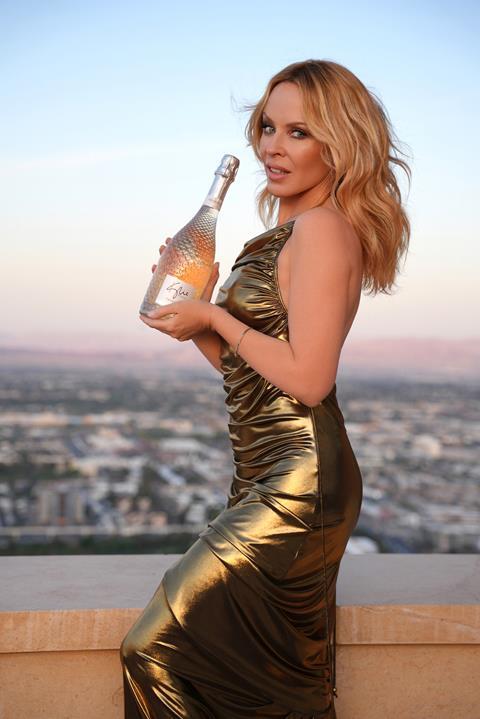
The former Accolade Wines CEO, then two years into his own venture with Benchmark Drinks, had been told the Australian singer was interested in creating her own rosé.
“She came around the corner of the office with a platter of cheese and biscuits,” he recalls with a smile. “It completely broke the ice.”
The pair talked for three hours, moving from “embryonic idea” to the Tesco launch of Kylie’s Signature Rosé in just three months – a timeline made all the more extraordinary by the fact that Covid meant samples had to be left on Kylie’s doorstep or sipped over the garden gate.
Throughout, Minogue was involved at every stage, from sketching out the label design and attending meetings with major supermarket buyers to travelling to meet winemakers and cellar hands in Provence
“One of the things she said was that it’s so important to her that she’s involved and that it’s authentic,” says Schaafsma.
It proved a winning formula. The wine has now sold more than 20 million bottles, with year upon year of double-digit growth. More than that, though, it has become emblematic of a new type of celebrity deal sweeping the shelves in food and drink.
Where once musicians, actors and sports stars were paid a (huge) fee to endorse products they knew next to nothing about before walking away, they’re now looking for skin in the game. They’re taking equity stakes in ambitious startups, signing on as creative directors and co-founders, and stumping up millions of pounds of their own cash in investment rounds.
But if that means the potential upside is bigger for both the celebrity and the brand, so too is the risk. So, how have things changed? And what are the real stakes when it comes to striking a celebrity deal in 2026?
The origins of the co-ownership model
By the time Gary Lineker signed up as an ambassador for Walkers Crisps in 1994 – featuring in its ‘Welcome Home’ ad – celebrity endorsements were already booming on the back of explosive growth in both TV and sports marketing. Multimillion-pound deals had been struck between Pepsi and Michael Jackson, Kellogg’s and The Monkees, and McDonald’s and Michael Jordan.
But for Raf McDonnell, founder and MD of Talent & Brands, Lineker’s collaboration with Walkers marked something more significant: the start of a move away from celebrities delivering a one-liner and walking off to cash their cheque, toward something more genuinely reciprocal.
As a marketing manager for Walkers in the 1990s, McDonnell watched the former England striker get deeply involved behind the scenes in a far more “multifaceted” arrangement than anything that had come before. Lineker would show up to sales conferences, take calls with major national account holders, join the team on corporate away days and travel the UK on store visits.
“[Lineker] was a believer in the brand, developed great relationships with all of the team and was fully integrated, even in some of the brand development,” says McDonnell.
It set the tone for what brands could expect with the right celebrity partnership. And it wasn’t long before celebrities had their own realisation. The boom in social media had suddenly given them a captive audience of millions. They became influencers as well as actors, musicians and sports stars.
Their role “in humanising products, helping explain and story-tell made them far more appealing”, says Tom Ainscough, VP of commercial partnerships at representation and marketing agency The Team. This gave celebrities new power not just to endorse, but to materially help grow a product. And in return, many wanted a stake, not a fixed fee.
One of the first to grasp this was rapper 50 Cent, who turned a 2004 trial endorsement deal with Vitaminwater into a reported $100m payout when the brand was sold to Coca-Cola three years later. The musician had acquired equity in the brand while helping to power its sales from $100m to $700m in just three years.
The deal created a new blueprint for many of the celeb deals that followed. In 2018, actor Ryan Reynolds took an undisclosed stake in Aviation American Gin, an Oregon-based craft spirits brand that had first launched in 2006. Reynolds spearheaded creative direction and used his profile to catapult its growth. In 2022, Beyoncé headlined a $31m Series A funding round for lemon water brand Lemon Perfect.
Partnerships that shaped celebrity brand deals
1983 | Michael Jackson and Pepsi
A year after the release of Thriller, Michael Jackson, along with his brothers, struck a reported $5m deal with Pepsi to front one of its marketing campaigns, in what has since been lauded as one of the first contemporary endorsement deals of its kind.
The deal saw Jackson moonwalk and boogie in Pepsi’s ‘The New Generation’ TV ad, delivering huge uplift for the soft drinks brand, which also sponsored The Jacksons’ Victory Tour.
1994 | Gary Lineker & Walkers
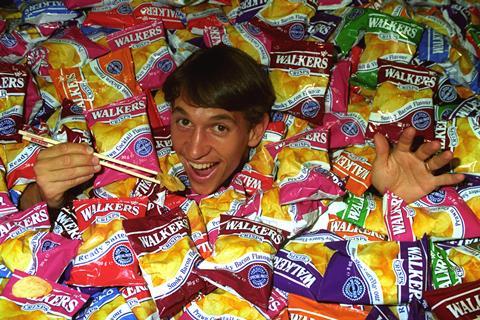
It is 30 years since the former England striker first signed on as brand ambassador for Walkers, making it one of the most enduring partnerships in fmcg. In that time, Lineker has become synonymous with the snack, appearing in countless TV ads and ATL campaigns, as well as playing an active role behind the scenes. Despite rumours of a split (Lineker hasn’t been in an ad since 2021), neither side has confirmed they’ve parted ways.
2004 | 50 Cent and Vitaminwater
New York rapper 50 Cent wasn’t settling for a fixed fee when he began talks to become an ambassador for Vitaminwater, then owned by Glaceau.
Having already signed lucrative deals with Reebok and launched his own video game, he reportedly agreed a 10% stake in the brand, before helping to turbocharge sales to $700m within three years. That landed him a tidy sum when Coca-Cola bought the brand in 2007 – and created a blueprint for a new model of celeb partnerships.
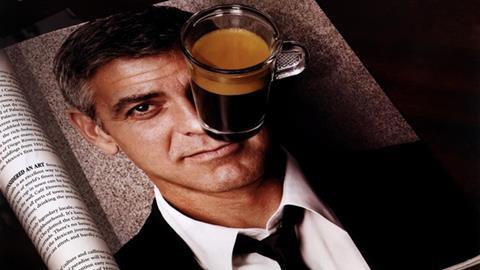
2006 | George Clooney and Nespresso
Proof that the more traditional celebrity endorsement deal is by no means dead. George Clooney has been the (rather handsome) face of Nespresso for 20 years, his A-list power a pivotal driver in its meteoric rise to a multibillion-pound brand.
Interestingly, though, it doesn’t appear Clooney has taken a financial stake in the business, settling for a seat on its sustainability advisory board and $40m in reported fees.
2018 | Ryan Reynolds and Aviation Gin
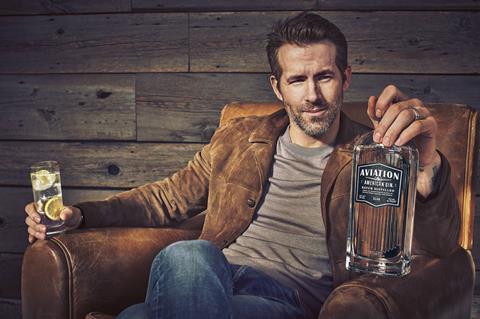
Just two years after acquiring a stake in Aviation American Gin, actor Ryan Reynolds netted millions from its sale to Diageo in 2020. Reynolds had deployed his signature wit to lead all creative marketing for the brand and will be “its face” until 2030 as part of the arrangement. The actor said he had not anticipated “the sheer creative joy learning a new industry would bring”.
Then, this February, Kim Kardashian signed up as co-founder and partner of clean energy drink startup Update. It isn’t for show – according to the brand, Kim K already helped update packaging and product formulation ahead of its rollout into 4,000 Walmart stores earlier this year. And that isn’t even touching on the spate of celebrities that have eschewed existing products to go it alone.
“Once one goes, it kind of snowballs,” says Ainscough. “It can become a powerful vehicle for both brands and talent, and I think they’ve realised that.”
These deals aren’t always quite what they seem, though. While celebrities are sometimes heavily involved, there can be a little “smoke and mirrors” around terms like ‘investor’, he says. Equity might be handed over by a smaller brand that couldn’t otherwise afford the services of a top-tier celebrity. And of course, the talent is often short on time.
But there’s definitely a shift in dynamics, with many celebrities realising that by “launching their own brands, or taking equity or ownership in brands, [they’re] able to realise the full benefit, the full commercial upside of their distribution power”, says Leon Harlow, group commercial director at talent agency YMU. “Creators have built their own highly engaged communities and can scale brands for a fraction of the [average] customer acquisition cost.”
The negotiating table
There is no single script for how these partnerships come about. In rare cases it’s as organic as a mutual friend and bonding over a shared cheese platter – as was the case with Minogue and Benchmark Drinks.
But with big stakes (and sometimes big egos) at play, the roadmap from potential deal to partnership announcement is often far more convoluted, orchestrated by a complex ecosystem of agents, brokers and lawyers working behind the scenes.
Typically, a brand on the hunt for its next celeb partner will hire a specialist agency to sift through their rolodex and suggest celebrities with the right interests, acumen and even temperament. They will then create a shortlist to present to brands.
It can go the other way, too. Celebrities aren’t always waiting for the right deal to land in their lap, says Harlow, but are instead looking for opportunities themselves. “There’s real long-term strategy now around the top creators and celebrity talent in a way that there perhaps wasn’t 10 or 15 years ago.”
For example, it was Ant and Dec’s team that first reached out to Lancashire-based Northern Dough Co ahead of the presenting duo becoming co-owners in 2025. “We were looking for brands that already resonated with Ant and Dec and what they stood for, and we had a very specific set of criteria,” he says. “Long before they announced that partnership, Ant and Dec had met the founders, they’d tried and loved the products, they’d immersed themselves in the roadmap and in the plans that the business had and its values.”
Whoever makes the first move, the next phase gets into the details. Brokering a co-ownership deal now involves rigorous due diligence on both sides, says McDonnell. It isn’t only brands poring through old social media feeds. Celebrities are checking for skeletons in the closet, too. “Creators and talent are becoming much pickier. They’re looking into the ethics of the companies they’re working with, whether they’ve been involved in scandals, who’s the backer, where’s the money coming from, or even what their stance is on political issues. They don’t want to enter into a deal that could badly impact their reputation,” he says.
Then come the lawyers, drafting not only commercial contracts (as they would for celeb ambassadors of Lineker’s ilk) but also corporate deals related to equity stakes or joint venture deals. Tensions can arise around how much say a celebrity has in product development, their time commitments and whether they have approval rights over who else is associated with the brand.
All of this can lead to “potentially protracted conversations”, says one lawyer who has acted for major fmcg brand owners in this space. Sitting around the negotiating table can be a wake-up call, he adds. “Brands who may be new to this come in, and obviously there’s the excitement around the talent, but then comes the realisation of the realities of what can be potentially very demanding clients.”
“Brands and talent speak different languages,” echoes McDonnell. “Brands require certainty, and they require fixed guarantees of what they’re getting. Talent live in a world of uncertainty and, well, they’re people. They have good days. They have bad days. They have illnesses. They have break-ups.
“Managing those ambiguities and difficulties and working with the entourages that come with these celebrities is part of the skill and the art of putting these deals together. It’s why people like us exist.”
The rise of the celeb founder
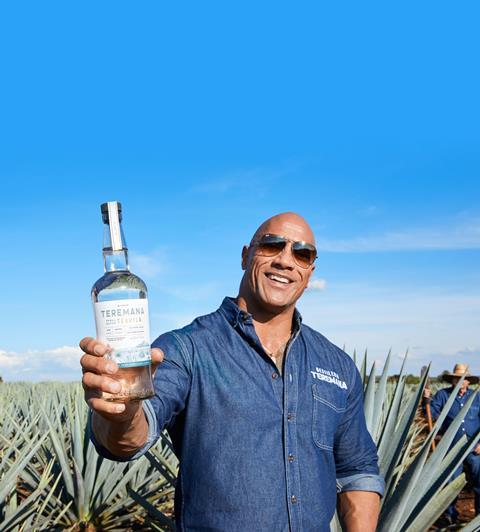
For some celebs, a slice of someone else’s pie is no longer enough – they want their own. From Dwayne ‘The Rock’ Johnson (Teremana Tequila) to Brooklyn Beckham (Cloud23 Hot Sauce) and Margot Robbie (Papa Salt Coastal Gin), recent years have been littered with celebrity founders determined to build a brand from scratch, with varying levels of success.
“Sometimes the best route to market is to find an existing brand that has generated proven traction and partner with them in a co-founder model, because they’re early stage and willing to be shaped and give up strategic influence in a true partnership,” says YMU’s Leon Harlow. “Other times, it’s the right decision to launch a full, ground-up new brand. We’re doing that with our talent and creators in different verticals from petcare to food and drink.”
When they take that route, what matters most is recognising they are not experienced industry operators. Instead, “they need to find experienced operators, exited founders, industry veterans, people that really know and understand the space,” he says. “It’s also about having a distribution strategy from the start, and real 360-degree marketing capabilities. If you’re reliant on a few social posts, that’s not going to build a brand. It might throw rocket fuel on it, but you need that always-on consistency to build a true, loyal customer base.”
Ultimately, “the quality of the brand and the product is paramount”, Harlow concludes. “You can be the most influential celebrity or creator in the world, but if the product doesn’t stand up, then ultimately it won’t succeed.”
Balancing risk vs reward
Dealing with a big ego or bad temper isn’t the only risk when it comes to getting into bed (legally speaking) with a celebrity.
With greater professionalisation has come fewer public slip-ups than brands faced in the late 1990s and early 2000s. “Pepsi were famously the sponsors of Britney Spears and paying many millions for her to be their global ambassador, and she was often photographed drinking a Diet Coke,” smiles McDonnell. “That would not happen in today’s world.”
But in their place, new issues have surfaced, including the high-profile legal fallout typified by Sean Combs and Diageo.
“This world has become more professional, which means the likelihood of scandal, mistakes, etc, is minimised, but you are dealing with people,” says McDonnell. “If your brand ambassador does something that brings your brand into disrepute, then that’s a huge issue and could have a massive impact on your company, your share price or your reputation.”
Even more so if they are legally ensconced in the brand. “If you’ve been working with that celebrity for five years, it’s not so simple to suddenly go: we’re no longer dealing with that. The world is much better prepared to deal with those situations, [but] there’s always a risk.”
It’s rare, though, insists Ainscough. “I was trying to think of examples where things have gone south, and I had to scratch my head a little,” he says. The worst case he could come up with was a celebrity (that hadn’t been recommended) failing to show up to a shoot.
Much more common is that these partnerships simply fizzle out or fail to land.
Celebrities and brands alike may covet the type of billion-dollar exit that George Clooney achieved with his Casamigos tequila brand in 2017. But the product needs to be right, the passion needs to be genuine, the relevance for a celebrity’s audience needs to be there and the right fit needs to be right for that scale to be feasible.
For brands toying with the idea of a celebrity partnership, how can they mitigate that risk?
“Rather than scrolling Instagram and finding names that you think share a similar mentality to your brand, think more strategically about the kind of audience that you’re trying to tap into and the type of growth that you’re trying to achieve,” says Harlow. “Think strategically about what you need from a talent partner or a creator partner and recruit against that moving target.”
Give them a meaningful role, too, he adds. “If you’re going to ask them to accept a structure where part of their remuneration is delayed because it’s equity or it’s dividends or it’s future earning potential, you have to offset that risk by giving them a level of strategic influence and involvement that makes them feel like they’re masters of their own destiny, that they can control the success of that venture more than if it were pure promotion.
“The best equity and venture deals we’ve done, there’s that deeper level of involvement and integration.”
If it’s superficial, it won’t work, says Alex Kemp, executive creative director at The Team. “Audiences aren’t stupid. They’ll see through it. Because of social media, we have so much more access to celebrities. The idea of waiting to see them in a magazine or on a TV ad has changed. So consumers are not as easy to flog to. You have to be smart.”
Get it right, though, and the sky’s the limit.
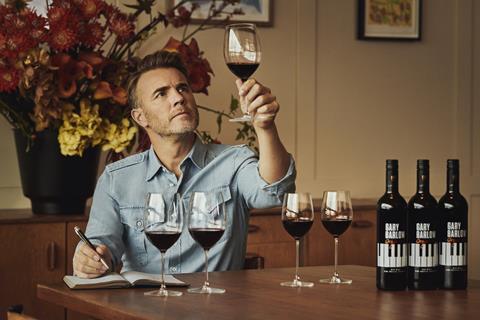
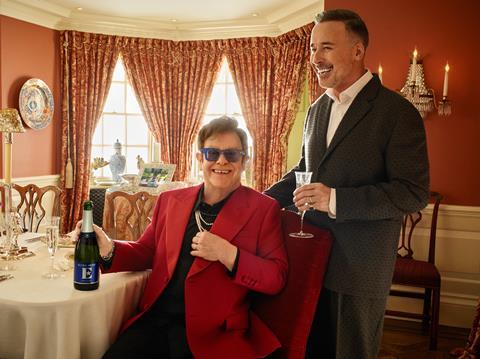
Take Schaafsma, who despite never having planned “to get into the celebrity business” has since built up a portfolio of celebrity bands that includes Gary Barlow, Elton John and Gordon Ramsay.
The common thread is that all these celebrities want to do more than license out their face on a wine bottle. “We wouldn’t do a deal unless we were talking directly with the principle. Simple as that,” he says. “They need to be the one who’s driving the passion. We only do partnerships. That’s it.”
How Diageo and Diddy came to blows
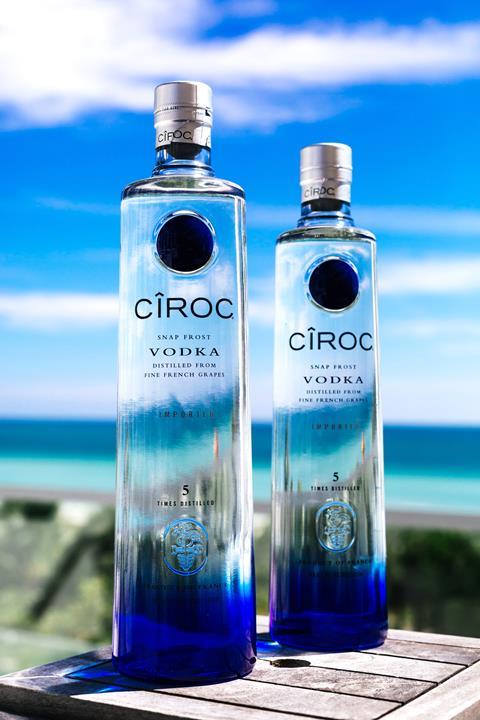
In 2007, amid struggling sales of Cîroc vodka, owner Diageo approached music mogul Sean Combs, aka P Diddy, and offered him a fixed fee to endorse the brand.
Combs, however, had seen what the likes of 50 Cent had achieved through equity, and pushed for something different: a share of future profit, along with the title of chief marketing officer. “I’ve gotten to the point where I don’t want to do just endorsements,” he allegedly told execs. “I want ownership.”
For years, it looked like a win-win. From 300,000 cases in 2007, Diddy grew Cîroc to 2.5 million cases a year. He reportedly made around $50m annually from the deal. Such was the success of the partnership that in 2014, Combs and Diageo acquired the luxury DeLeón Tequila brand in a 50-50 joint venture.
But then, the relationship soured. In 2023, Diageo found itself the subject of a lawsuit by Combs, who claimed the company had neglected the tequila brand, in part because of inherent racism within its senior leadership.
Shortly afterwards, Diageo hit back, saying it had in fact invested more than $100m (£78m) in DeLeón Tequila and “tried for years to salvage the broken relationship with Mr Combs”.
It added: “Despite having made nearly a billion dollars over the course of our 15-year relationship, Mr Combs contributed a total of $1,000 and refused to honour his commitments. Mr Combs’ bad-faith actions have clearly breached his contracts and left us no choice but to end our business relationship.”
The lawsuit was settled in 2024, with both parties confirming they had no ongoing business partnership.
Since then, Combs’ reputation has been completely destroyed by allegations of racketeering, sex trafficking and more.


No comments yet