



2025 was the year the hackers went shopping. M&S, Co-op and Morrisons all battled major cyberattacks that locked staff out of systems and left store shelves bare
The impact of hacks alone was disruptive enough, but it’s just one of a trolley load of challenges thrown at the grocers over the past year, alongside surging employment costs, roaring food inflation and changing shopper habits as UPF backlash grows.
This is The Grocer’s roundup of the top supermarket stories that drew eyeballs and sometimes ire in 2025.
Asda shows green shoots – but mostly weeds
Allan Leighton has certainly rung the changes at Asda since returning in November 2024, as he attempted to reverse the supermarket’s dire market share performance (which has slipped by 3.2% since the 2021 takeover by TDR and the Issas).
First he’s sought to cut costs, including two rounds of job cuts to store management and HQ teams.
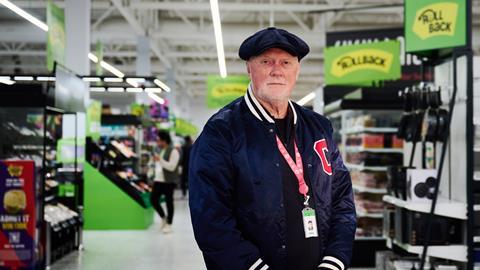
Leighton has also sought to restore Asda’s price position of being 5%-10% cheaper than its full-offer rivals, with the return of Asda’s iconic Rollback price initiative in January.
Campaign communications vowed that the Rollback would involve moving away from three or four-week promotion cycles to 12 weeks, then to a permanent cheaper Asda Price.
However, as The Grocer revealed in April, up to 63% of products during any one period were rolled back for far shorter periods than suggested. It prompted a furious response from Leighton, who defended the strategy in an open letter to The Grocer.
Asda has also promised to slash 6,000 SKUs from its total offer as part of the strategy.
The effort had led to green shoots and a dramatic slowdown in the rate of sales decline. However any progress was torpedoed by the disastrous implementation of its Project Future IT switchover in August, which crippled availability and online ordering.
Morrisons turns to farm shops to spark turnaround
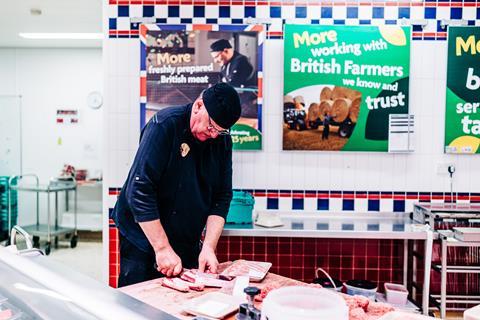
Just down the A647 in Bradford, Morrisons is another grocer in the midst of a turnaround plan.
CEO Rami Baitiéh kicked off 2025 with a major cost-cutting exercise that saw more than 200 people axed from its people development team in January.
Baitiéh partly blamed the “avalanche of costs” Morrisons faced following Rachel Reeves’ 2024 autumn budget. A second round of cuts followed in March, after the closure of nearly 100 fresh counters, more than 50 cafés and 17 convenience stores, putting 365 jobs at risk, as part of a wider relaunch of its iconic Market Street format.
Convincing shoppers to return to the “Market Street of Tomorrow” is a major strand of Baitiéh’s strategy. The supermarket aimed to bring a more premium farm shop-style fresh food offer to its stores as part of the work, which is being led by Morrisons’ new group trading director Andrew Staniland and new chief customer officer Matt McLellan.
Morrisons want to make Market Street more accessible to home cooks by including value-added products such as foil trays in which fish are sauced, marinated, breaded, coated and ready to cook.
It’s also slashed 2,500 SKUs from its lineup and dialled back loyalty promotions with a new “laser-focus on clear pricing and value” across stores.
Tesco cuts jobs despite record Christmas
Not even the all-conquering Tesco was able to escape the impact of market pressures.
Indeed, just 21 days after announcing its “biggest-ever Christmas sales” (up 4% across the six weeks to 4 January), then UK CEO Matthew Barnes announced Tesco would cut up to 400 roles as it looked to cut costs.
While Morrisons’ Baitiéh was blunt about where he thought the blame lied, Tesco blamed the cuts on a “more competitive than ever” grocery market
Reading between the lines, it meant it had to find new ways to invest in price in order to defend its market position, ahead of yet-to-materialise fears that Asda’s value push could spark a sector price war.
Affected staff included those manning its in-store bakeries as the supermarket moves away from scratch baking, alongside management in Tesco Mobile phone shops and a raft of head office positions.
Sainsbury’s rolls out ‘lock’ to counter Nectar loyalty fraud
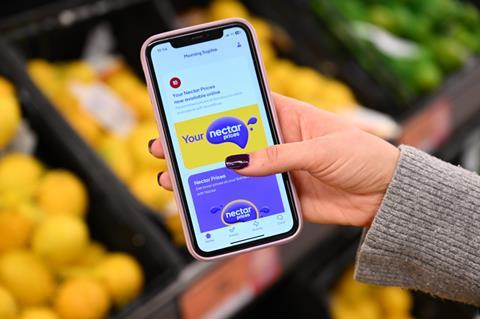
If there’s an example of just how digitised supermarkets have become, and the new risks this brings, it’s Sainsbury’s, which in February rolled out a new ‘spend lock’ to its Nectar Card digital app in order to protect shoppers being defrauded of their Nectar points.
It followed a growing wave of shoppers reporting they’d had their loyalty points stolen by scammers who had access to their Nectar account numbers. In total an estimated 12.5 million rewards points, worth the equivalent of more than £63,000 over the past year, were taken by scammers who had accessed Nectar accounts.
The feature enables shoppers to freeze their account, and limit where their reward points can be redeemed.
M&S Italian innovation excels despite cyberattack
M&S has been in the headlines for all the wrong reasons this year following the £136m-plus fallout from its devastating cyberattack. But its continued NPD efforts have also drawn the eyes of The Grocer readers.
Most noteworthy was the launch of six new premium pasta ready meals for one under its Collection brand, in September.
One of a number of new ‘ultra-premium’ launches across the mults, the “restaurant quality” meals aim for authentic Italian flavours, with three of them using whole Italian tomatoes, picked in season and then slow-cooked and simmered to reduce water, according to M&S.
They were seemingly a hit with M&S shoppers too, and had helped grow volume sales of Italian meals at the retailer by 25% year on year by October. Value sales were also up by 35% year on year since launch, M&S said at the time.
All change at the top of Waitrose

Few would have begrudged Waitrose MD James Bailey for needing a break, when he stepped down from leading the supermarket in September.
His five-and-a-half years at the helm of the ‘posh’ grocer have been turbulent to say the least. Beginning in the midst of the Covid pandemic, Bailey battled falling sales as Waitrose – hampered by high prices, availability struggles and aging infrastructure – lost market share to M&S.
He turned it around, implementing a range of price cuts, a new push on loyalty and launching Waitrose’s most ambitious store expansion strategy for many years, with plans to build 100 new c-stores by 2029.
JLP chairman Jason Tarry turned to a familiar face for Bailey’s successor, naming former Tesco executive Tom Denyard as Waitrose’s new MD less than a fortnight later. He will take over in January, with retail director Tina Mitchell handling the reins as interim MD until then.
Iceland vows to shake up retail media
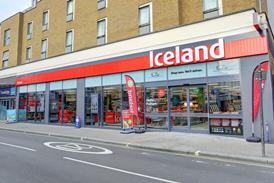
Iceland Foods, never one to shy away from an ambitious strategy, raised eyebrows in March when it unveiled plans to roll out 5,000 digital screens to stores, following the founding of its first-ever in-house retail media team.
Longtime frozen buyer Adam Smith was promoted to lead the new division, which handles all elements of retail media, including screens, online advertising and traditional paper PoS across Iceland and Food Warehouse stores.
The rollout has come alongside a wider investment in technology across the business, including a new CRM system and relaunch of its Bonus card.
Iceland was relatively late to the retail media party compared to the rest of the sector, admitted CEO Tarsem Dhaliwal, in an exclusive interview with The Grocer in April. However, that hasn’t stopped it innovating at speed, including a recent trial of aisle-roaming retail media robots.
“We won’t prostitute ourselves, but there’s income to be had, and we want to be part of it,” Dhaliwal said.






No comments yet