





For the poorest shoppers, access to healthy food is scarce. Affected areas are caught in a vicious circle of reduced choice and more fast food. What steps need to be taken?
Gordon McKee paints a vivid picture of life in Glasgow’s Castlemilk district. In a November debate in the Commons, the Labour MP for Glasgow South described the issues faced by people trying to access affordable, healthy food in an area where the nearest supermarket is three miles away.
“It’s one of the most isolated areas in Glasgow,” he said. “Despite being just five miles from the city centre, there’s no train station, just unreliable buses. In an area where most people do not have a car, the options are a £6 return bus fare, if the bus turns up, a six-mile walk with heavy bags in the wind and rain, which there’s lots of in Glasgow, or spending £20 on a return taxi journey. For many people, that £20 is the choice between accessing healthy food and turning the heating on.”
It was the latest sign that food deserts are back on politicians’ agenda. In January, The Grocer reported the government is planning to roll out healthy food pilots with supermarkets and suppliers to tackle obesity levels in the country’s most deprived neighbourhoods.
At the time, a source close to the discussions told The Grocer: “The idea is for these to be trialled in areas known as ‘food deserts’ because of the lack of access to affordable food and high levels of unhealthy food.” The phrase also popped up in the minutes from the Food Strategy Advisory Board meeting on 8 December.
So, as the term comes back to the fore, what exactly are food deserts? What are the key barriers to healthy eating for those in the most deprived areas? And, most importantly, what can be done to help?
The link between deprivation and obesity is well known. Numerous social, economic and environmental factors, such as lack of facilities, stress, time pressures and price, make it harder for people from poorer areas to eat healthily.
As a result, children in less privileged areas are twice as likely to be obese as those in the wealthiest. In 2016, the Obesity Health Alliance warned of “a looming significant weight gap between the poorest and wealthiest primary school-aged boys”.

The term ‘food deserts’ has been identified as a key contributing factor. One of the first academic papers on the topic was written in 2002.
The exact meaning of the term has been debated over time. “There’s no one definition everyone agrees on,” says Graham Clarke, an expert in retail and business geography at the University of Leeds. “To me, it’s simply any area with poor access to affordable and healthy food. These areas can be rural, urban, ethnic, student, etc. Normally the concern is greatest in low-income areas (the large council estates in particular), which the main grocers tended to ignore in the ’80s and ’90s.”
Quantifying elements such as ‘access’ can be tricky, given that what’s easily accessible to one person might be impossible for another. Typical measures of reasonable access vary between a radius of 500m to a mile (between a 10 and 20-minute walk). The same difficulties with quantification arise for whether something is ‘affordable’ and for what constitutes ‘healthy’.
However, most agree the issue should be summed up as a lack of affordable, healthy food in places people can realistically access.
Affordability of food
‘Limited incentives’ for supermarkets
That issue of access is often tied to the proximity of large supermarkets. Retail geographer Clarke explains how in “the so-called ‘golden age’ of grocery retail expansions” – from the 1970s to 1990s – the mults “ignored poorer areas as they searched for higher-income greenfield sites”.
This meant low-income estates and inner cities were the subject of very little retail investment. The lack of services to support new residents were “a major design fault”, Clarke says. “Residents had to rely on a few small shops that stocked only a limited selection of fresh fruit & veg,” he explains.
The problem persists today. For most supermarkets – and most convenience stores, too – the economics of either opening in or offering fresh produce in the poorest areas still don’t add up.
“Commercial determinants drive the major supermarkets,” says Alicia Weston, founder of food poverty charity Bags of Taste. “In poor areas, there won’t be much demand for high-margin items like truffle oil. These high-price items are what drive their margins, because they barely make anything on basic foodstuffs, which is all people on low incomes can afford.”
This means there are “limited commercial incentives” for supermarkets to open branches in the poorest areas. As a result, these areas will likely be served by independent shops or convenience formats from the major mults, where prices are uniformly higher.
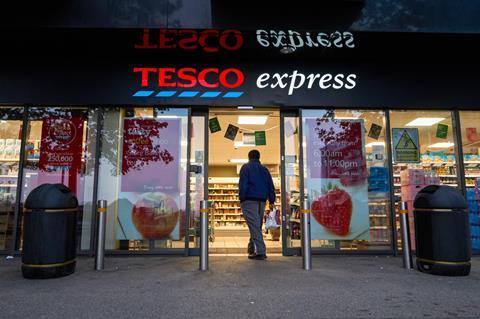
“In Tesco Express, Sainsbury’s Local, Best-one, you tend to only have branded items,” says Dianna Smith, an expert on household food insecurity at the University of Southampton. “It’s Birds Eye fish fingers versus generic ones. And I go back to fish fingers a lot. Yes, I know it’s not ‘healthy’ food, but if you’ve got kids, fish fingers are pretty much a sure-fire bet to feed them.”
An often overlooked facet of food poverty is that people don’t want, and can’t afford, to waste food, she explains. “So, I think we over-emphasise the importance of fresh fruit & veg,” she says. “If we can get more people thinking about frozen or tinned, that would be a big step forward – reminding folks that tinned tomatoes are just as good for you as fresh ones.”
That’s even an more important point considering stores in these areas often don’t sell fresh fruit & veg due to their short shelf life.
“Low demand quickly renders these foods unprofitable at the item level,” says Megan Blake, an expert in food security and food justice at the University of Sheffield. “There’s substantial waste compared to frozen pizza. This shapes what’s available in the store.”
“On the consumer side, numerous factors prevent sufficient demand in certain areas. First is the price. Fruit & veg go off and are risky when you can spend the same amount on food that’s ‘financially safe’ (everyone likes it and it won’t go off). When there’s a concentration of people in that same boat, demand for these items declines and they remain on the shelves longer. When that occurs, perceived quality declines. If you go into a shop and all you have are some tired-looking veg, you’ll give it a miss. It isn’t good value. Over time, eating fresh fruit & veg in that area is de-normalised.”
Food inequality in numbers
Affordability isn’t just about shelf price, either. It’s also about the cost of transport, points out Mark Game, founder of The Bread & Butter Thing. In areas where there’s no supermarket and public transport is unreliable or expensive (or both), residents are hit by a “poverty premium: higher prices at convenience stores, extra travel costs or meals missed altogether”, he says.
While minds might wander to poor, inner-city neighbourhoods when picturing such issues, it’s just as prevalent in rural and semi-rural areas, where the only shop in a village is a small local store, the nearest supermarket is miles away and buses run once an hour, if at all.
Healthy food ‘out of reach’
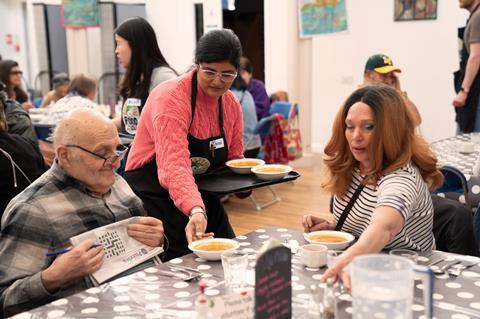
Ultimately, though, affording a healthy diet comes down to income. And lots of people simply don’t have enough money. “Food deserts aren’t just about distance to shops, they’re also about cost and health,” says Sophie Tebbetts, CEO of community kitchen FoodCycle.
“In many communities we work in, healthier food is simply out of reach for people on very low incomes. Only 15% of our guests have £35 or more per person per week to spend on food, far below the £52 needed for a healthy diet,”
A similar story plays out in Gorton, Manchester, where Marion Jones runs the local Bread & Butter Thing food club. “We have a big Tesco and a big Aldi, but we still have people coming into us every week without fail. It’s an affordability issue,” she says.
“The supermarkets put prices up every week, it feels like. Price rises are affecting people round here very much, very much.”
Food issues faced by guests of FoodCycle community kitchen
- 75% have skipped meals
- 67% say they can’t afford to buy the food they need
- 11% have gone into debt or borrowed money to buy food
- 30% don’t have a fridge
- 41% do not own or have access to an oven
- 54% don’t have a hob
Source: FoodCycle survey of 1,760 guests, 2025
Last year, the Bread & Butter Thing polled 4,000 members about what stops them eating well. Two-thirds said healthy food was simply too expensive, while more than 70% said they could and would eat a balanced diet if money were no object.
According to the Food Foundation, healthier foods are more than twice as expensive per calorie than less healthy foods in the UK – and healthier food has increased in price at twice the rate in the past two years.
In its 2025 report, Roadmap to Reducing Food Insecurity in the UK, the Food Foundation found that “to reduce food insecurity, increasing the incomes of the lowest-income households is essential”, because “neither benefit levels nor the national living wage are based on the cost of essential goods, which limits many households’ ability to afford a healthy diet”.
The prevalence of fast food in the poorest areas also has a negative impact on health. There’s an unsurprising correlation between deprivation and the number of fast food outlets present, according to the government. The Food Foundation found almost one in three UK food outlets are fast food in areas of higher deprivation, compared with one in five in the wealthiest.
Junk food isn’t just more readily available in these areas – its marketing also tends to target the nation’s poorest people. Junk food ads appear “six times more frequently per kilometre in the most-deprived areas compared to the least deprived”, found research last year by the University of Liverpool in collaboration with campaign group Bite Back.
More budget options needed
If the barriers to healthy eating in deprived areas are numerous and complex, working out how to help is just as difficult. One hugely impactful change would be the major retailers “offering more budget options in their smaller-format stores”, Smith says.
Following a Which? campaign in 2023, there was some movement here. In August 2023, Tesco said it replaced over 50 branded items with cheaper alternatives, many from its own-label budget ranges.
Sainsbury’s soon followed suit by doubling the number of its Stamford Street products in its convenience stores. Morrisons had already made similar moves with its budget Savers range. And in early 2025, Co-op launched Aldi Price Match across all its stores, including convenience branches.
Nonetheless, when The Grocer took a 10-item shopping list to a Tesco Express and then a Tesco Superstore in London last week, the small Express format came out at more than double the price – and for fewer eggs and 500g less oven chips, too.
The findings came after The Grocer revealed earlier this month that Morrisons, Tesco and Sainsbury’s had quietly removed many of the cheapest products from their shelves by paring back their own-label budget ranges by 15.6%, 13.6% and 6.2% respectively.
So, if the major supermarkets aren’t the solution, it might be down to the government to take action. In July, it launched the Good Food Cycle, a strategy that builds on recent measures to curb diet-related health problems. “Our most deprived communities should never be forced into unhealthy diets where junk food is cheaper than healthy food,” said minister for food security Angela Eagle.
“This is why we’re taking decisive action through expanding free breakfast clubs, widening free school meals to half a million more children and working with industry through our food strategy.”
Ministers are also in talks with supermarkets to bring back retailer top-ups to the government’s Healthy Start voucher scheme, which provides financial support for low-income families to buy healthy food – though it has been beset by technical and awareness problems.
According to Game, government “needs to treat food access like infrastructure”. He wants to see access to healthy food embedded into planning, targeted support to improve affordability and investment in “community-based models that can move fresh food into low-income areas sustainably”.
One such model might be the Good Food Retail Network, a national movement aiming to make healthy food more accessible and affordable in independent c- stores. According to founder and CEO Stephanie rice, it “has a clear route for wholesalers and their suppliers and is already supported by Bestway”.
In a similar mould, Clarke is a fan of community-led shops and social supermarkets – “local solutions that fit the type of food desert being considered”. He cites Community Shop, which opened its 15th store in north Bransholme, Hull, in December as “a great success”.
In terms of access, much has been made of the explosion in supermarkets’ online delivery services, which mean they can cover pretty much all of the UK. The irony is that the people who could benefit most – those who struggle to get to physical supermarkets for various reasons – are largely priced out of the service due to hefty minimum order fees of about £40-£50.
Weston explains how, at Bags of Taste, they encourage participants to split orders with neighbours. And Blake outlines a hybrid delivery model she thinks large stores could and should consider.
“A van equipped with a small pop-up could go into different underserved neighbourhoods to sell healthy food, accepting Healthy Start vouchers,” she explains. “If retailers can’t make the demand in one place, going to where people are, without having to invest in and maintain permanent infrastructure, could reduce some of the financial risk associated with a shop.”
Ultimately, though, this is about gross, embedded inequality. According to Food Foundation figures, the UK’s poorest households would need to spend 45% of their disposable income on food to follow the government’s recommended healthy diet. For the most affluent fifth of households, that figure is just 11%.
For Game, the key is closing that affordability gap for healthy food. “That doesn’t have to simply be food subsidies. Planning and business rates for the right sort of food shops in the right areas would be a good start. Retailers can be part of the solution, but they need support and incentives to do so,” he says. “This isn’t about blame, it’s about shared responsibility across retail, planning and government. If fresh, nutritious food cost what people can realistically afford, many so-called food deserts would disappear overnight.”
A model from across the pond: New York proposes city-owned grocery stores
Like many major UK cities, New York is grappling with food affordability and pressure on household budgets. Against that backdrop, Mayor-elect Zohran Mamdani’s proposal for city-owned grocery stores is moving from campaign promise to practical plan. A new blueprint from Community Food Advocates (CFA) outlines how a small pilot could pave the way for a broader public grocery network.
Phase one would see five municipally owned supermarkets launched with around $60m in first-year funding. The goal: test a no-frills, affordability-first model. At this scale, savings might reach 10–15%, as limited buying power would restrict wholesale leverage.
The bigger ambition lies in expansion. A 20-store network, operating with a streamlined range of roughly 1,500 fast-moving essentials, could generate far deeper savings. By combining scale, centralised purchasing and public backing to offset costs such as rent and labour, CFA suggests prices could fall by as much as 38%. The approach borrows from the U.S. military commissary system, which keeps prices low through minimal mark-ups and coordinated procurement.
Public ownership is only part of the story. The proposal also calls for investment in cooperative food businesses, building on existing models such as Key Food and the Park Slope Food Co-op.
For UK readers, the parallels are clear. With a strong cooperative tradition – led by The Co-operative Group – and renewed focus on food affordability, a council-backed pilot linked to existing co-ops would not be out of place. If New York can make the model work, it may offer a fresh template for treating grocery retail as essential civic infrastructure.
“New York’s model offers exciting potential to reframe food as civic infrastructure,” says Megan Blake, a senior lecturer and expert in food security and food justice at the University of Sheffield. “However, success hinges on curation that goes beyond calories to prioritise healthy food and social connection. Without deep community engagement, they risk creating ‘stores for the poor’ rather than the vibrant spaces our high streets need
Food deserts: the problem and how to solve it
For the poorest shoppers, access to healthy food is scarce. Affected areas are caught in a vicious circle of reduced choice and more fast food. What steps need to be taken?
 Currently
reading
Currently
reading
Food deserts: the problem and how to solve it
- 2




No comments yet