







This International Women’s Day, we meet five fab female founder duos who are working together to transform grocery and ‘build a fempire’
Female entrepreneurs are more visible than ever in grocery. A breakthrough moment came in 2024, when Ocado launched a dedicated ‘aisle’ on its website for female-founded brands, bringing together more than 1,500 products from 130 suppliers.
That idea is growing. Last month, Tesco introduced dedicated Buy Women Built (BWB) shippers to over 100 stores, featuring products from Pip & Nut, Fearne & Rosie and Bio&Me – all founded by women.
“The world we operate in today is night and day versus what it was 10 years ago,” says Thea Alexander, CEO at fmcg consultancy YF. “You used to be able to count the female founders in fmcg that you could look up to on one hand. Now, day in, day out, you see celebrated, successful, female-founded businesses.”
Still, there’s room for improvement. The UK, for example, has 30% fewer female entrepreneurs than other developed economies.
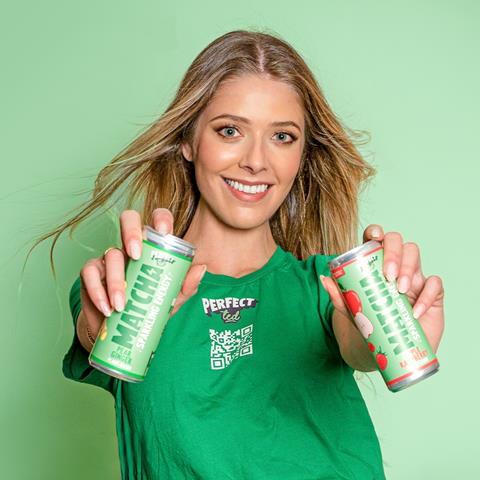
Marisa Poster, co-founder of PerfectTed, says unconscious bias among investors is often a barrier. “Pattern recognition is powerful, and if most of the people who’ve scaled big fmcg brands historically are men, that becomes the mental shortcut.”
Indeed, all-female founder teams only received a 1.9% share of total equity investment in 2024, according to the Innovate UK & British Business Bank Small Business Equity Tracker 2025.
“It’s staggering,” says Double Dutch co-founder Raissa de Haas. “Fmcg is a capital-intensive industry; you’re funding stock, production runs, listings, trade spend, marketing… Without significant funding, it’s incredibly difficult to scale.”
The irony is, investors are missing out on a huge commercial opportunity. Over six in 10 (62%) of shoppers said they’d be more likely to choose a product with a BWB kitemark over an alternative, found a survey of 1,000 UK consumers in the She Built This report in June 2025.
Among women, purchase intent rose to 74% – an important stat given “85% of household spend is held by women”, says Amisha Mody, head of partnerships at BWB. Ocado is a powerful case study: value sales of products from female-founded businesses rose by 20% within six months of the launch of its BWB aisle.
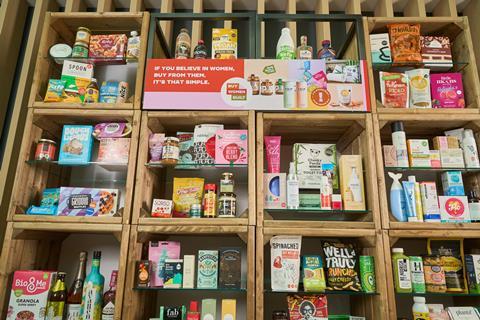
Tesco’s BWB shippers are in their early days, having only launched last month. Still, Fearne & Rosie experienced its “highest-ever sales day” shortly afterwards. “So far, we’re selling over four times our usual,” says Fearne & Rosie founder Rachel Kettlewell.
Kettlewell believes she’s been “very lucky” in her interactions with retailers as a female founder. However, she thinks there’s still “a lot of work to do around parenting” to level the playing field. “Over the past year, I’ve started to work reduced hours over the school holidays, and I don’t work Fridays. I think it’s about having those open conversations around childcare and expectations at home,” she says.
Pip & Nut founder Pip Murray agrees female founders and their families need more flexibility. “When I had my daughter, my partner took nine months of paternity leave and became the primary carer so I could continue to grow Pip & Nut,” says Murray. “That support was transformative, and it’s why I’m a big believer in businesses offering shared and equal parental leave.”
Even against those odds, female founders are flying in fmcg. Here are five female co-founded brands making their mark in the industry…
Ella Harland & Sophie McGregor
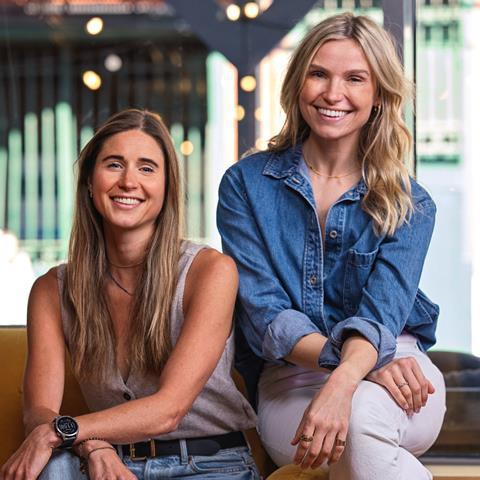
Founders, Griddle
If Sophie McGregor (l) and Ella Harland hadn’t met, they would no doubt still be founders. “Growing up, I had little drawings of conveyor belts of frozen yoghurt,” says McGregor.
It’s one of many business ideas she had before she and Harland met as flatmates in 2016. Soon after, their kitchen became a breeding ground for their entrepreneurial spirits. Eventually, it spawned a concrete business plan in the form of frozen bakery brand Griddle, which produces clean-label waffles. The three years they spent living together laid the foundations of trust, instinct and shared ambition that continues to define their partnership.
“Two is better than one. It’s such a lonely journey otherwise,” says McGregor. “You’re going to get pushed back, and only female founders have that emotional intelligence to really carry each other.”
The pair had experience in fmcg and the corporate world: Harland at Pip & Nut and PwC; McGregor at Vita Coco and in insurance. However, they have encountered regular pushback as younger women in manufacturing and investment spheres. “People talk down to you… They take you as two little girls with an idea, that it’s a hobby, not a proper business,” McGregor says.
“Two is better than one. It’s such a lonely journey otherwise”
While men “walk into the room and own it” and “bulls*** and get away with it”, Griddle’s founders have found their strengths lie in building long-term relationships that are “really solid”, she adds.
Their experiences have made them passionate about fostering a positive culture at Griddle and determined to create an inclusive healthier food brand. It’s a big ask in a tough industry, and McGregor is clear the sector needs “more initiatives for female founders to take that leap”.
Lucy & Taya Jackson
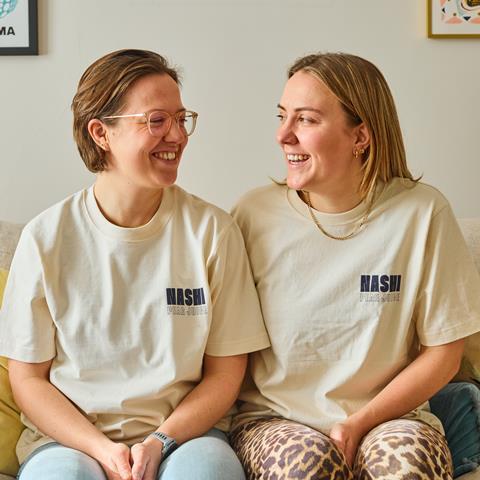
Founders, Nashi
Korean pear juice brand Nashi is pitched as a product you “drink before alcohol for the feel-good way to start your night”. It was born out of sisters Lucy (l) and Taya Jackson’s desire to live a more balanced lifestyle.
“I moved to Australia and tried Korean pear juice,” Taya explains. “It became part of my pre-drinking ritual, so when I came back to the UK, I brought a load with me. Lucy was marathon training, so I gave it to her, and she texted me saying: ‘I feel a million dollars.’”
Korean pear juice has been culturally embedded across Asia for centuries and studies suggest it can reduce hangover severity. “The research isn’t mature enough yet for us to really lean on that, but we are leaning on it fitting into wellness culture,” Taya says.
Nashi comes in 250ml cans, which is typically larger than rival serving sizes and pouch containers. But rather than just the product, the pair believe the brand’s true “superpower” lies in their sisterly bond.
“We get on really well and, don’t get me wrong, we bicker, we argue, but we can speak to each other honestly,” Lucy says.
“We bicker, we argue, but we can speak to each other honestly”
As female founders, the pair have also learned that “preparation is everything”. “It’s obvious there are still rooms in grocery where women are underrepresented, and we’re conscious that lends itself to us needing to establish credibility quickly,” says Taya.
“We also don’t have a big budget. We don’t have a marketing team. We’re doing everything ourselves, from sampling to field sales to packing to suppliers. We hope that will bring us a level of brand equity because people buy from people,” she adds.
The brand is already seeing success in independent retailers. Last year, 100% of Nashi’s stockists re-ordered. “It’s an amazing indicator for us,” Taya says. “But we want to be in all the big retailers too – that’s what we’re working towards.”
Kate Horne & Louise Nicholson
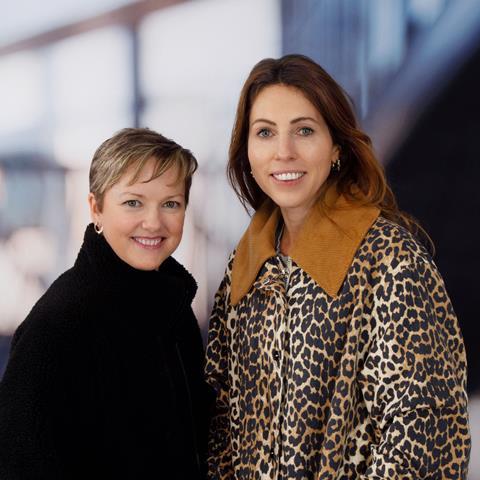
Founders, Craft & Crumb
Homemade birthday cakes are always heartfelt, but almost never straightforward. After a particularly fraught attempt at a Peppa Pig creation, Kate Horne (r) enlisted the help of friend Louise Nicholson. That was the start of their birthday cake kit business Craft & Crumb, launched in 2016.
The pair met in 2010 through a mutual friend and “never thought we’d be business partners”, Horne says. As the business developed, however, they found the cake kits were too niche and complex and pivoted towards eco-friendly party bags and a ‘bake and craft’ offer. Craft & Crumb’s kits combine a kid-friendly bake with a hands-on craft or activity for “a fully creative experience”, says Horne.
Running a business while raising children is no mean feat. “We always want to be mums first,” Horne stresses. But being a duo means they can share the load. Their joint female – and maternal – perspective informs every decision, from simplifying kits to product inspiration. They enlist the help of their kids too. “When they were little, our children were basically in-house focus groups,” Nicholson adds. “They were brutally honest and invaluable in shaping our products.”
“We know what the other is thinking and can often second-guess each other’s opinions”
Their partnership is built on complementary skills. Horne’s background is in product design and sourcing; Nicholson’s in sales and teaching. But friendship underpins the business, and communication is key. “We speak to each other 10 times more than we might speak to a husband during the day,” Nicholson says. “Being friends first means we know what the other is thinking and can often second-guess each other’s opinions.”
That collaboration is paying off. Last year, revenue reached over £1m and it is on track to grow 25% in 2026, with listings in Tesco, Ocado, John Lewis and Selfridges.
Morgan Mixon & Rima Suppan
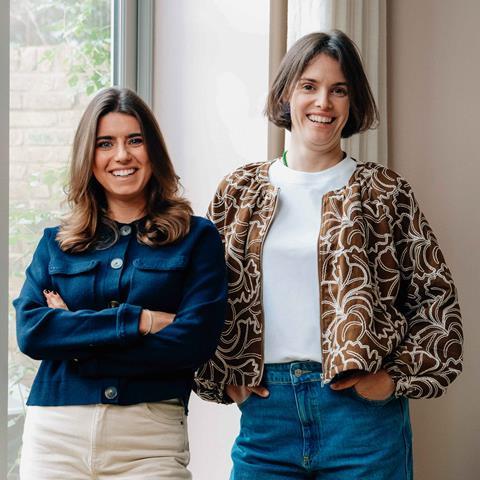
Founders, Peachies
They say finding a co-founder is like dating – when you find the one, you know. For Morgan Mixon (r) and Rima Suppan, that moment came just days into their studies at Imperial College London, where they’d both signed up to run the university’s entrepreneurship club.
“The fact we weren’t friends at the time gave us such clarity on whether it could turn into a fruitful working relationship,” says Suppan. Three years after launching nappy brand Peachies, they now serve 50,000-plus parents and this year are on track to reach eight-digit DTC revenue in the UK alone.
Fittingly, their relationship today is akin to parents who have weathered many storms together. “Neither of us would do this alone,” says Mixon. “Co-founding a business is like parenting children and doing it yourself is like being a single parent.”
She recalls the first time they thought it was all over – their first minimum quantity order, which came a week before Mixon’s wedding: “We didn’t raise that much money: it would take every dime.” They were able to renegotiate and their business has thrived since, growing from two people to a 20-person team.
“We give each other creative autonomy to make decisions”
These days, scaling up and delegating is the challenge. For Mixon, that means logistical wrangles involving hundreds of containers. Suppan, meanwhile, handles the front end: marketing, hiring and fundraising.
Thankfully, their trials have given them confidence and resilience. Their approach also comes from deep trust. “If Rima told me she was going to do something, she always did it. We give each other creative autonomy to make decisions.” That’s especially useful as Mixon prepares for her second round of maternity leave. “We’ve done it once, we’ll do it again,” says Suppan. “We’ve always come out the other side.”
Tara Chandra & Susan Allen

Founders, Here We Flo
Tara Chandra (l) and Susan Allen met while doing their master’s at LSE and “fell in best friend love”, according to Allen. After a week of classes, Allen said: “Let’s start a business together. Let’s start a fempire!”
At the time, Chandra – a “raging hippie hipster” – was struggling to find organic period products outside of California. The pair “wanted to create a sustainable swap that was affordable, accessible, adorable”, says Allen. Here We Flo was born.
Coming up with the business so soon after they met means there’s “no separation between work and life”, Allen says. Instead, “it’s just stream of consciousness”.
The two have “complimentary skills”, says Chandra. While Allen feels they are “confident in what we bring uniquely, we also really respect each other, so we’re able to disagree and settle conflict”.
That respect extends to its team of 30 women. The pair hired “women who know more than us… we’re comfortable with that because we bring the mission, vision, values for the brand”.
The all-female team was created by accident, not design. Chandra reveals many men have pulled out of the application process saying they “didn’t connect with the products”.
“We were intentional about building a company founded on fierce feminist values”
For the duo, the most important thing was establishing a positive culture. With Allen’s background in D&I strategy, she says they were “intentional about building a company that was founded on our funny, feminist, fierce values”. Chandra adds: “We needed to have a place where we felt there was high performance but also high empathy.”
A decade in, the brand is stocked in Tesco, Sainsbury’s, Boots and Superdrug, has a partnership with Chelsea FC Women and continues to expand its lineup.






1 Readers' comment