



It’s official: food origin is a growing concern for shoppers. So reveals our poll of 1,000 Brits for the thriving Welsh food & drink sector. The next 10 charts show how retailers can support farmers, hit sustainability targets, grow sales and more, by stocking more Welsh produce…
This research was commissioned by The Grocer and carried out by Toluna/Harris Interactive independently from Cymru Wales.
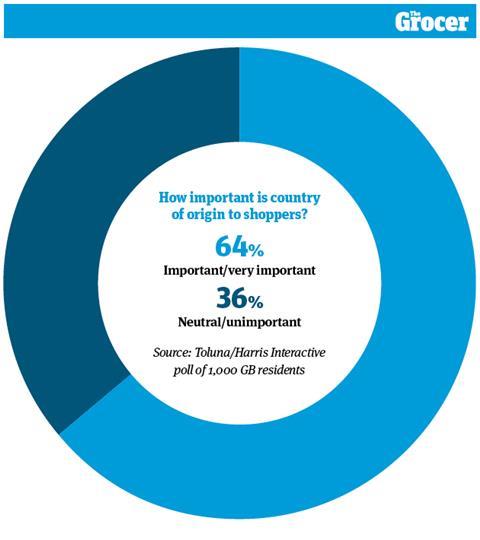
1. Food origin is important or very important to two thirds of Brits…
Wales punches above its weight when it comes to food & drink. Seventeen per cent of the workforce is employed by the sector – the highest percentage in any of the devolved nations – and no fewer than 24 Welsh foods have Geographic Indication (GI) status (only England has more).
This puts Wales in a powerful position as demand for British products grows. Our poll reveals that food origin is very important to more than a fifth (22%) of Brits and important to a further 42%. It will be no surprise that British provenance is most attractive to shoppers (see Chart 5). Welsh producers – which with Welsh government support grew exports by 47% between 2019 and 2024 – can help UK retailers meet that demand.
2. But younger people care about it most
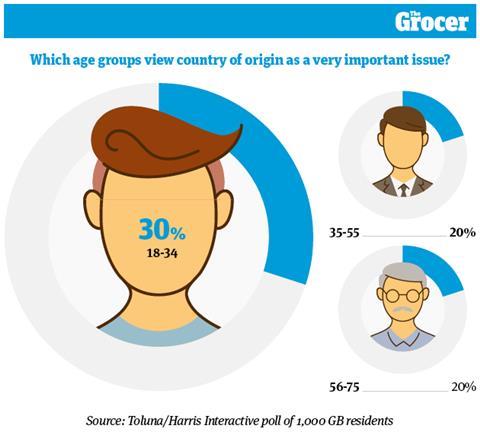
As you’d expect, how important food origin is to people varies on several demographic factors. These include gender (for example, 25% of men say food origin is a very important issue compared with 19% of women), affluence and age. Thirty per cent of people aged 18 to 34 say food origin is very important to them, compared with 20% of people aged between 35 and 75. Welsh origin is a particularly attractive attribute for British shoppers.
As we explore in later charts, many people view buying Welsh products as a way of ensuring they’re getting quality and freshness when they’re shopping for groceries, as well as helping to support farming communities and maintain higher animal welfare, food safety and sustainability standards. Such things clearly matter to people. Seventy per cent of the people we polled said they try to support farmers through the choices they make when shopping for groceries and 68% said they try to buy products made in Britain whenever possible. Sixty-two per cent of people said they try to buy as locally as possible.
All this suggests that food origin messaging can help supermarkets and suppliers develop positive associations in the minds of consumers and attract younger people – clearly, a key demographic for the long-term success of any business.
3. Brits care more about where their food comes from than before…
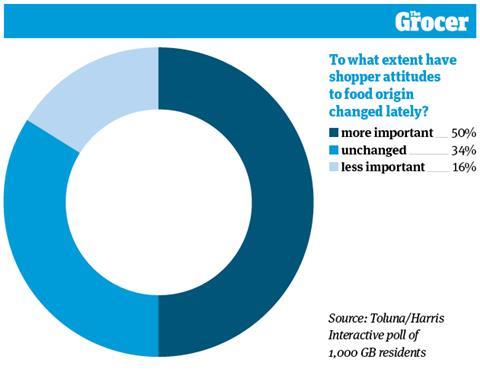
Provenance is moving up the agenda: 50% of people say knowing where their food is from is becoming more important to them. This is linked to concern about the wider impacts of their food choices. Two thirds (66%) believe British food is made to higher welfare and food safety standards; 63% say it has higher sustainability and ethical standards.
Wales has positioned itself as a leader in this area, aiming to create one of the world’s most sustainable supply chains. Initiatives include a carbon reduction pilot scheme, endorsed by industry leaders like Tesco. Producers are required to have carbon reduction plans in place and complete climate adaption readiness assessments to apply for Welsh government-funded schemes.
4. But quality, value for money and convenience matter most
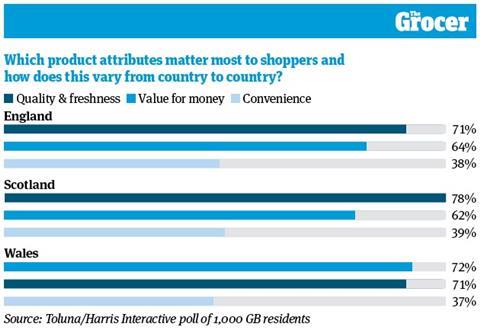
This may come as no surprise: food quality, value and convenience are most important to people when they’re grocery shopping. Seventy-one per cent of people told us that these were the three most important product attributes to them.
What might raise eyebrows is how much this varies by country. Seventy-eight per cent of Scots, for example, say quality is a top three priority, versus 71% of people in Wales and 71% in England. Welsh shoppers appear to be more motivated by value: this is a top three priority for 72% of people in Wales, versus 64% in England and 62% in Scotland.
Health is also more important for Welsh shoppers: 36% ranked health benefits as a priority, compared with 32% of people in England and 29% in Scotland.
5. Buying Welsh food & drink goes way beyond national pride
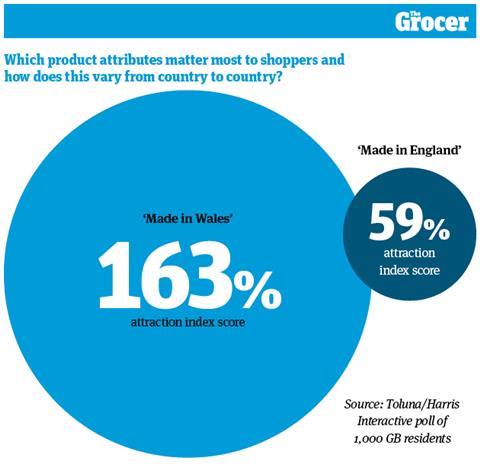
Brits are a patriotic bunch when they’re shopping: 73% put ‘Made in the UK’ in their top three food origin claims. But preferences for provenance go beyond national pride. Welsh origin beats English hands down in our attraction index, calculated by expressing the number of people who live in a given region as a percentage of those who choose food from that region.
Because our sample is representative of the British population, 5% of people polled live in Wales, yet 13% put ‘Made in the Wales’ in their top three food origin claims. That gives Welsh provenenace a score of 163%. Eighty seven per cent of our sample lives in England, yet 51% put ‘Made in England’ in their top three, giving English provenance a score of just 59%.
6. Food security is becoming more important to people
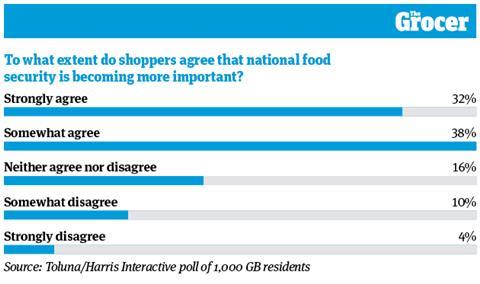
In this increasingly uncertain world, the UK’s ability to feed itself is also rising up the agenda. Our research reveals that 70% of Brits believe national food security is becoming more important than it was in the past. Just under a third (32%) strongly agree with the statement that national food security is becoming more important and 38% of people agree with the statement.
Older people are more likely to be concerned: 77% of people aged between 55 and 75 agree or strongly agree that food security is becoming more important compared with 63% of people aged 35 to 54 and 64% of people aged 18 to 18 to 34. These groups might want to look away now: the latest Defra figures show that the UK imports 48% of the food it consumes.
7. 72% would like to see more British food in supermarkets
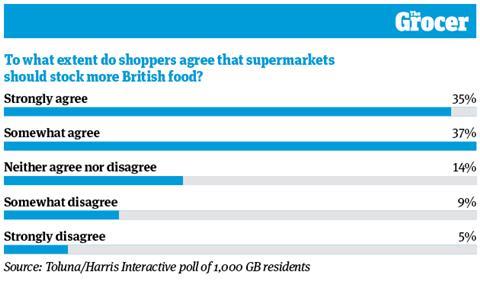
The message for retailers is clear: shoppers want to buy more British food & drink. Seventy-two per cent of people told us they’d like to see supermarkets stocking more English, Welsh and Scottish produce. As we’ve already explored (see Chart 3), this is largely because people see buying British as a way of ensuring the food they eat is produced ethically and sustainably.
The Welsh government is engaged in several initiatives to ensure the country’s food & drink sector continues to lead in this regard. These include the Sustainable Farming Scheme 2026 – which rewards farmers for sustainable food production, higher animal welfare and environmental stewardship – and the ‘Good Life’ Farmed Animals Challenge.
8. Brits want welfare assurances when shopping for meat
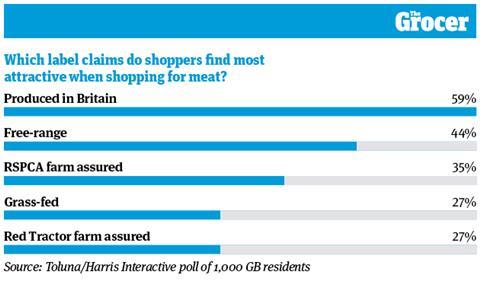
Meat provenance matters. Fifty-nine per cent of people say British-reared is among their top three label claims relating to meat, making this the most attractive claim. Assurances relating to free-range grazing (44%), RSPCA farm accreditation (35%), grass feeding (27%) and Red Tractor accreditation (27%) also hold sway.
Welsh government figures show that around 29% of the UK’s total sheep and lamb numbers and around 11% of total cattle numbers are located in Wales, and it’s on a mission to improve the lives of these animals. Through the ‘Good Life’ Farmed Animals Challenge, five projects are underway to develop positive welfare opportunities that go beyond mere compliance with regulations.
9. Lamb is the food most associated with Wales
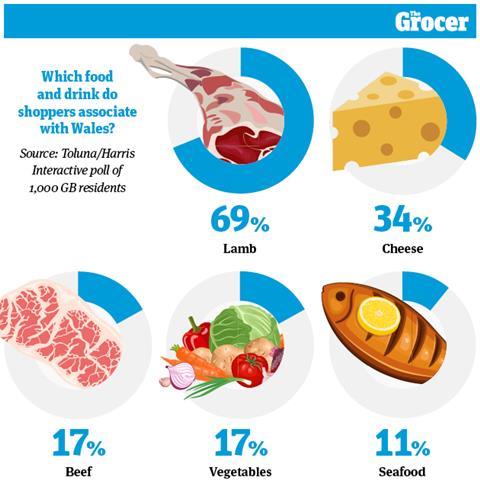
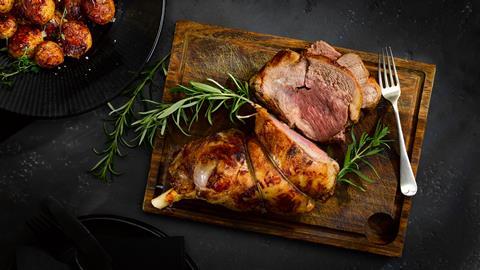
Wales is synonymous with lamb. When we asked people to tell us which foods they associate with Wales, 69% picked lamb. Note also that the attribute most associated with Welsh food & drink is quality (see Chart 10).
That’s no coincidence, says José Peralta, CEO of red meat levy body Hybu Cig Cymru – Meat Promotion Wales. “Wales is naturally well placed to produce high-quality red meat – owing to its maritime climate, mountainous landscape and its farming heritage,” he says. “Sheep and beef farming is embedded in Wales’ culture and is a backbone across rural communities.”
After lamb, cheese was the food most associated with Wales, with 34% of the vote, followed by beef (17%), vegetables (17%) and seafood (12%). Products in these categories are among the 24 Welsh foods to have one GI status. These include Protected Geographical Indication (PGI) Welsh Lamb, Beef, Leeks and Pembrokeshire Rock Oysters.
It’s not just quintessential examples like this that are spreading the word about Wales’ thriving food scene. Welsh Heather Honey, Single Malt Whisky and Dovey Native Botanical Gin are among the latest Welsh products to have won PGI status.
10. Quality is the attribute most associated with Welsh food
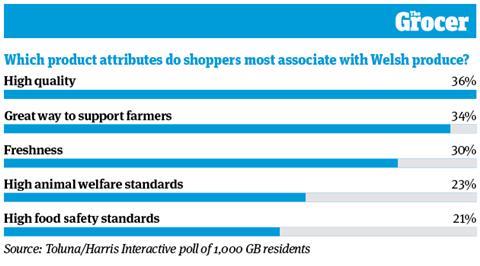
As we’ve already seen (see Chart 4), quality is the number one thing Brits want when they’re shopping. It’s significant, then, that quality is also the attribute most associated with Welsh produce.
Thirty-six per cent of people associate Welsh food & drink with quality, rising to 42% of people aged18 to 34. When we asked people to pick the three attributes they most associate with buying Welsh, 34% said they saw it as a great way of supporting farmers; 30% associate it with freshness; 23% with high animal welfare standards and 21% with high food safety standards.
The message is clear: stocking Welsh is not only a great way to support Wales’ thriving food & drink sector, it also gives your shoppers more of what they want.
Downloads
10 charts_Food Provenance
PDF, Size 1.06 mb




No comments yet