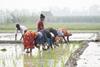
Women plant rice saplings in a paddy field in Mayong, India

Source: Getty Images

Reading the recent headlines about the El Niño weather system on its way, my mind turned back to a conversation I had with some of our basmati growers in Jammu, India, last year. They told me how earlier that season, flood waters had caused the Tawi River to rise above the bridge in Jammu for the first time in living memory. They explained how the seasonal monsoonal rains that once set a reliable rhythm for their crop calendar could no longer be relied upon.

The India Meteorological Department is forecasting El Niño to bring intense heat, an erratic monsoon and below-average total rainfall to the ‘basmati belt’ of northern India. The impact on smallholders’ crops and livelihoods could be significant. But perhaps the real question is not simply what impact this weather event may have on this year’s crop – it is whether the supply chains we rely on are resilient enough for the climate volatility that is clearly already here.

While warnings of a ‘super’ El Niño will dominate the headlines, perhaps we should be looking instead at the weaknesses it reveals in our commoditised global food system.

The case for commoditisation

The advantages of commoditising food – in this case, rice – are clear. By standardising a potentially complex product into a set of simple, generic product specifications, it becomes easier to trade. The dynamics of supply and demand can meet with less friction. It’s an efficient system that has allowed global trade to flourish.

But this system serves to devalue farming.

In the conventional commodity market, buyers have little knowledge of how rice is grown. Growers therefore have no commercial incentive beyond maximising yield and minimising cost. Those incentives have caused extractive farming systems to dominate.

What’s the solution?

Greater transparency around production methods and environmental outcomes would allow buyers to make more informed decisions about the rice they source. There are already frameworks in place that serve this purpose today.

For example, our growers are all certified to the Sustainable Rice Platform’s sustainable farming standards, a basis supported by decades of academic research. I’ve seen first-hand how our growers’ crops are stronger than conventionally farmed neighbouring crops, with more tillers on the plant, fewer dead or discoloured grains and larger root systems that promise greater resilience to extreme weather.

But to grow from serving a niche part of the market into the mainstream, I believe the closest we get to a silver bullet comes from government involvement. Perhaps minimum environmental performance standards for food imports, much as maximum residue limits, are already enshrined in law to help ensure food is safe from chemical residues?

The rice industry’s stress test

Of course, any systemic change needs to be equitable for our smallholder supply chains. But done well, it could send a powerful signal across the supply chain that farming systems suited to the realities of a changing climate can no longer be seen as optional.

This El Niño, then, may serve as a stress test for the rice industry – not just of supply availability or pricing, but of how much we really know about where our food comes from, how it is grown and whether the production systems behind it are capable of withstanding more frequent extremes.

If so, this could be a defining moment for sustainability in the rice industry. Climate resilience may prove to be a greater hook for retailers, food manufacturers and wholesalers than often poorly understood green claims.

The thorny issue, of course, is cost. But building resilient food systems requires a systemic shift: we must recognise and standardise the inherent value in how our food is grown. And with increasing climate volatility, the choice to leave our present food system unchanged may not be a choice at all.


Fergus O’Sullivan is founder of Nice Rice