




Can a store lease written 54 years ago entitle the landlord to a share of click & collect sales, even though, naturally, online shopping is not mentioned in it?
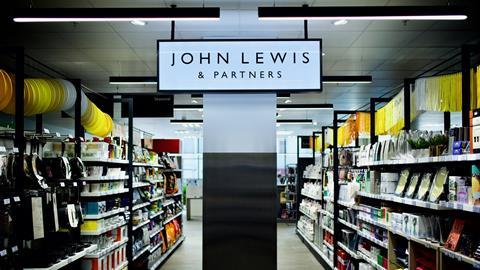
That’s a question the High Court will have to examine after it emerged last month that the landlord of Brent Cross shopping centre is suing John Lewis.
So, how significant is the case? And how are landlords and retailers dealing with the sticky issue of online sales in more recent turnover-linked leases?
Under the lease in question, entered into in 1972 for a period of 125 years, John Lewis is liable to pay its landlord 0.75% of the department store’s gross receipts for annual sales above a threshold of £4m, rising to 1% of turnover for sales above £10m.
Among other things, the lease defines gross receipts as including “mail, telephone or similar orders received or filled at or from the demised premises or directed thereto”. Claimants Hammerson and Standard Life Investments argue that any click & collect sale involving the premises falls under the definition of gross receipts, and should therefore be included in a calculation of rent owed.
They are seeking a court order forcing John Lewis to provide a breakdown of sales at the store for every year since 2013, and to cough up any backdated payment.
Click & collect
In its defence John Lewis has hit back, claiming that a click & collect transaction takes place when the order is dispatched from the distribution centre, not when it is collected from the store. The retailer also argues the lease only requires it to provide an auditor’s certifcate relating to its sales for any given year.
It also argues it would be “unconscionable” for the claimants to withdraw from that shared assumption, having already accepted payment of additional rent against those certificates.
It’s certainly not the first time a landlord has sought a way to take a share of online sales. During the pandemic in 2020, retail data firm CACI developed a new lease model that considered a store’s online catchment area, and property consultancy Colliers developed a model that considered footfall. Neither caught on, partly due to retailer pushback.
“All of that discussion around trying to use sophisticated metrics, in my experience, hasn’t really moved forward much,” says Callum Jeffreys, director of Colliers’ retail lease advisory team. “It’s incredibly difficult to implement something that’s consistent across the board.”
Anyone hoping the John Lewis court case may help provide an applicable resolution is likely to be disappointed, because “this lease is a real rarity in terms of its age”, according to Jeffreys. “It’s very rare to have turnover leases that go back that far – my understanding is it came about as Brent Cross was sort of the first American-style shopping centre in the UK”.
He says the vast majority of turnover leases in retail date to the 21st century and have much shorter terms, meaning “when they’re renewed, the wording is updated and modernised”.
“So this isn’t necessarily going to have far-reaching consequences for turnover leases that are currently in place, because there are very few that would predate e-commerce.”
Changing face of retail
In any event, when it comes to click & collect specifically, the focus of this particular case, landlords and retailers have moved closer to solutions.
But even here there is no one-size-fits-all solution. “Contracts now are far more black-and-white on click & collect sales and whether or not they are included,” Jeffreys says.
“It is more common now that turnover leases include some element of click & collect, but it really depends on the location and on the leverage that one party has over the other. So you’ll have some tenants, like a John Lewis or maybe a Next, who carry significant weight in some more secondary shopping centres. And actually, if they turn around to a landlord and say, we’re not going to include click & collect fulfilment, some of those landlords will have to accept that position.”
But one way or the other, new leases are far more likely to have addressed the issue of where exactly a click & collect sale takes place.
What the case does highlight is “the changing way that retail space is valued by both owners and occupiers”, Jeffreys says.
“It also highlights the need for clear and concise wording that both parties fully understand the implications of at the outset of any lease agreement.”
Sound advice – if 54 years too late for Hammerson and Standard Life.








No comments yet