



Rivals offer lower prices for nearly a third of branded lines sold in Tesco’s new flagship Everyday Low Prices campaign.
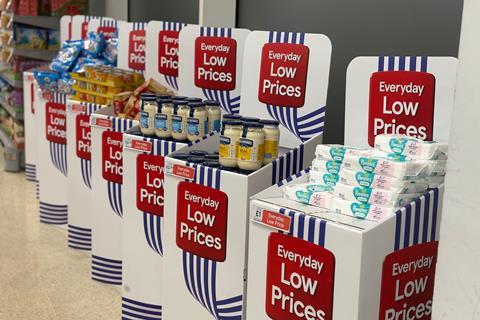
Britain’s biggest grocer kicked off the year with a substantial expansion of its public commitment to keep prices consistently low on big brands.
But analysis of Assosia data by The Grocer of prices on Monday’s launch day (5 January) shows that consumers could buy 32% of the products featured cheaper somewhere else. Of the 2,267 badged as Everyday Low Price sold by at least one other rival, 717 (32%) cost less somewhere else. Some 679 (30%) were price matched, and 38% cost less at Tesco.
This included Schär Buckwheat Brown Ciabatta Rolls, which cost £2.30 at Tesco, but £1.85 on a Rollback promotion at Asda; Lansinoh nipple cream at £11.90 at Tesco but £9.50 on an Asda Rollback; and 750g tubs of Lurpak, which cost £5 at Tesco but were on promotion for £4.50 at Morrisons.
Asda was cheaper for 482 SKUs in Tesco’s scheme on Monday, and on Thursday retaliated by strengthening its Asda Price promise with a “new pledge to be cheaper on thousands of everyday products” than Tesco, Sainsbury’s and Morrisons – including each supermarket’s loyalty card prices.
The Grocer’s analysis also shows that swathes of brands in the campaign cost the same as they did in the run-up to the scheme’s launch. Tesco battled inflation by lowering the prices of 976 SKUs since 22 December, while 1,374 cost the same, and 221 more, largely due to the end of promotions.
Tesco’s campaign did not claim to be the cheapest and the supermarket said that Everyday Low Prices focused on consistent low pricing rather than matching short-term promotions at other retailers.
Last week it reported 32 consecutive four-week periods of year-on-year gains as its market share reached 29.4%.
“Walking a fine line”
Nicholas Found, head of commercial content at Retail Economics, said: “Tesco’s latest campaign is walking a fine line with Everyday Low Prices (EDLP) signalling and its selective price storytelling. While it doesn’t claim to be the outright cheapest, there’s a clear attempt to reposition around price consistency and simplicity – a calculated shift after years of Clubcard-driven price personalisation.
“The data suggests some muddying, as around two-thirds of the SKUs are cheapest, but a number are clearly undercut by rivals. Consumers shopping across retailers may spot those gaps on branded lines, where price points are more visible and comparison easier.
“Although Tesco isn’t Asda or a discounter staking its brand on being the cheapest, it does trade heavily on trust. Campaign language such as ’Low Everyday Prices’ raises consumer expectations around value consistency, and opens the door for scrutiny.
“If it can maintain strong integrity around EDLP, it gives Tesco permission to talk about price again, in a way that reassures mainstream shoppers without diluting brand equity.”
A Tesco spokesman said: “Through Everyday Low Prices, we’re committed to delivering consistently low prices on more than 3,000 branded lines that our customers love.
“Everyday Low Prices means customers can rely on consistent prices week after week, without needing to time their shop around promotions.
“As the Grocer’s analysis shows, products in the scheme are priced competitively across major supermarkets, with the added reassurance that prices will stay consistently low.
“Together with Aldi Price Match and Clubcard Prices, Everyday Low Prices is part of a broader value strategy that helps customers save across their shop.
Catherine Shuttleworth, CEO of shopper marketing agency Savvy, said Tesco’s new scheme was a powerful message to cash-strapped shoppers who want to buy brands.
“The backdrop to everything at this time of year is that nobody’s got any money at all – so all the supermarkets need to show their hand about how they’re helping the consumer,” she said.
“Tesco’s advert is clever because it uses brands in our British DNA like Marmite and Weetabix, which have spent decades telling us why they’re great. They’re borrowing those superiority claims and benefits, and putting a value message on top of it. That is quite powerful for shoppers who still want to buy brands.
“This could be the start of a slightly differentiated strategy to give consumers the consistent pricing they want on the things they need to buy so they can budget. Shoppers want everyday low pricing, on the products you rely on for a family shop.”
Shuttleworth predicted that Tesco would “sharpen” prices as the campaign developed, and that it would appeal to brands.
“One of the biggest trends from the Christmas results was consumers switching to own label, so it’s in the best interests of brands and retailers to work together. If I was a brand I’d be wanting to work with the biggest retailer with the strongest sales potential in 2026,” she told The Grocer.“’




No comments yet