



Ooh, we’re an opinionated bunch. In 2025, The Grocer team has written more than 200 opinion pieces on a wide range of subjects close to our hearts; some of them markedly more controversial than others.
Our journalists are experts in their field, breaking exclusive news stories at a startling pace. So it’s no surprise that when given the chance to share their own personal take on the latest big grocery talking point, they jump at it. And in doing so, we’ve occasionally poked the proverbial bear.
We’ve dug into the detail of why Unilever unceremoniously ditched its CEO at the start of the year, waxed lyrical about Walkers’ HFSS revamp, launched a scathing attack on animal welfare in the meat supply chain, and asked if Joe Wicks’ UPF-laden ‘Killer Bar’ really was nothing more than a load of shit. We haven’t held back.
Here are some of the highlights from the past 12 months.
Yay, mushrooms!
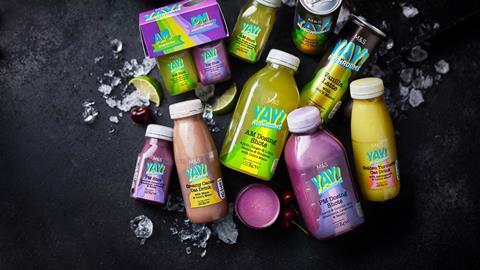
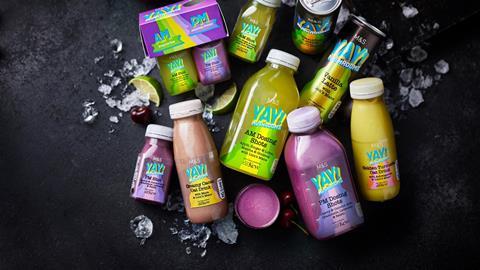
We kicked things off in style this year, with this piece from fmcg editor Niamh Leonard-Bedwell asking whether the science behind M&S’s Yay Mushrooms range held up. The range, which brought adaptogenic mushrooms to the UK masses, was a big talking point at the time, as everyone was looking for ways to take their new year resolutions to the next level.
The nine-strong functional drinks range claimed to be the “first” own-label offer of its kind. And although it was developed in partnership with scientists at Kew’s Royal Botanic Gardens, Niamh wasn’t convinced the products would deliver any real benefits, concluding that, depsite some pretty decent credentials, the jury was “still out”.
In the same month, chief reporter Ian Quinn asked if Asda was “firing blanks” in the supermarket price war it launched almost a year ago now, as it marked the start of 2025.
With price cuts across 2,500 household staples, it seemed like a decent stab at trying to recapture the price DNA Asda was once famous for. But one sentence in the piece rings as true now as it did back in January: “You don’t have to be a supermarket nerd to know things haven’t exactly worked out as planned since then.”
Our most-read blog of the year also came early on, as finance editor Ed Devlin scratched beneath the surface of exactly why Unilever ditched ‘well-liked’ CEO Hein Schumacher, back in February. He picked through the possible reasons for the surprise decision, which left analysts “surprised”, “shocked” and “gobsmacked”.
Other surprise developments in the early part of 2025 included Lidl branching out into TikTok Shop, with its own take on 2025’s biggest viral sensation Dubai chocolate. It seems like old hat now, but at the time it was Emma Weinbren who asked what it all meant for the future of UK grocery…
Crisis comms
Breaking over the Easter weekend, one story went on to dominate the news cycle for a significant chunk of the year. The Grocer team examined the M&S and Co-op cyberattacks from every imaginable angle as the story developed, but early on we were particularly impressed with M&S’ refreshing approach to crisis management.
Stuart Machin’s direct and honest comms to customers were billed as a ‘human response to a cyber problem’. Of course, things are never that simple and the story continued to evolve – at last count it has cost the retailer £136m. But at the time M&S’s crisis response was a textbook example of how to turn a PR (and security) disaster into a masterclass in managing a high-profile problem.
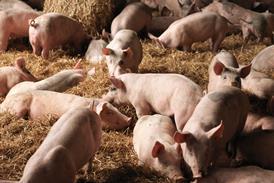
M&S wasn’t the only grocery name dealing with a crisis this year, as Cranswick also found itself racking up some less-than-favourable column inches. Fresh editor Grace Duncan wrote about animal welfare in the meat supply chain after footage from inside a major pig farm revealed the full extremes of how animals were being treated inside some of the nation’s biggest farms.
“It is not good enough to be merely ‘taking action’ in response to news of this violent abuse,” she wrote. “It must not be allowed to happen in the first place.”
Changing tides
Poundland’s turnaround has been a hot topic this year, after the retailer was sold for £1 in June 2025 by Pepco Group to US investment firm Gordon Brothers. While the biggest move was cutting its estate to 650-700 stores, some in-store changes have been similarly drastic. Deputy news editor Steve Farrell wrote that perhaps the biggest surprise was Poundland’s plan to remove its frozen food offering entirely. The frozen offer had previously been central to its plan to take on the supermarkets – but the new approach sees it “knuckling down on what it knows it can do well”.
At the end of July, more than 150 British food and drink leaders demanded prime minister Keir Starmer took action to pressurise Israel to “end the starvation of the people of Gaza”. International editor Kevin White took the opportunity to write about the worsening humanitarian crisis in Gaza, asking why it had taken UK grocery so long to break its silence.
“The food industry has always acted to find solutions to feed hungry mouths if it possibly can,” he said. “Why should this situation be any different?”
Back on less political ground, it was a watershed moment back in 2018 when Coca-Cola first snapped up coffee giant Costa. Over the summer, senior reporter Cara Houlton blogged on the news that Coca-Cola was looking to sell off Costa, with its sources suggesting that initial talks had been held with a small number of potential bidders, including private equity funds.
It wasn’t hard to see what had gone wrong, Cara explained, adding that betting on Costa has been a “gamble that didn’t pay off” for Coca-Cola.

No comments yet