


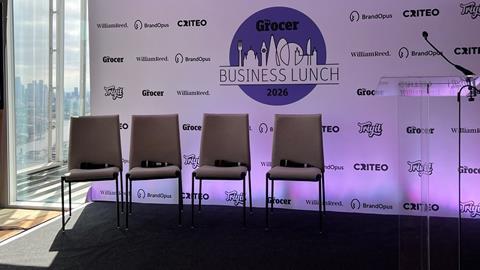
We opened today’s Marketing Business Lunch with a stark stat from Dan Holt, strategy partner at Havas Media Network: 80% of brands in the UK could disappear and people would not care. “And that’s an issue,” he said.
It’s perhaps little wonder. As Holt put it, “brands are becoming more personalised but less personal”.
So what does it actually take to become a brand that people would miss?
According to Holt, it starts with becoming more human and putting greater emphasis on real, in-person connection.
Ocado, which boasts one of the highest net promoter scores in the supermarket sector, does this brilliantly. Where many businesses “use digital and tech as the destination”, Ocado uses it “as a bridge”.
When it saw increased used of chatbots and forms were eroding customer satisfaction, the online retailer responded by putting more people back on the phone to handle complaints. Its drivers also send text updates as they approach customers’ homes. In short, it uses digital in “incredibly human ways”.
And that, Holt argued, is the point: “Quality of connection drives customer satisfaction.”
The new intermediary
It wouldn’t be a marketing event without mentioning AI, which has fundamentally changed the relationship between brands and consumers. As Nir Wegrzyn, CEO of BrandOpus, put it: “It’s a new intermediary sitting between the brand and the consumer.”
“Brands have always spoken to humans. Now they must also speak legibly to machines,” he said. “Your brand has two audiences and they don’t agree. They’re making different decisions and they care about different things.”
As AI shifts search “from a directory to a narrator”, Wegrzyn spoke about the importance of ensuring your brand is part of the story.
Crucially, brands must avoid “semiotic contradiction”, where a new positioning jars with their historical identity. And because AI reflects the dominant signals of the wider internet, consistency becomes critical. Overly personalised messaging, fragmented regional strategies, or wildly different positioning across markets can all work against that.
As Wegrzyn put it: “What might have worked 12 months ago doesn’t any longer.”
The big debate
It’s one of the biggest questions facing fmcg brands today: is retail media delivering real value for brands? A topic this polarising was the perfect subject for a debate.
Retail media has had a major “glow up” in recent years, said Olivia McCullagh, retail media lead at IAB UK, and it’s no longer the shopper marketing of old.
Its proximity to consumers, access to first-party data and impressive ROI means it is “no longer a niche conversation, it’s a central one”.
But there are reasons to be cynical, argued Ged Futter, founder of The Retail Mind, making the case against. “Is it a way for retailers to make more profit? Or is it about brand growth or category growth? Who actually gets the cash?” he asked. While it’s undoubtedly a “money tree” for retailers, brands need to be far more considered in their approach, he said.
In the end, it was Futter who won the room.
Psychology to pharmacology
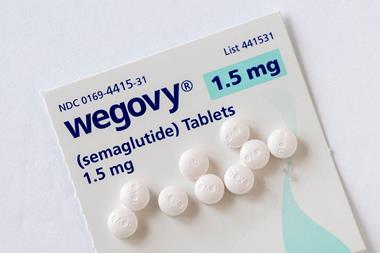
Elsewhere, GLP-1s are “rewiring brand loyalty”, said Paul McGinley, CMO of consumer engagement platform Triyit, and “we’re shifting from brand psychology to brand pharmacology”.
Some 11% of Triyit’s consumer cohort are using GLP-1s, of which 78% are the primary shopper for their households.
The effects are well documented: users think about food less, feel full faster, and experience reduced cravings. But for brands, the more significant shift is behavioural. “You might be brand-loyal to Heinz for four decades, but go on the drug and loyalty evaporates. It takes decades-long loyal consumers and changes them into day-one consumers,” McGinley said.
That’s clearly a “threat for incumbents” he added, as well as an “opportunity for challenger brands to steal share”.
There’s another twist, too.
Nearly half of GLP‑1 users stop after a year, but many return later. Which means brands need to prepare for what McGinley described as a “cyclical relationship” with consumers and a kind of yo-yo loyalty.
@phoodndrinx Little Moons Lemon and Elderflower Refreshos have officially arrived and they taste even better when served by the Amalfi legend, Mattia. Location: Crumb, 8 Charlton Place, London N1 8AJ Time: 11am–5pm Date: 29th March No stress if you can’t make it, these are also available at your nearest Tesco 🍋 AD @Little Moons @mattia.cretella #london #popup #littlemoons #londonfood #refreshos ♬ Taste Of Italy - Full Length - pinegroove
Moonshot
Ross Farquhar, marketing, innovation and sustainability director at Little Moons, is a firm believer in leaning into trends. After the brand went viral during the Covid-19 lockdown, he admitted it has taken a conscious readjustment to stop chasing those viral moments.
Instead, social listening has become an invaluable tool.
On launching the lemon and elderflower flavour of its Mini Moons Refreshos – a smaller, snacking version of its Little Moons sorbet balls that come in a pouch for night-in snacking – the brand found itself at the centre of a content creation storm. Having hired Italian influencer Mattia Cretella (AKA the Sorbet Prince), Little Moons leant into the Amalficore trend, bringing lemon-themed décor to a pop-up shop, which attracted fans of the brand, the aesthetic and of course the influencer himself.
“They were all creating content and trying to go viral themselves, which is exactly what we want,” Farquhar said.
If only it was always that easy…







No comments yet