


The Advertising Standards Authority has cleared a string of ads from McDonadl’s, Burger King, Domino’s, KFC and Uber Eats of breaching the government’s junk food marketing rules in recent weeks. Campaigners called the rulings proof the clampdown had failed. Look closer and they show the opposite: a policy working precisely as designed.
The ads were cleared because the products in them are not, under the UK’s nutrient profiling model, classified as less healthy. In several cases that is because companies reformulated them. The ASA’s chief executive made the point himself: the government wants these rules to push businesses to “reformulate their products so they are no longer classified as less healthy”. That is exactly what is happening. Regulation set the incentive, industry responded, and the system held.
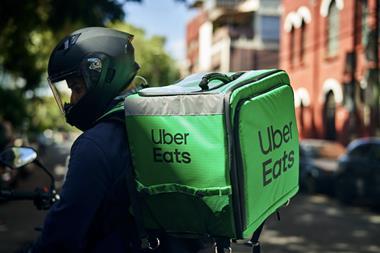
Yet nobody in Westminster will read it that way. The pattern is familiar to anyone who watched the sugar levy arrive or the HFSS rules tighten: a cleared ruling becomes a loophole, a loophole becomes a consultation, and a consultation becomes a restriction or a tax. It is only a matter of time before the delivery economy, the platforms, the takeaways and the dark kitchens that supply them, faces advertising curbs and levies of its own. Before that happens, someone should ask whether the target deserves the treatment.
First, the economics. The sector being lined up is one of the few unambiguous British growth stories of the past decade. Online food delivery is worth £14.3bn, up 87% since 2019, sustaining thousands of restaurants that would not survive on footfall alone. Dark kitchens, fully equipped commercial facilities with no storefront or seating, cooking solely to fulfil app orders, now account for one in seven outlets on the major platforms. They are routinely described as sinister. They are, in reality, the lowest barrier to entry the food industry has ever offered: a way for a first-time founder to launch a brand without prime rents, fit-out costs or front-of-house wages, and a large part of why the choice of cuisines on British menus has never been wider.
Nor is the public clamouring for protection. When NIHR-funded researchers led by the University of Sheffield produced the first agreed definition of a dark kitchen this year, their consumer research found fewer than one in four people had even heard of the term. Once the model was explained, more than half said they would consider ordering from one. What people wanted was transparency at the point of ordering, not prohibition. The industry should offer it, gladly and quickly.
The convenient scapegoat
Second, health. The public health case against the sector leans on association rather than cause. Yes, a NIHR study links takeaway density to childhood obesity, and the most deprived areas have five times more fast food outlets than the wealthiest. But outlet density tracks poverty, and poverty, not the presence of an app, is the strongest predictor of obesity in Britain. Obesity rates climbed for three decades before the first delivery app was written.
A Public Health Wales survey found more than a quarter of 16 to 29-year-olds eat a takeaway at least twice a week. Their parents’ generation did much the same: the difference is a phone rather than a walk to the chippy. The app changed how food is ordered, not why it is eaten.
None of this denies the scale of the problem. Obesity-related illness costs the NHS around £12bn a year. It is precisely because the bill is so large that policy must aim at causes rather than symbols. Restrictions and taxes on delivery would change one thing above all: who pays. A takeaway levy is regressive by design, landing hardest on households already squeezed. And as last week’s rulings showed, marketing rules bite hardest not on giants with reformulation budgets but on the small operator, the single chicken shop in Woking, the first-time founder in a rented kitchen.
Partners, not punchbags
The same instinct distorts a third debate: the workforce. The Supreme Court confirmed in 2023 that riders are self-employed, and Labour’s Employment Rights Act deliberately left that status untouched. The flexibility is not an accident of the model. For many thousands of riders it is the point of it.
There is a better path than the ratchet. Food manufacturers show what happens when government sets clear incentives and industry invests: £180m in 2024 alone on reformulation, with salt and sugar falling across categories. The delivery economy could be enlisted the same way. The platforms already display calorie information; they could go further, using the data they hold to promote healthier ranges, reward better choices and widen access to fresh food in the neighbourhoods that lack it.
Restricting takeaways near schools has been tried for years without denting childhood obesity, because the premises were never the point. The infrastructure that can put a burger on a doorstep in 30 minutes can put fresh food there too. A government serious about obesity would harness that network rather than tax it, and would treat one of Britain’s few homegrown digital success stories as a partner in the fight rather than the next convenient villain.
Mike Coppen-Gardner is the founder and CEO of WeAreSPQR


No comments yet