





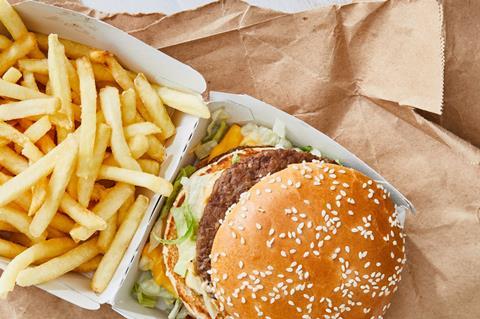
San Francisco has fired the opening salvo in what could become the UK food industry’s worst nightmare. This week, the city’s attorney filed a “first-of-its-kind” lawsuit against 10 major food corporations, alleging they sold addictive ultra-processed foods they knew made people ill.
The defendants read like a who’s who of household brands: Kraft Heinz, Coca-Cola, PepsiCo, General Mills, Nestlé, Mars, Mondelez and Kellogg.
If this sounds familiar, it should. In December 2024, Bryce Martinez filed what Morgan & Morgan also called a “first-of-its-kind lawsuit” in Philadelphia against 11 food giants, claiming their ultra-processed products caused him to develop type 2 diabetes and non-alcoholic fatty liver disease at age 16. While a federal judge dismissed the case, legal experts warn that this is just the beginning. As one attorney noted, UPF litigation is still in its “early innings” – plaintiffs are “road-testing theories”, and “narrower mislabelling and marketing claims remain very much alive.”
The parallels with Big Tobacco litigation are deliberate and ominous, and for UK food companies watching nervously from across the Atlantic, the message should be crystal clear: what happens in America doesn’t stay in America. In fact, it’s already here and the consequences will be severe.
UK’s ‘addictive’ legal challenge
In February 2025, The Grocer revealed that UK law firm Leigh Day was exploring potential class actions against major food companies in “an unprecedented legal challenge to the UK food and drink sector.” The firm met with think tanks and policy experts to discuss whether cases could be brought, examining whether companies knowingly deploy techniques, including neuroscience, to make products addictive.
While Leigh Day insisted there were “no concrete plans” for legal action, the very fact that one of Britain’s most prominent claimant firms – known for pioneering multi-party litigation and taking on large corporations – was conducting exploratory work should have set off alarm bells in boardrooms across the country. Legal experts said at the time that the UK’s heightened public awareness of UPFs, combined with advocacy from NGOs and campaigners, “creates an environment conducive to litigation”.
Activist NGOs have both the resources and the motivation to band together and pursue strategic litigation. They’ve watched the American playbook unfold. They’ve seen how initial individual lawsuits against Big Tobacco in the 1980s mushroomed into filings by attorneys general of 46 states, eventually resulting in a master settlement that fundamentally reshaped an entire industry.
The food industry should not assume British courts will be more sympathetic than US ones. They have recent, painful evidence to the contrary.
Kellogg’s: a cautionary tale
In 2022, Kellogg’s took the UK government to court over HFSS regulations, arguing that breakfast cereals should be assessed with milk rather than dry. The company claimed the existing rules were “wrong” and “unreasonable”. The judge disagreed, dismissing the case and ruling that mixing cereal with milk does not alter the fact that it is high in sugar.
This judgment did more than uphold the regulations and as Barbara Crowther of the Children’s Food Campaign noted, Kellogg’s became a “cereal offender” in trying to disrupt the government’s obesity strategy. The financial costs were significant – an estimated £113m in lost sales – but the reputational damage was incalculable. The company that had spent decades building brand trust was now publicly cast as prioritising profits over children’s health. The lesson? Losing in court doesn’t just cost money, it hands your critics a judicial validation of their narrative.
Perfect storm brewing
The conditions for UK litigation are aligning with frightening precision. Recent research from the Food Foundation shows that HFSS policies capture between one-third and just over half of ultra-processed foods, meaning there’s substantial overlap between products already under regulatory pressure and those now facing potential legal action.
A comprehensive review published in The Lancet evaluated hundreds of studies suggesting that ultra-processed foods are worsening diets, driving overeating, exposing people to toxins, and contributing to rising levels of chronic disease. This isn’t fringe science from advocacy groups, this is the medical establishment’s most prestigious journal lending credibility to claims that will inevitably appear in UK courtrooms.
Meanwhile, legal experts note that while most studies are observational and don’t establish causality, the parallels with tobacco litigation remain ominous. Few gave those early tobacco cases much chance either.
Compliance is no defence
Food companies facing these lawsuits in the US will undoubtedly point to FDA approval and compliance with existing regulations. The toddler milk case demonstrates why this defence has limits – plaintiffs only need to prove that false claims led them to purchase products, not necessarily that the products caused harm.
Moreover, the industry’s own defence – that there’s “no agreed scientific definition of ultra-processed foods” – could backfire, as it makes companies appear to be hiding behind definitional ambiguity rather than addressing legitimate health concerns.
This is not an argument that UPF litigation is justified. The evidence remains contested, not least because the UPF category encompasses everything from diet fizzy drinks to wholemeal bread, and there are legitimate questions about causation, consumer choice and the role of food in modern life.
What matters isn’t whether ultra-processed foods are optimal, it’s whether courtroom activism is how we want to set nutrition policy. The tobacco playbook is being rolled out with alarming predictability: demonise products, erase context, lawyer up. And if this San Fran court case goes anywhere, it will reshape markets with higher costs, less consumer choice and ultimately curtail many companies’ licence to operate.
Food companies need to move beyond defensive posturing and traditional lobbying to build genuine public support. The question isn’t whether they can win these battles in court today, it’s whether they can prevent the accumulation of losses, bad publicity, and regulatory hostility that will reshape their business in five years.
The litigation storm is coming. Will industry still be fighting defensive rearguard actions when it arrives or will they have built enough public trust and goodwill to weather it?
Mike Coppen-Gardner is chief executive of WeAreSPQR







No comments yet