






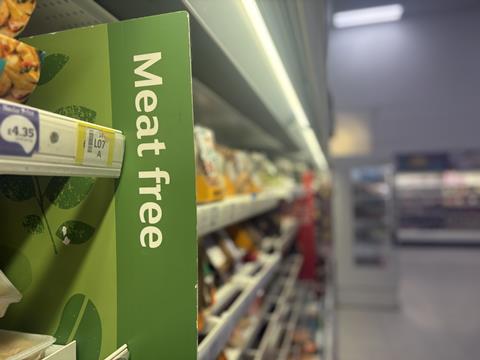
As January comes to an end, the Veganuary campaign will no doubt be celebrating yet another record campaign. The figures aren’t yet in for this year, but last year as many as 25.8 million people took part in the global challenge to go vegan for a month.
Veganuary is proud of its ability to drive conversion. In 2024, organisers reported nearly a quarter of participants were following a fully vegan diet six months afterwards. That’s impressive. But here’s the thing: it also means nearly three-quarters have resumed eating meat and/or dairy to some extent.
In reality, only 2%-3% of the UK population is vegan. One of the prime motivations for participating in Veganuary is to boost health, rather than making a major dietary change. This raises a bigger question: is January best served as a single-issue dietary challenge, or could it evolve into a broader national health month focused on long-term wellbeing?
Building healthy habits
If the goal is to build lasting, healthy habits across the nation, we may need to move beyond binary choices and restrictive labels. For the meat industry, it can seem impossible to start a positive conversation during Veganuary, which is the focus of hefty innovation and marketing efforts.
Yet there is a compelling argument to ramp up comms at this time. A sizeable chunk of the UK population finds the idea of Veganuary, or giving up meat altogether, too daunting. At the same time, they are keen to improve their health, and many feel increasingly uncomfortable not just with meat itself, but with highly processed food in all its forms. These shoppers aren’t asking for extremes – they’re asking for clarity, balance and realism.
There is growing concern about ultra-processed foods, including many plant-based meat alternatives, and their role in poor health outcomes. Shoppers are crying out for advice on how to eat well without ultra-restriction, misinformation or reliance on UPFs masquerading as ‘healthy’.
January is the time to start shaping those healthy habits. Rather than positioning the month around exclusion, it could become a celebration of real food. That means talking about recipes that pair high-welfare, quality meat with seasonal vegetables, pulses and whole foods. It’s about showcasing wholesome, home-cooked dishes that feel genuinely nourishing.
This isn’t about dismissing the plant-based narrative, or dissing meat alternatives. It’s about reframing the conversation around food quality, provenance and health – not ideology. It’s about putting the focus on what you are putting into your body, rather than what you are cutting out of your diet.
Habits that last
Regenuary has pushed a similar narrative (encouraging shoppers to source food from regenerative systems) since its inception in 2020. Yet the movement has struggled to gain the momentum of Veganuary. Perhaps because health, not just sustainability, needs to sit at the heart of the message.
It’s time for that to change. Both public health and farming are in crisis. Ultra-processed diets are driving rising obesity rates, while British farmers and growers producing real food to high standards are under immense pressure. Now, more than ever, we need a joined-up message that values nutrient-rich food, farming integrity and achievable health improvements.
For those who struggle with restrictive challenges, January should offer an inclusive alternative: eat real food, cook more, rely less on UPFs, and choose quality meat and vegetables where possible. That means thinking not just about what you are eating, but how you are eating.
It’s a narrative already established in countries that place a higher value on food culture, such as France and Italy. It is arguably no coincidence that both have significantly lower obesity rates than the UK.
If we are serious about kickstarting the nation’s health in 2026 and beyond, it’s time for a big, generic meat-and-veg campaign – one that champions real food and helps households build habits that last.
So let’s create a shift in mindset, where January becomes a true health month. Not a temporary challenge, but the starting point for a healthier way of life.
Harvey Choat is MD at Nexus PR






No comments yet