



It can take a long time for food brands to pinpoint exactly when something has gone wrong in their supply chain.
As we wrote earlier this month, the biggest recalls of late have involved global supply chains, novel ingredients and forensic tracing.
But for Moma Foods, which on Sunday issued a recall for 53 batch codes across nine of its porridge pots and sachets, it seemed simpler.
A consumer had reported “a potential contamination issue with a Moma porridge product”. Moma, owned by AG Barr, immediately launched an investigation with the third-party producer. On 20 March it was told that “a mouse contamination event did occur in autumn 2025”.
When brands outsource manufacturing, they’re placing their reputation in someone else’s hands. It’s hard to imagine anything worse.
But Moma acted quickly. Within 48 hours the recall had been issued, retailers instructed to withdraw the products and consumers told to dispose of them and ask for a refund.
But the obvious question remains: how did a supplier fail to notify its brand partner of a mouse contamination incident for months?
In the meantime, people may have unwittingly eaten more than just chia seeds with their oats.
Late notice
One such customer is Jo Sensini, a PR and marketing expert. Moma porridge pots had become a morning staple. And not only for her. She buys a month’s worth at a time for her mum too. Sensini’s mum has dementia and lives independently with carer support. Her mother always enjoyed eating porridge, and while she can no longer cook it for herself from scratch, she can boil a kettle and therefore prepare a porridge pot.
“I do feel very emotionally attached to the brand,” she says. “It’s seen me through some difficult times and it’s a practical part of all the support I give to my mum. They’re really quick and easy, their ingredients are better than with others, and my mum loves them.”
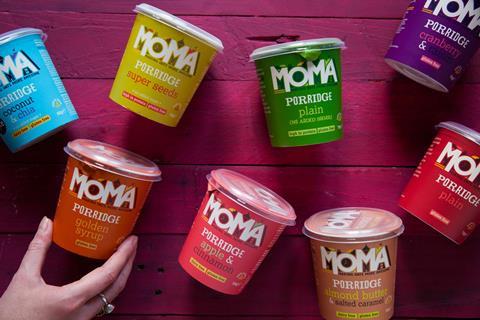
Sensini, who orders with Ocado, received an email on Monday morning (23 March) which said products delivered on 1 March were being recalled “due to potential pest contamination during the manufacture of these specific batches”.
Coming three weeks after receiving her order, she had of course already eaten them.
She didn’t notice anything unusual in her breakfast, but as she points out she wasn’t looking for anything unusual. “You put boiling water on this product, so you’d hope any bacteria would be killed off,” she says.
Sensini’s experience also highlights gaps in recall execution. When she went to Waitrose in Chiswick to buy replacements, she found items that should have been pulled were still on the shelves. “I showed customer services the recall notice on my phone. He said, ‘I need to look into this right away’,” she says.
A Waitrose spokeswoman said it had followed the correct processes over the weekend. ”Customer safety is paramount,” she said. ”When any product is recalled, we remove it from our shelves, and customer notices are posted online and in stores. As an additional precaution, the impacted product is blocked by our checkout system to prevent it being sold.”
Sensini made her own overnight oats for breakfast this morning, but intends to keep buying Moma pots when she can find them again.
“It seems to me they’ve been very honest and specific, because they could have talked in more general language,” she says.
But questions remain. What exactly is the mouse element, and what does it mean for people’s health? What are the implications?
Sensini wants more reassurance. “I’d want to see action taken and understand a bit more behind the scenes. You should handle these things by being open and transparent. Tell us a story about how this product is made and reassure us about the hygiene aspect.”
Breach of standards
Rodent contaminations are a serious breach of standards. Food safety lawyer Jon Payne says: “Mice are a common issue for food premises to contend with and the law requires that food premises are kept pest-free… Contamination by mice or other rodents is often seen as a very serious matter by the courts.”
While the risk to consumers is “probably very small indeed”, he advises anyone who has eaten withdrawn products and is suffering from symptoms such as diarrhoea, sickness, abdominal pain, itching or chills to seek medical advice.
Payne notes that Moma undertook the recall as a precaution, a “commendable good practice”, he says.
In response to a question from The Grocer, Moma said it has paused all manufacturing with the supplier and will be “carrying out audits to confirm the issue has been completely resolved”.
Previous recalls have developed slowly, from a single product to a host of other brands supplied by the same factory. The supplier has not been named, but Moma may not be the only brand left wondering how long it had been left in the dark.


No comments yet