




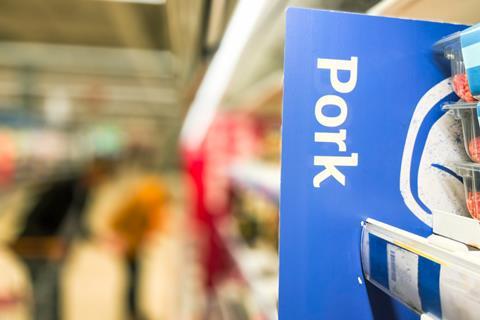
Plummeting wholesale pig prices have not been reflected on supermarket shelves, analysis by The Grocer shows.
Whilst the average price paid by abattoirs for pigs in the UK has collapsed by 14.2% year on year [AHDB], analysis of Assosia data shows the average pork price across the mults had actually risen 5.8% over the past year [Assosia 52 w/e 23 June 2026].
AHDB’s benchmark SPP price stood at £1.75/kg in the week to 13 June, down from £2.04/kg a year ago and representing its lowest level since May 2022. However, the average price of key pork cuts, joints and mince lines in the eight biggest supermarkets rose from £9.28/kg to £9.82/kg over the same period.
Francesca White, MD at family-owned premium sausage business Porky Whites, suggested savings from easing farmgate prices were being used to offset inflationary pressures elsewhere across supply chains, rather than “dropping straight to the bottom line” of pork producers.
“We have seen significant margin erosion on other proteins, particularly beef, where prices have remained exceptionally high,” she told The Grocer. “At the same time, manufacturing overheads continue to rise – labour costs, energy, EPR, packaging, logistics and a growing list of surcharges.”
White added the ongoing conflict in the Middle East had not helped, with businesses such as hers having to absorb the additional costs on fuel, plastics, casings and other imported materials.
“Consumers understandably expect lower shelf prices when they hear pork prices are down, but the reality is far more complex than a single commodity price.”
And despite the divergent pricing trends, British Retail Consortium director of food and sustainability Andrew Opie argued supermarkets were not profiteering.
“It can take time for these changes to reach shop shelves because of existing contracts and wider supply chain costs, including packaging and labour,” he said. “Retailers operate in an intensely competitive market and will continue to work hard to offer their customers the best value they can.”
In May, pork sector insiders told The Grocer their industry was at breaking point, as abattoir closures and breakdowns, falling demand, trade turbulence and soaring energy costs all contributed to a “perfect storm”.
Whilst acknowledging there was space for retailers to do more to support the beleaguered sector, the National Pig Association said their support for British pork had remained relatively stable. It said some had even publicly stated their desire to source more.
“Retailers have upheld their commitments to home-grown pork despite pork being available from the EU at even lower prices – caused in large part by the African swine fever outbreak in Spain resulting in large volumes of Spanish meat usually destined for Asian markets not allowed for export,” a spokeswoman said.
The NPA said the foodservice sector had raised more eyebrows, however, with the trade body and NFU Scotland recently calling on operators to “use more British pork and [offer] greater transparency in companies’ sourcing policies”.
“AHDB’s GB pork foodservice purchases dashboard shows foodservice pigmeat volumes declined by 3.5% year on year in the 52 weeks to 22 March, driven primarily by a decline in takeaways,” the NPA spokeswoman added.
With pork traditionally squeezed between higher-priced beef and lamb and cheaper chicken, some industry commentators have called on retailers to price pork more competitively, but the NPA and White argued the issues affecting demand ran deeper.
The NPA also noted pork has seen a boost in volumes and sales over the past year as a result of high beef and lamb prices, although this has not been shared by across the category.
“Fresh primary pig meat performed well, mince in particular, with purchase volumes increasing by 6.8%, however processed pig meat recorded declines of 5.9%,” the NPA spokeswoman said. “This is believed to be due to consumers making more health-conscious choices.”
She continued: “Chicken continues to be an attractive option for consumers particularly during cost of living pressures, benefiting from its affordability, versatility and healthy image.”
White said the industry needed to remind consumers that pork “isn’t just for a Sunday roast” and better communicate its nutritional credentials, as well as leaner cuts.
“Supermarkets also have a role to play,” she added. “Too often, we see the same traditional cuts with little imagination. There is a real opportunity to innovate, inspire and present pork in ways that fit modern lifestyles and eating habits.”








No comments yet