




You wait months for a crumb of good news, then suddenly there’s a ceasefire in the Middle East and word that Britain’s enduring love of toast may soon be a lot less dangerous.
News of the latter has understandably been eclipsed by the former, as it raised hopes the crisis sparked by the Iran conflict could yet be contained.
However, for an industry that has long grappled with the potential cancer risk of burnt toast, news that scientists have developed gene-edited wheat that reduces potentially carcinogenic acrylamide levels is also quietly significant.
But there’s a big, Brexit-shaped caveat to all that.
Super wheat
Experts at Rothamsted Research yesterday revealed they had successfully developed wheat with dramatically reduced levels of asparagine, without affecting crop yields, using CRISPR gene editing techniques.
Lower concentrations of free asparagine mean the amino acid produces less acrylamide when bread and other starchy carbs are heated at temperatures above 120°C. The likes of the FSA and European Food Safety Authority raised alarm bells about the threat of acrylamide way back in the mid-2010s, leading to warnings to avoid eating burnt toast, chips and much more.
After two years of field trials, the scientists found a way to significantly reduce the presence of asparagine (by up to 93%), creating what The Telegraph describes as a “super wheat” with the potential to “substantially reduce acrylamide levels”.
These findings were “particularly timely as regulatory pressure on acrylamide intensifies”, Rothamsted said. Current EU legislation sets benchmark levels for acrylamide in food, with the European Commission announcing new maximum levels later this year. The UK would need to follow these rules if selling gene-edited products to the EU, researchers noted.
Read more: Is food & drink ready for the EU reset?
But given how the UK is also in the midst of negotiations on a new sanitary and phytosanitary (SPS) deal with the EU – which would effectively take the UK’s food and farming sector back into the single market – Rothamsted’s breakthrough was now at risk of hitting the buffers, it warned, unless the EU agreed to a “carve-out” for gene editing in any agreement.
‘Nonsense bureaucracy’
Such a turn of events has understandably outraged the likes of the Conservatives and Reform UK, with the Telegraph quoting shadow science secretary Julia Lopez, who said the Labour government continued “to negotiate away our post-Brexit freedoms, surrendering our competitive advantage to EU law”.
Lopez, crucially, did not mention the fact food and drink exports had fallen by about a third to the EU since Brexit. But as politicians and the media wake up to the realities and trade-offs required by the EU reset, such stories are only going to become more of a regular occurrence.
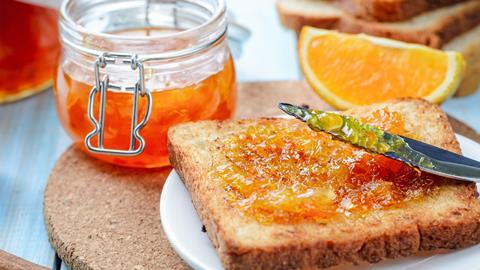
We saw it last week when a story about another breakfast favourite (marmalade) went viral – amid warnings the “quintessential British preserve” would need to be renamed ‘citrus marmalade’ under EU rules.
“What would Paddington think!” asked the Mail, while quoting Tory Priti Patel, who said: “This marmalade madness is a classic example of the nonsense bureaucracy that emanates from Brussels.”
Reform’s Richard Tice added “hands off our marmalade!”, while various media organisations suggested products such as Pot Noodle and meat-flavoured crisps could also have to change their names due to the interference of Brussels bureaucrats.
Storm in a teacup
“Could”, however, is a word that’s doing a lot of heavy lifting, with the Mirror noting the whole marmalade furore was a storm in a teacup – given how most marmalades sold in the UK already carry the term ‘orange marmalade’, which would still be permitted under the EU rules.
A government source told the newspaper that “despite false claims that the name orange marmalade is toast, it will be preserved, so there’s no need to spread alarm”. Boom boom!
What is or isn’t in the SPS deal, of course, is yet to be determined, with the government insisting it won’t give a “running commentary” on negotiations.
Though as The Grocer reported earlier this month, the scale of change coming down the tracks is understandably raising alarm bells within the food sector, with the FDF’s Karen Betts one of many to warn “the change is even greater than it was when we came out of the EU”.
What is clear, however, is that until we know more about what is and isn’t in scope of the SPS agreement, we’re going to see many more (often spurious) scare stories about the EU reset – the likes of which became the right wing media’s stock in trade for decades before the Brexit referendum.
And unless the government gets a handle around the messaging on what should be a positive (though doubtless difficult) transition back into the EU’s orbit for the food sector, there’s a risk the move could be derailed or devalued by those on the right that continue to see the bloc as the enemy.



No comments yet