





Food and drink exports to the US crashed by almost 10% in the second half of 2025 as Donald Trump’s tariffs took hold, causing a “significant impact on global supply chains”, according to the Food & Drink Federation.
Despite total UK food and drink exports breaking the £25bn barrier for the first time, year-on-year sales to the US dropped sharply as the year progressed. Exports across the Atlantic swung from an 18.9% surge in the first half of the year to a sharp, 8.9% drop in the second half, revealed HMRC data used in the FDF’s annual Trade Snapshot, published today.
Overall export values to the US rose by 3.6% over the full year to £2.8bn, with premium chocolate, teas and organics “thriving in health/indulgent trends, especially in affluent, wellness-driven California and New York”, the FDF said. However, Stateside growth was significantly lower than the 11.8% increase in exports seen by UK companies during 2024.
By the second half of 2025, the impact of Donald Trump’s ‘Liberation Day’ tariffs and the numerous measures and countermeasures which followed, had become starkly present for UK food and drink exporters, leaving many questioning whether the US was still a viable market.
Despite US sales falling, however, total UK exports globally hit a record high, climbing by 4.8% year on year to £25.6bn.
Key highlights included an 35.2% increase in shipments to Turkey (to £394m) and a 12.4% rise in exports to India – helped by the signing of a new free trade deal last July – taking values to £330.3m. Export growth was also seen across fast-growing economies like Indonesia (52.0%) and Colombia (153.7%).
Read more: Is food & drink ready for the EU reset?
Food exports to members of the Comprehensive and Progressive Agreement for Trans-Pacific Partnership (CPTPP) increased 7.8% in volume terms in 2025 following the UK’s accession to the trade bloc in December 2024. With Indonesia, Uruguay and the Philippines all prospective members, there could be “further opportunities for the UK in the pipeline”, the FDF suggested.
Export volumes were up by 6%, both in total (globally) and to the UK’s biggest export market the EU in 2025.
However, growth was still significantly below pre-Brexit levels, down 27% globally when compared with 2019, and by 31% to the EU – with exports to the bloc still hampered by the “added complexity that businesses face trading with our most important trade partner”, the FDF said.
Meanwhile, global imports also reached a historic high of £66.9bn, up 5.9% compared with 2024.
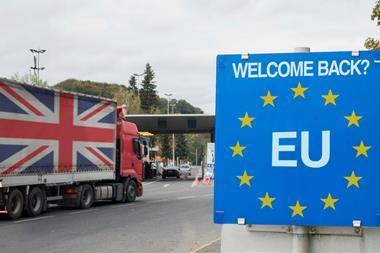
The Sanitary and Phytosanitary (SPS) agreement with the EU, due to come into force in mid-2027, aimed “to revitalise exports by removing the additional checks and certification businesses have faced when trading with the EU”, the FDF said.
But for this to have its intended outcome, “government must prioritise providing businesses with the right support to prepare for this regulatory change”, it added.
‘Non-SPS’ products – which will only see very limited benefits from the agreement – such as chocolate, biscuits and breakfast cereals, also saw some of the steepest declines in exports over the past five years, when compared to the five years prior to Brexit.
“This shows there’s more to be done to support the UK’s 12,000 food and drink manufacturers and revitalise our exports to the EU – such as more accessible customs guidance and practical support for businesses, both via the government’s overseas network and through available support in the UK,” the industry body added.
FSA in crunch talks with government to meet EU reset deal funding gap
“British food and drink is sought after worldwide – it is known for its high quality, innovation, and connection to our cultural heritage,” said FDF CEO Karen Betts.
“It’s good to see some British products flying in overseas markets, and others holding their own in tough trading conditions,” she added.
“But rising production costs, tariffs and behind the border barriers, as well as worsening household budgets in some markets, mean that real export growth continues to be challenging. Conflict in the Middle East only makes this harder.”
With export volumes “still far from pre-Brexit levels, the government needs to step up and support exporters to enter and become established in global markets”, Betts said, pointing to it and the Food & Drink Exporters Association’s target to take export values to £35bn over the next decade.
“The EU SPS agreement won’t be easy, with some businesses needing to reconfigure their supply chains, so ensuring that every UK food and drink business understands the regulatory changes ahead is vital – whether they trade with the EU or not.”







No comments yet