Talks on an SPS deal are advancing, with an eye on 2027 implementation – but it is feared the industry is not prepared for the scale of adjustment

It’s now almost 10 years since the UK voted to leave the EU. And it’s just over five since the end of the Brexit transition period – when the UK actually exited the single market and customs union.

But for the food and drink sector, the political dust from those febrile times has never really settled. Despite Boris Johnson’s bluster over his Trade and Co-operation Agreement (TCA), the reality has been a marked deterioration in trading conditions.

That could all change following a “historic” UK/EU summit last May. Keir Starmer’s EU reset is now, finally, gaining momentum. Negotiations on a new sanitary and phytosanitary (SPS) deal with the bloc – effectively taking the food and drink sector back into the single market – are well underway. Implementation is expected to be as early as next year.

So, what’s at stake in the SPS talks? And what needs to be resolved before a deal can be agreed?

Talks are intensifying ahead of a potential summer SPS agreement, which would reduce border friction for food, plant, and animal products by aligning UK rules to EU standards. The changes are likely to come into force in mid-2027. Against that tight deadline, concerns are growing that both government and the food sector are yet to grasp the scale and breadth of the changes required. Such is the complexity of this challenge – after half a decade of regulatory divergence – that Food & Drink Federation CEO Karen Betts questions the government’s claim the SPS deal will drive down food Prices. She also warns “the change is even greater than it was when we came out of the EU”.

British Retail Consortium director of food and sustainabilityAndrew Opie says the industry faces a “wake-up call” over the extent of the upheaval required. He warns  that could result in a “struggle to implement what’s needed to meet the deadline of mid-2027”.

‘Long and protracted shock’

At the time, Johnson hailed his trade agreement with the EU – finalised just days before the Brexit transition period ended on 1 January 2021 – as a deal that “should allow our companies and exporters to do even more business with our European friends”.

But that comment – like so much of the former PM’s proclamations over the merits of Brexit – has proved to be significantly wide of the mark. Research published in December by King’s Business School, Stanford University, the Bank of England and the University of Nottingham revealed that by early 2025, the UK’s GDP had fallen by 6%-8% below pre-Brexit levels.

This was largely driven by the “long and protracted shock” of the Brexit process, which depressed investment, restrained hiring and reduced productivity growth, the research claimed.

What’s more, the food and drink sector has borne the brunt of that slump. export trade with the EU shrank by 23.4% between the 2016-20 period and 2021-25, found analysis of HMRC data by the FDF in December.


The NFU puts that fall at an even higher level, when comparing data between 2019 and 2025. Agrifood export volumes fell 37.4% in total, it says – driven by a 37.7% fall in poultry shipments, a 23.6% drop in beefexports and a 15.6% slump in dairy sales to the bloc.

In financial terms, the food sector has taken around a £4bn hit due to lost business and red tape since the UK left the EU, according to Defra.

To illustrate the avalanche of bureaucracy from additional border checks and export health certification, Europe minister Nick Thomas-Symonds revealed earlier this month that agrifood exporters had spent £210m on a “paperwork tax” since 2023 alone.

Alongside paying up to £200 for an export health certificate per consignment (and the potential for many multiples of that figure in groupage loads), exporters have also had to contend with phytosanitary certificates costing approximately £25, plus inspection fees of at least £127.60, according to Defra.

That’s before sampling at EU border control posts comes into the picture – adding approximately £1,200 to a cheese load, £1,400 to a salmon shipment, £440 to a load of apples and £1,200 to a beef load.

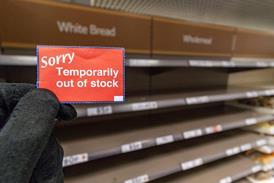
All that – alongside the more recent phenomenon of increasingly long and costly checks at the EU border – added up to “mountains of paperwork, unnecessary delays and spiralling costs”, said Defra secretary Emma Reynolds this month. She insisted the SPS deal would “reduce delays and unnecessary paperwork, keeping shelves stocked, protecting jobs and putting downward pressure on food priceinflation”.

Great expectations

The prospect of less friction at the border is clearly proving attractive to industry, if not to the likes of Nigel Farage’s Reform UK (see box, p30). Hauliers such as Europa Worldwide have joined major supermarkets and suppliers in welcoming a return to easier trade with the bloc.

“For groupage operators like ourselves, removing that administrative burden for an EHC and the requirement for a mandatory inspection is a very good prospect,” says Europa operations director Jack Baxter.

That hope is shared by Toby Ovens, MD of Broughton Transport – who reeled off a litany of border-related horror stories to the Commons Efra Committee in January, including having one lorry full of meat impounded for almost a month in Calais due to a “paperwork error”.

Lorry queue Getty

‘The change for food and drink is even greater than when we came out of the EU’

Onerous border checks and paperwork have – and continue to – come at “a massive cost”, he says. Ovens’ logistics firm is now one of only a handful in the UK to still sell chilled red meat carcases to EU buyers due to the challenges at stake. “Everyone’s hopes are pinned on this SPS deal,” he adds.

Against this backdrop, the SPS agreement is hugely “prized” by the government in the context of a wider ‘EU reset’, according to think tank UK in a Changing Europe. It points to the increasingly pro-EU rhetoric coming out of all parts of government in recent weeks.

The most overt example came via the Chancellor’s speech last week at the Mais Lecture in the City of London, when she spoke of the “need to go much further” in forging closer links with the bloc.

UK in a Changing Europe suggested earlier this month that the deal had a “tangible, everyday quality, which other deals [being negotiated with the EU] on carbon pricing and electricity price auctions do not have”. This allowed the government “to tell a clear story about how closer ties to Brussels can bring economic benefits at home”, says Joël Reland, senior researcher at the organisation.

Whether the government has told quite such a clear story on how to prepare for the changes is another matter. Speaking to The Grocer in February, Commons Efra Committee chair Alistair Carmichael bemoaned the “complete omertà” from government, and specifically from the Cabinet Office – which is leading negotiations on the deal –  on the finer details.

Carmichael’s committee had just published a report warning against dynamic alignment without “carve-outs” for key sectors and “time to adapt to any changes”. He said the food sector faced a slew of “unintended consequences” from the deal if government failed to heed its call for engagement.

Public outreach by the government is now belatedly ramping up. Earlier this month, Defra urged businesses to “start getting ready now” for the deal, with a call for information and a list of the 76 pieces of EU legislation in scope of the ‘dynamic alignment’ with EU rules.

That has coincided with a growing realisation across the food and drink sector that the toughest work is still to come – and time is running out.

“It may look and smell like a trade agreement, but it actually isn’t – it’s a significant change to UK law and it will impact everyone in one way or another,” argues the FDF’s Betts.


The industry body is “concerned” that businesses and government appear to be “underestimating the level of change the food sector is going to have to go through”, she says. “EU law has changed in the time we haven’t been a member, so UK law will change with this deal, and we’re concerned that isn’t well understood out in the industry.”

Betts is basing her concerns on the FDF’s work with industry to prepare for the deal. It has thrown up numerous examples from businesses who have been “quite surprised at the changes they’re going to have to make”, she reports.

Not only will companies exporting directly to the bloc have to adhere to its regulations, but those sourcing food or even ingredients from third countries – for use in food sold solely in the UK – will have to meet EU regulations too, she points out.

One example of divergence is how UK regulators are yet to undertake a risk assessment on the EU ban of smoke flavourings, which will come into force in the bloc and Northern Ireland this July.

The UK will have to “align with that once the SPS deal enters into force”, Betts points out. “We have some concerns that government has a bit of a tendency to underestimate the level of change.” 

Those comments are echoed by the BRC’s Opie. He highlights the confusion for businesses following the introduction of NI’s Windsor Framework and the adoption of ‘Not for EU’ labelling on food destined for the country from Great Britain.

“Despite loads of publicity and outreach from businesses and their supply chains, we still had reasonably sized companies not knowing what to do – and that was quite a simple change,” he points out.

A ‘far more complex’ deal

Opie stresses the SPS deal will be “far more complex” than the Windsor Framework. That won’t just be in the obvious areas of official controls for food hygiene and animal welfare, plant health and gene editing, but also labelling and marketing standards.

The latter is illustrated by the EU’s recent ban on so-called ‘meaty’ terms for plant-based alternatives.European businesses have already warned of “chaos and fragmentation” after the long-awaited decision earlier this month to ban plant-based brands from using 31 words, including the likes of ‘steak’ and ‘bacon’ as descriptors.

Unless unlikely ‘carve-outs’ are secured by the UK, experts are already warning homegrown plant-based brands will have no choice but to follow suit in the wake of the SPS deal.

Similar concerns over EU rules have been voiced by the plant protection (PPP) sector. In January, industry body CropLife UK estimated growers could see up to £810m wiped off their already negligible profit margins within the first year of dynamic alignment with EU rules post-SPS. That’s unless the government secures permission to continue using herbicide and fungicides currently banned in the bloc.

Farming agriculture GettyImages-98434031

Source: Getty Images

Growers have called for regulatory  ‘carve-outs’ over the continued use of pesticides banned in the EU – or they could face a decimation of their margins

There was “clear” evidence of regulatory divergence – with some PPP approvals having moved faster in GB than the EU in some instances, and vice versa, CropLife said.

NFU president Tom Bradshaw is taking those concerns seriously. Despite broadly welcoming the EU reset and accompanying SPS deal, he insists forging ahead without “carve-outs” in areas such as PPPs could be devastating for UK growers.

“We’ve been clear with government we need proper transition arrangements, particularly around PPPs, plus with gene editing – because we believe we need to continue to have the ability to continue with R&D with gene editing, and I don’t believe we should hold that up,” Bradshaw says.

Otherwise, the UK is effectively being “penalised” for having a “better regulatory system” than the EU on these issues, he argues. Bradshaw says the bloc has indicated a “desire to use these products too” but has been held back by the EU’s slower approval mechanisms.

“These are fully approved, there’s no scientific argument about the safety of the products, and yet you’re potentially looking at withholding the ability for us to utilise them as part of this negotiation, as that’s a difficult sales pitch,” he adds.

Calls for a delay in the implementation of the SPS deal, however, are not universal. A clear divergence of opinion is emerging over the merits of pressing ahead or delaying its rollout.

One organisation in favour of pressing ahead is the Association of Independent Meat Suppliers, which has called for “immediate action to restore frictionless trade in food and agricultural products”. Executive director Jason Aldiss argues “the problem is not food safety, the problem is bureaucracy”. That makes “no sense for consumers, for businesses or for regulators”, he adds.

Ashford Port Health is in the other corner. It points to recent Efra Committee criticisms and a government “endorsement of the need to protect our borders from disease” amid the growing issue of illegal meat imports. On that basis, it is “shocked” ministers want “to remove all EU border checks by June 2027”.

Meanwhile, fresh produce Consortium CEO Nigel Jenney is unsure of the benefits. He is wary of government claims that the SPS deal will, at a stroke, wipe out the disruption and added cost of doing business experienced by the sector since the UK left the EU in 2020.

“We’ve carried the cost of Brexit disruption, shifting UK border models, repeated government delays, contradictory guidance and relentless policy uncertainty for years,” he says, slamming the “lack of detail, honesty and sector understanding needed to justify the claims being made”.

The FDF’s Betts also casts doubt over renewed claims this week by Chancellor Rachel Reeves that the deal will “directly impact food prices in our shops”.

“I don’t think it’s going to make food prices go down, that’s for sure,” Betts says bluntly. “It will take some costs and friction out of the system, particularly with EHCs. But in the immediate term, it’s going to require investment in terms of time and systems change.

“As with all of these things, [the sector] will try really hard to absorb that cost and not pass it on to consumers. But in the context of EPR just coming in, the government’s planned changes to the nutrient profiling model, plus the energy and fuel price spike – all at the same time – there will be a cost to companies. These costs will have to be passed on.”

The BRC’s Opie, meanwhile, puts it even more plainly: “There’s a hell of a lot still to resolve.”

It’s a no from Nigel: Farage slams ‘surrender’

While the food sector is broadly in favour of closer ties with the EU, it will come as no surprise that the architects of Brexit, Nigel Farage and his Reform UK party, want nothing to do with it.

Farage hit out at Keir Starmer’s agreement with the EU, to align the UK’s SPS rules with the bloc, last May. In a column in The Telegraph, he argued the deal amounted to a “naked and unashamed u-turn on the prime minister’s pre-election promises” not to return to the EU’s orbit.

This “surrender agreement” gave away “vast amounts of our sovereignty for very little in return”, argued Farage, and was “nothing more than the start of a slippery slope to rejoining the EU”.

Farage named granting EU fishers access to British waters for 12 years as a key failure of the deal.

3E01F1W

Farage has named   the UK’s ability to gain “competitive edge over Europe” as one of the “key benefits of Brexit”. However, given the significant shrinkage in trade with the bloc, those claims are up for debate.

But seeing how the Reform UK party has surged in the polls over the past year, and its continued opposition to the SPS deal, it’s clear EU leaders have taken note.

The FT reported in January that EU diplomats wanted a so-called ‘Farage clause’ in the SPS deal, to financially penalise any party pulling out of the agreement and cover the cost of reinstating border controls in the future – which could run into billions of pounds.

On social network X in January, Farage said “we will not honour” the SPS deal nor the wider EU reset. “No parliament may bind its successor. This is a democratic outrage,” he added.

It’s for this reason the government is aiming to implement the SPS deal by mid-2027, suggest several senior food sector sources, mindful of the political risk of speaking out directly against Farage on the issue.

“If the government lets this slip into 2028, with a general election expected in 2029, the noise will become even louder, with Farage using it as a stick to beat the government,” one points out.

“Starmer will want to get this done and dusted before that, so he can present its success as a positive at the next election.”