





We have spent years framing healthier food reformulation around taking things away: less salt, less sugar and less fat. Yet one of the UK’s biggest nutritional challenges is something most people need more of – fibre.
The government recommends adults consume 30g a day, but the latest National Diet and Nutrition Survey found only 4% meet that recommendation. Cereals and cereal products already provide between 43% and 50% of the fibre in our diets, which makes flour an obvious place to start.
If we are serious about closing the gap, however, we cannot rely solely on people reading labels, understanding nutritional claims and consciously choosing a different product. Healthier ranges have a role, but asking shoppers to change habits that have been built over decades will only take us so far.
We need to start with the foods people buy. Flour sits at the heart of bread, biscuits and cakes, but it is everywhere – in pastry, sauces, coatings, gravies, even your humble Yorkshire pudding. Improving flour gives us the opportunity to make small changes across so many products and eating occasions.
No single reformulation will solve the problem. What could make a real difference is a step change through small increments across the menu: a little more fibre in a loaf, a wrap, a Yorkshire pudding or an occasional treat. Each change may look insignificant on its own, but together they begin to add up.
It is about helping everyday food to fuel people, rather than simply fill them.
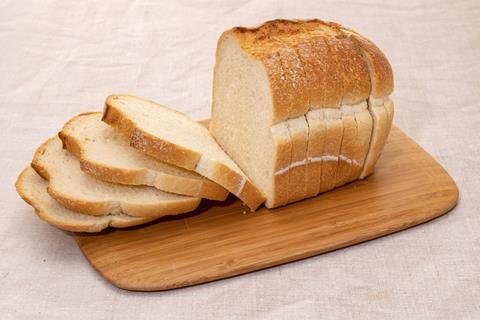
The difficulty is that adding fibre has traditionally involved compromises. Bran can create a coarser texture, a darker appearance and, let’s say, a different eating experience. That may be exactly what someone expects from a seeded or high-fibre loaf, buy it is not what they want in the white loaf they buy every week.
We should not pretend those preferences do not exist. We have spent years conditioning shoppers to see bright white bread as the norm. We cannot expect that to disappear simply because we tell people wholemeal is better. White bread is not the devil. If it is what millions of people choose, our job is to make it work harder nutritionally.
Advances in milling are giving bakers more room to do that. At Whitworth Bros, our work includes FibreFine, which mills naturally occurring wheat bran finer than conventional flour, as well as pulse flours from ingredients including broad beans. This removes issues such as coarse texture and changes in appearance, while opening new areas for fibre and protein across foods.
Ingredient innovation holds the key
Ingredient innovation is not magic. Adding fibre can still affect a finished product, and every application has to work technically, commercially and, above all, for the person eating it. But the gap between improved nutrition and a tasty, affordable mainstream product is getting smaller.
That is what I mean when I talk about health by stealth. It is not about concealing ingredients: fibre remains declared on the pack. It means making practical improvements to everyday foods without expecting shoppers to adopt an entirely different diet.
It also avoids dividing the category into virtuous specialist products and everything else. Nutrition should not be only for shoppers who have the time, money or inclination to look for it. The bigger prize is improving the products that appear in millions of baskets already. That is less dramatic than launching a new health range, but it has the potential to reach far more people, far more often.
This is a shared job across the supply chain. Millers can develop the ingredients, manufacturers can prove them in real products and retailers can help take those products mainstream. Fibre now deserves the same systematic attention the industry has given to salt, sugar and fat.
There is no single dramatic intervention that closes the fibre gap. But by working together and making everyday food work a little harder, we can turn small technical gains into a meaningful improvement across the nation’s diet.
Simon Curran is head of technical bakery and innovation at Whitworth Bros










No comments yet