



Baroness Hayman’s intervention reads less like informed analysis and more like a polished sales pitch.
No one in our industry needs a lecture on food security, resilience or the importance of a strong supply chain. Fresh produce and cut flower businesses live that reality every single day.
We have carried the cost of Brexit disruption, shifting UK border models, repeated government delays, contradictory guidance and relentless policy uncertainty for years. So when ministers present this UK-EU “reset” as some kind of obvious win, they should expect robust scrutiny.
The problem is simple: the claims being made do not stand up to the trading reality being imposed on our sector.
Baroness Hayman repeats the assertion that this deal will slash red tape and cut costs. The obvious question is: for whom, exactly?
Because for the fresh produce sector, the reality is very different. The outcome is likely to be avoidable and unjustifiable additional costs imposed, not by Brussels, but by our own government.
The UK does need a reset with the EU, but it must be one that strengthens trade without damaging our global supply, inflating costs, or undermining a sector that has consistently demonstrated resilience, compliance and commitment.
Our industry has proven what works. The question now is whether government is prepared to listen?
Nigel Jenney, CEO, Fresh Produce Consortium
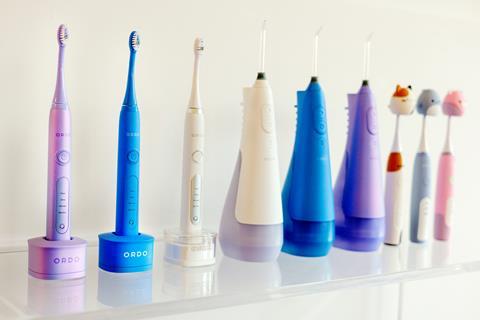
Merchandising oral care
We read last week’s big interview with Ordo with interest.
Dental experts now recommend a simple three-step routine to support gum health: clean between your teeth using interdental brushes or floss, brush your teeth thoroughly with fluoride toothpaste and use a clinically proven mouthwash.
These daily habits can be shaped in the personal care aisle, where clearer guidance can explain how each step supports gum health.
Retailers can also add simple behaviour cues, such as shelf messaging or step-by-step prompts, to help people understand how different products work together. Thoughtful cross-merchandising which groups toothpaste, floss, interdental brushes and mouthwash alongside each other also signals that these products are meant to be used together.
Small changes in how products are presented can make routines easier to understand and adopt. By helping shoppers navigate the aisle with greater confidence, retailers can support healthier everyday oral hygiene habits.
Melanie Pomphrett, HCP brand manager, Kenvue
Redistributing recalls
The article on product recall shines a light on a very important issue.
As correctly pointed out, food being withdrawn from sale can have ‘huge consequences’ from a profit and environmental point of view, by creating unnecessary waste.
With growing supply chains and improving technology, the issue is becoming more prevalent, which is good from a consumer safety point of view, but the impact goes further than the goods already on the shelf or in shop storerooms. For every item in-store, there can be at least two or three times that amount from the same batch being stored in depots.
While your article quite rightly flags specific issues in which products have been potentially contaminated and must be disposed of, there are many more reasons why food is recalled, such as undeclared allergens, missed ingredients or non-compliant packaging issues. In these cases, waste isn’t the only option.
With interventions to make these products fully compliant, and meet all legal obligations on labelling, weights and measures and packaging, the products sat in warehouses can be redistributed.
While some disposals are unavoidable, there is no need for all products to be wasted.
Daniel Sheppard, head of technical, Company Shop Group
Have your say
Get in touch with your comments and feedback about any of our stories at youropinion@thegrocer.co.uk





No comments yet