



M&S’s limited ingredients range has attracted some criticism – but it’s been a hit with shoppers. Brands and own-label suppliers alike have taken note
Woe betide the fool who inserts themselves into the UPF debate. The battle lines have been drawn, the two sides entrenched, and arguments over the presence of xantham gum on an ingredients deck look set to rage until the end of time.
“The controversy stems from the fact that UPF is a processing classification, not a nutritional one, and that can create confusion,” says Nichola Ludlam-Raine, author of How Not to Eat Ultra-Processed and a spokesperson for the British Dietetic Association. “Some of the public debate has become polarised because people understandably want simple answers in an area that is actually quite complex.”
UPFs currently make up 60% of all foods on sale in UK supermarkets, according to a 2026 analysis of 50,000 products by The Food App, and have been described by scientific journal The Lancet as a “corporate-engineered public health crisis”. But at the same time, researchers from University College London have said it’s “too simplistic” to brand all UPFs as harmful.
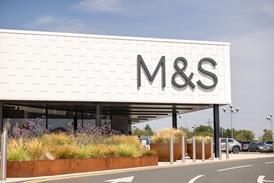
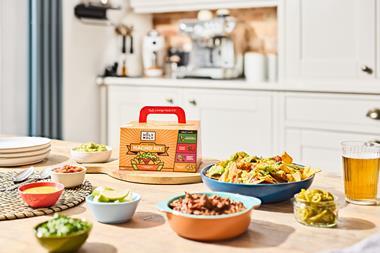
What we can be sure of is that the debate is having an enormous impact on the fmcg industry. Clean labels are increasingly en vogue, typified by Marks & Spencer’s launch of its Only… Ingredients range last year.
“What matters more than any single range is the signal it sends, which is that ingredient simplicity can be a genuine selling point rather than a niche concern,” says Sarah Berry, professor of nutritional sciences at King’s College London.
So, what impact has the Only range had? And is it blazing a trail for brands to follow its lead?
The M&S Only… Ingredients range, in full
Only 1 Ingredient
- Corn Flakes (325g)
Only 3 Ingredients
- British Beef Burgers (454g)
- British Beef Burgers (340g)
- British Beef Meatballs (300g)
- British Beef Meatballs (600g)
- Steel Cut Porridge (300g)
- Bran Flakes (300g)
- Avocado Oil Crisps with Sea Salt (125g)
- Oat Drink (1l)
Only 4 Ingredients
- Wholegrain Sliced Rye Bread (500g)
- Olive Oil Potato Wedges (500g)
- Dark Chocolate Date Bar (50g)
Only 5 Ingredients
- Heather Honey Ice Cream (500ml)
- White Sliced Sourdough (450g)
- Raspberry Yoghurt (450g)
- Rhubarb Yoghurt with Honey (450g)
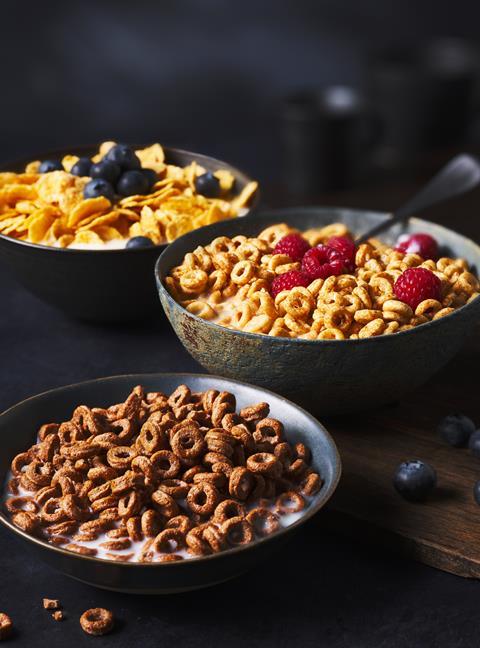
- Multigrain Hoops (300g)
- Dark Chocolate & Almond Date Bar (55g)
Only 6 Ingredients
- Pork Cocktail Sausages (255g)
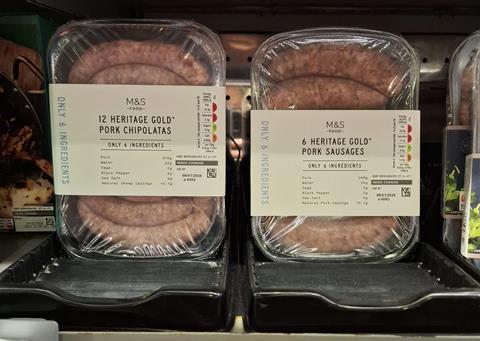
- 12 Heritage Gold Pork Chipolatas (375g)
- Heritage Gold Pork Sausages (400g)
- Olive Oil Mayonnaise (250g)
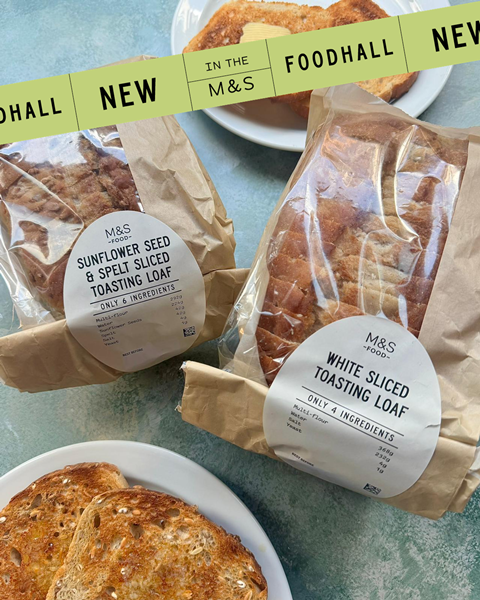
- White Sliced Toasting Loaf (550g)
- Choco Hoops (300g)
Only 7 Ingredients
- Seeded Sliced Sourdough (450g)
- Baked Beans (400g)
- Baked Beans (220g)
Only 8 Ingredients
- 85% Dark Chocolate Ice Cream (500ml)
- Tomato Ketchup (250ml)
- Sunflower Seed & Spelt Sliced Toasting Loaf (550g)
Only 9 Ingredients
- 4 White Rolls (300g)
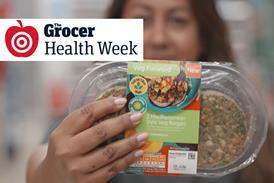
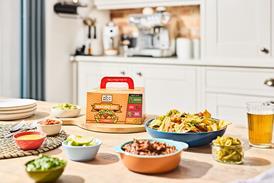
The M&S range was unveiled in March 2025, starting with a trio of cereals – including its Only 1 Ingredient Corn Flakes – and a pack of bread rolls. It’s since expanded to 32 SKUs, including Only 6 Ingredients Olive Oil Mayonnaise, Only 7 Ingredients Baked Beans and Only 6 Ingredients Pork Cocktail Sausages. The most recent addition to the lineup came earlier this month with the first Only ice creams: Only 5 Ingredients Heather Honey Ice Cream and an Only 8 Ingredients 85% Dark Chocolate Ice Cream.
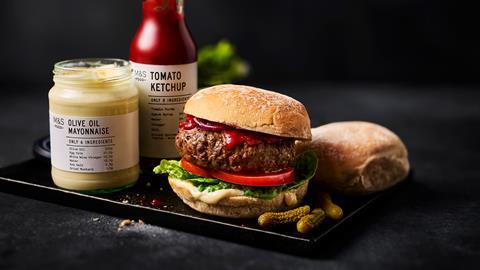
M&S says the reaction to the range has been strong, with Only 8 Ingredients Ketchup and Only 6 Ingredients Mayonnaise outselling their classic equivalents, while Only Ingredients meatballs have become the top-selling line in their category.
Kathryn Turner, director of product development at M&S, says there’s been “a great response” to the range, which was created “for customers looking for simple, clean ingredients without sacrificing convenience”. After all, “our customers are looking at exactly what’s in their food more than they have before”.
The range has not been without controversy. Writing in The Grocer in March last year, development chef Anthony Warner claimed that because the Only 1 Ingredient Corn Flakes “has none of the vitamin and mineral fortification of standard cereals”, that means “there’s a strong argument it’s less good for you than a budget own-label equivalent”. And last October, M&S promised to review the labelling after it was noted there were fewer ingredients listed on the front of pack than in the legal declaration on the back.
Meanwhile, the range is having a positive impact on other clean-label brands. “M&S is very good at identifying and commercialising emerging consumer behaviours, so in that sense it’s probably helped bring this style of product further into the mainstream,” says Ludlam-Raine. “However, a clean ingredient list doesn’t automatically make a product healthier, just as a longer ingredient list doesn’t automatically make it unhealthy.”
Another irony is that one of the definitions of a UPF is a product with five ingredients or less. So on that score most of the M&S Only range doesn’t qualify as non-UPF.
But the success of the Only range lies in its simplicity. It “helps normalise the conversation” and “shows that major retailers recognise growing demand for simpler formulations and shorter ingredient lists”, says Jess Leather, co-founder of Freja, which launched instant bone broth sachets in 2024 to take on ultra-processed stock cubes.
The mainstream catches up
While the Only range has taken many of the headlines, it was far from the first to lock on to the trend for clean ingredients decks. Nutrient-dense food brand Hunter & Gather counts numerous clean-label mayonnaises and a ketchup – M&S has one of each – among its range. Its Olive Oil Mayonnaise has four ingredients compared with M&S’ six.
“It’s nice to see the mainstream catching up,” says co-founder and CEO Jeff Webster with a smile. “We’ve been championing this way of thinking for years, but the M&S range is another sign the market is moving.”
He points out how everyday products like ketchup and mayo are often “built on” refined sugar, starches, gums, preservatives and flavour systems. Developing an alternative requires a lot of work, however.
“It’s hard to create clean-label products that taste great, have a viable shelf life, work operationally and can scale commercially,” says Webster. “The usual shortcuts in the category exist for a reason.”
Despite now being stocked in Tesco, Waitrose, Ocado and more, “one of the hardest things to overcome has actually been retailer sentiment – helping them see the size of the opportunity. What we see again and again, though, is that once we get on to shelves, the products move, because consumers want products they can trust.”
Another cornerstone of the M&S range is its Only 7 Ingredients Baked Beans. However, launched in January, it too was simply following in the footsteps of other non-UPF category trailblazers like the Bold Bean Co, which launched its premium, clean-label baked beans about 15 months earlier.
Bold Bean head of category & insights Beth Latham says she hopes the M&S range “raises awareness, so more brands and own label will look at removing unnecessary ingredients and chemicals from food products”, though she also points out that development was difficult.
“Tomatoes are extraordinarily sensitive – high temperatures can turn a bright, vibrant tomato sauce into something flat and muddy,” she says.
Despite the health credentials of beans, the category has “lower health perceptions”, with many products “more processed with added emulsifiers, thickeners or stabilisers”. So Bold Bean took the decision to call out ‘Nothing Artificial’ on front of pack and on the suggested retail price. “This helps more health-conscious consumers navigate towards Bold Bean Co and is a real point of difference from other products on shelf.”
Too hard to crack
Another trailblazer has been Brickell’s ice cream. Co-founder Robert Gore says that when the brand started in 2018, “we hadn’t even heard of the term UPF”. And until just a couple of weeks ago, when M&S added two ice creams to its Only range, Brickell’s was the UK’s only non-UPF ice cream, “as far as we’re aware”.
Other brands “fall down with chocolate”, which often includes soy lecithin, says Gore. M&S gets around this by using 85% dark chocolate, which is non-UPF – and includes all three dark chocolate ingredients in its overall count of eight ingredients, having clearly learned from earlier controversies.
Ice cream was long seen as too hard to crack in grocery from a UPF perspective. Gore agrees it’s “really hard to formulate”, and it has taken a long time to reach 12 months’ shelf life – a key concern previously. Price point was another.
“We were always worried that would be our main barrier, but with consumers now more informed about UPFs, it’s justifying our higher price point,” reveals Gore. “We’re certainly pushing that message [non-UPF] more and have it on the front of pack now, as it’s a really unique point of difference for us.”
Of course, with the Only range standing at just 32 SKUs, there are plenty of categories and products where brands other than M&S are the ones blazing the trails. One product that often surprises people in falling into the UPF category is coconut milk. Almost all varieties found in supermarkets include stabiliser or emulsifier. While specialist health food websites sometimes offer non-UPF versions, the most commonly available to most consumers is Biona, whose canned coconut milk contains just coconut and water.
Gemma Williams, head of marketing at Windmill Organics, Biona’s parent company, says the main reason most brands use emulsifiers and/or stabilisers is to prevent separation in the can. But given coconut milk is used as a cooking ingredient, “we never thought the separation was an issue”, Williams explains, especially given the taste difference.
“We believe once you’ve tasted a pure coconut milk you wouldn’t go back to those with the fillers – they have almost a gummy-like texture, and it takes away from the coconut flavour,” she adds. Despite being stocked in Ocado, Amazon, Abel & Cole and many independent retailers, “the clear gap for us in the UK is with the supermarkets. We see from the sales that there’s huge demand – we’re confident it’ll fly off the shelves, as consumers simply don’t have the choice in many supermarkets currently.”
This pared-back approach to coconut milk feels like an easy win, and a good fit, for the Only range. But it does not currently include cured sausage varieties such as salami, pepperoni, et al. supermarket takes on these meats often include long ingredients lists, but premium pepperoni brand Properoni has brought a non-UPF alternative to Tesco, Asda and Ocado.
“Pepperoni had become largely commoditised in retail, and restaurant-quality pepperoni was not available to the home user,” explains Tom Horvath Neumann, founder and MD of Properoni. “The WHO’s 2015 report classifying nitrites in processed meat as carcinogenic pushed us further down the clean-label route. We stripped out added nitrites, additives and preservatives because we knew the product was made properly, hence the name, and could do without them.”
The non-UPF position “was not really the original design brief”, admits Neumann, it was more about “doing the right thing”. But now, while there are “some excellent artisan charcuterie producers”, there’s “almost no brands trying to lead that conversation in mainstream retail by championing quality, clean label and non-UPF together at scale”. Along with the completion of two major pieces of consumer research, that’s led to Properoni currently rolling out new packaging across the range.
“The non-UPF, clean label and ‘made without nitrites’ credentials now feature much more prominently front of pack, because all the evidence suggests these messages increasingly resonate with consumers,” says Neumann. “Younger shoppers in particular are turning packs over, reading ingredients lists and making purchasing decisions on that basis, so we felt it was important to bring those messages to the front.”
‘This is not a phase’
An increasing number of shoppers are becoming the ‘turning the pack over’ type, meaning large retailers such as M&S and clean-label challengers alike are betting big on clean ingredient decks and related UPF concerns being here to stay.
“This is not a phase. It’s a structural change in how consumers think about food,” believes Webster. “In many ways, this is not a new movement. It’s consumers reconnecting with the idea that food should be nourishing and made from ingredients you would understand. The lifestyle we’ve advocated for over a decade has now transcended into the mainstream…[and is] becoming part of everyday supermarket decision-making.”
Freja’s Leather agrees the movement is “here to stay” but thinks “the language may evolve”. Informed consumers “don’t just want ‘healthy’ products any more”, she says, they want those that “feel authentic, practical and enjoyable to use” on a daily basis.
That’s why, at Freja, the team think the biggest potential is in products that straddle food and functionality, especially those that “make everyday nourishment easier without feeling clinical or supplement-like”. This chimes with Hunter & Gather, where Webster says “the real opportunity is clean label plus nutritional quality. It’s taking the products people already buy and rebuilding them on better foundations. That’s where products like collagen, quality protein, bone broth and healthy fats become interesting. They’re not just about taking things out. They’re about putting something meaningful back in.”
While some consumers want simpler ingredients lists, and are currently getting them from M&S alone among the major mults, just as many are focused on other indicators of nutritional quality – hence the current trends for protein and fibre.
“Ingredient awareness is here to stay, but I suspect the conversation will become more nuanced over time,” says Ludlam-Raine. “Simpler ingredient lists can appeal to people looking for transparency, but there’s a risk people start using ingredient length as a shortcut for health, which isn’t always accurate.”
It’s a point that a new report published in the journal Science made last week. “Many UPFs are unhealthy, but some are nutritionally sound — and foods which contain helpful nutrients such as fortified wholegrain breads, probiotic yoghurts and plant-based milks risk being unfairly branded as UPFs”, it said. Conversely, “the reverse is also true: certain minimally processed foods can be calorie-dense and rapidly consumed”.
Ludlam-Raine believes “people may eventually become a little fatigued by obsessively checking labels, particularly if the conversation remains black and white. In the long term, we’ll move towards a more balanced view, where consumers look at the overall nutritional profile, the role of the food in the diet and practicality, rather than focusing solely on whether something does or doesn’t fit a UPF definition”.
What’s beyond doubt is that the UPF debate – love it or hate it – has driven not only conversation, says Berry, but “something more useful: a demand for clarity and transparency about what’s in our food”.
Or as Neumann says, consumers are “returning to the idea of real food, properly made”, with the M&S Only range a “positive for everyone operating within the clean-label space. It’s a strong vote of confidence in that direction from a retailer that understands consumer behaviour exceptionally well.”






No comments yet