




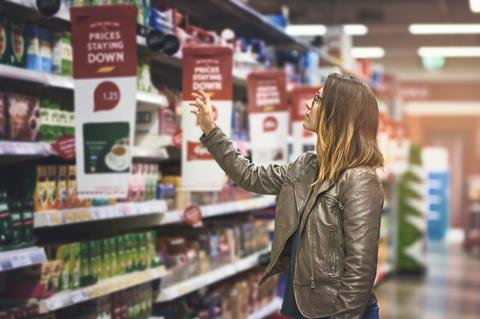
Food prices are on track to be 50% higher by November 2026 compared to the start of the cost of living crisis in mid-2021.
New analysis from the Energy & Climate Intelligence Unit revealed the amount of price growth seen in the nearly 20 years prior to the crisis would be achieved in just over five years – almost quadrupling the pace of food inflation.
The ECIU said the findings showed how a combination of extreme weather driven by climate change, global supply disruptions and exposure to oil and gas markets have compounded pressures on the food system.
Staples including pasta (+50%), frozen vegetables (+55%), chocolate (+58%), eggs (+59%), beef (+64%) and olive oil (+113%) have already seen some of the steepest rises, which the ECIU said reflected their sensitivity to these factors.
The organisation added that five climate-impacted foods – butter, milk, beef, chocolate and coffee – have been responsible for much of the continued pressure on food inflation, with the price of these foods rising over four times faster than other food and drink.
Household bills were pushed up by an average of £605 over 2022 and 2023, with energy shocks accounting for £244 of this.
It comes as the latest data from AIMs revealed meat and poultry prices are up 4.1% in the year to April 2026, compared to 8% in the 12 months to March 2026. Despite this slowing of inflation, the figures still outpace those of general food and non-alcoholic inflation.
“Trump’s war in the Middle East is set to drive shopping bills higher as oil and gas prices spike,” said Chris Jaccarini, food and farming analyst at the ECIU. “Unless we get to net zero emissions to stop climate change and bring balance to the system, food prices will spiral ever further, but net zero also means burning less oil and gas, so insulating our food system from the kind of price spikes we’ve been seeing since Russian invaded Ukraine.”
Lower-income households are expected to be disproportionately affected by higher food prices as they spend a larger share of income on food and are less able to absorb price shocks, the organisation warned.
The Food Foundation estimates that in order to afford the government-recommended healthy diet, the most-deprived fifth of the population would need to spend 45% of their disposable income on food, rising to 70% for those households with children.
“Food prices rising this high and this fast leaves families on the lowest incomes with nowhere left to cut except the food on their plate,” said Anna Taylor, executive director of the Food Foundation. “When that happens, people skip meals, children go hungry, and diet-related illness rises – taking parents out of work and piling pressure on an NHS that can least afford it.
“This conflict is the latest shock in a series, and there will be more.”


No comments yet